Is Hyacinth Poisonous? Learn About Its Toxicity Before Deciding Whether to Grow It
Some people say hyacinths are poisonous - is this true? How can we be safer when growing hyacinths? If you also like hyacinths, take a look at the content below~
Is Hyacinth Poisonous?
Hyacinth bulbs are toxic. If ingested by mistake, they can cause symptoms such as dizziness, stomach cramps and diarrhea, so it is essential to strictly prevent children or animals from eating them by mistake. In addition, it is advisable not to grow them in the bedroom, because the fragrance of hyacinth flowers may cause insomnia. However, as long as you pay a little attention in daily life, there is no danger, so there is no need to keep hyacinths at arm's length.
The Origin of the Hyacinth
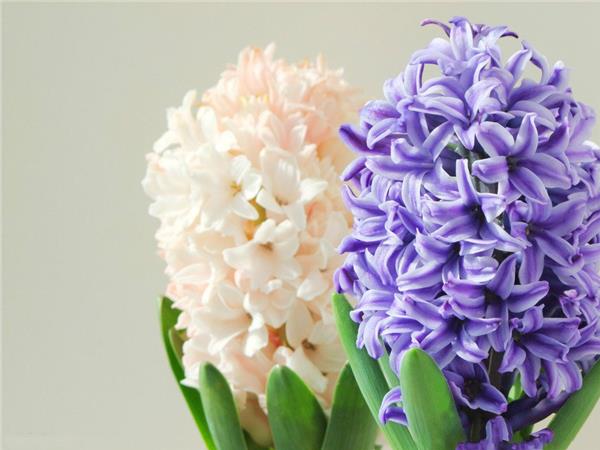
In Greek mythology, the beautiful youth Hyacinthus (Υάκινθος), who was favored by the sun god Apollo (Απόλλων) and accidentally killed by a discus thrown by him, was killed by a trick of Zephyrus, the god of the west wind. From the pool of Hyacinthus's blood grew a beautiful flower, and Apollo named this flower after the youth - the hyacinth, Hyacinthus orientalis.
How to Grow Hyacinths in Soil
Potted hyacinths prefer a warm, humid winter, a cool and slightly dry summer, and a sunny or semi-shady environment. They like fertilizer and do best in fertile, well-drained sandy loam soil, and dislike overly wet or heavy clay soil. Hyacinth bulbs have a habit of dormancy in summer; they root in autumn and winter, sprout new shoots in early spring, bloom in March, and the plants wither in early June. During the growth of hyacinths, the root system grows best when the bulb is at a low temperature of 2-6°C.
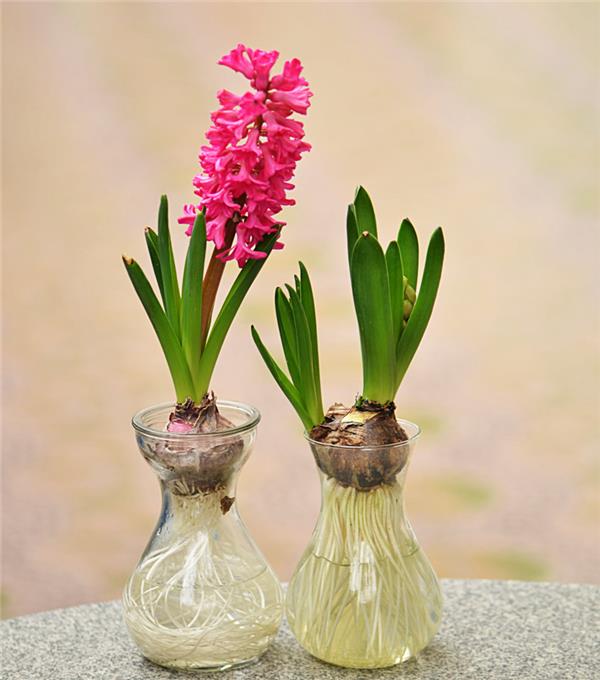
For water culture, hyacinths can be placed in December in a wide-mouthed glass jar with a grid, with a little charcoal added to help disinfect and prevent rot; the base of the bulb should only be immersed to the bottom of the bulb, then placed in a dark place with the jar covered with black cloth. After more than 20 days like this, the roots will sprout in a completely dark environment, and at this point it can be taken outside to receive sunlight. At first, give it one to two hours of light a day, then gradually increase to seven or eight hours. If the weather does not change much, it may bloom by the Spring Festival.
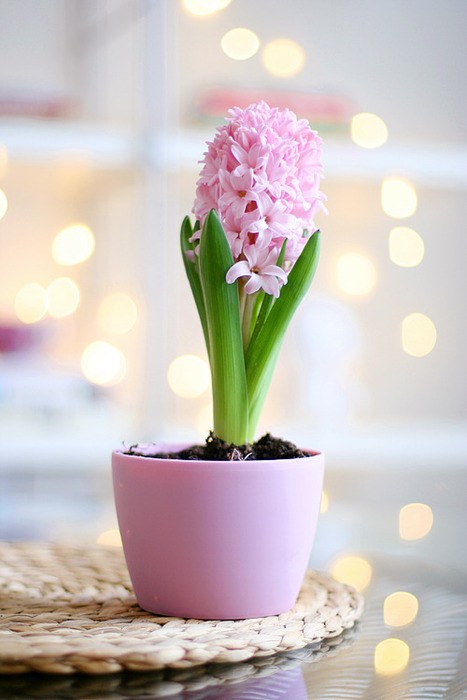
Hyacinths need constant watering during the growing season. If left in the soil, the flower stems should be cut off after the flowering period and the leaves allowed to wither naturally; fertilizer needs to be applied each year. However, some varieties will produce fewer and fewer flowers after being grown for several years. If you want to store them after the flowering period, they need to be pulled out; after the leaves have dried naturally, cut off the leaves, and it is best to put them in a breathable bag with wood shavings and store them in a dry, ventilated, cool place.
As for light requirements, hyacinths only need more than 5000Lx to maintain normal physiological activity. If the light is too weak, it will lead to weak plants, overly long stems, small flower buds, early fading of flowers and yellowing leaves; an incandescent lamp can be used about 1 m away for supplementary light. But too strong light can also cause scorching of leaves and petals or shorten the flowering period.
Growing hyacinths also requires fertile soil with high organic matter content, good aggregate structure and a pH of 6-7. The potting mix can be prepared in a ratio of 5 parts leaf mold : 3 parts garden soil : 1.5 parts coarse sand : 0.5 part bone meal. Before planting, chemical agents such as formalin can be used; at a soil temperature of 10-15°C, apply the agent to the soil surface and immediately cover with plastic film. After 3 days of warm weather, remove the film, let it air for 1 day, then plant, keeping the soil moist.
The Flower Language of Hyacinths
Purple hyacinth: sorrow, jealousy, melancholic love;
White hyacinth: tranquil, quiet love;
Red hyacinth: thank you, a love that moves me;
Blue hyacinth: constancy, chastity, as happy as seeing you;
Yellow hyacinth: happiness, bliss, very happy to be with you;
Pink hyacinth: admiration, romance.
I believe that after reading the above article, you now have some understanding of whether hyacinths are poisonous. I hope the above content can help everyone. For more wonderful content, please continue to follow our website~