What are the hydroponic flower techniques? Read this one article to understand the common methods
Flowers themselves are quite beautiful, and the emergence of hydroponic flower techniques has raised the appreciation of flowers to an even higher level. People still have some blurred focus regarding hydroponic flower techniques, so let us understand what hydroponic flower techniques there are?
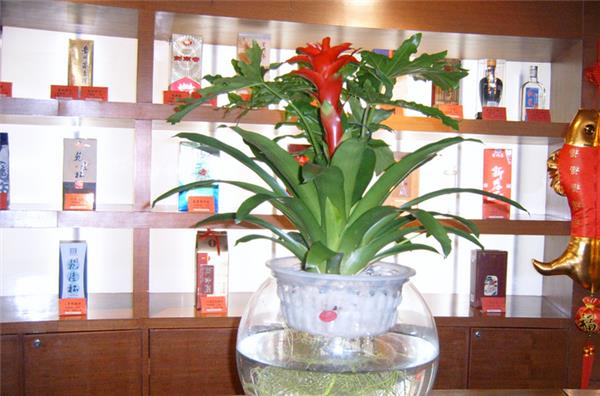
I. What are the hydroponic flower techniques
1. Stages that deserve attention
From the perspective of the plant growth cycle, hydroponic flower techniques have two technical stages that need attention: first, the seedling cultivation stage, that is, carrying out the water propagation process; second, the care stage of the finished plant, that is, the hydroponic process carried out by individuals after successful hydroponics. Through the maintenance work in these two stages, following correct hydroponic rules, and paying attention to the issues that need attention during the cultivation process, we can see beautiful, elegant, clean and healthy hydroponic flowers.
2. Soilless acclimatization
(1) Planting of large seedlings: Gently tap around the flower pot with your hand, and after the soil loosens, remove the whole plant from the pot. Gently remove the soil with your hands, or rinse it off directly with water; then cut the planting basket. If the plant head is too large while the planting basket holes are too small, the holes of the planting basket need to be enlarged to make planting easier. After that, add the prepared nutrient solution to the container, insert the roots of the large seedling through the planting basket, and then fix it with sponge or stones, etc. Be careful to avoid damaging the roots.
(2) Planting of small seedlings: Planting small seedlings is much simpler than planting large seedlings. Generally, the small seedlings taken should not exceed 8 cm. Take the small seedlings directly out of the pot, rinse the roots slightly in water, and be careful not to accidentally damage the roots; then begin planting the small seedlings, insert the roots of the small seedlings directly through the holes of the planting basket, and fix them with stones.
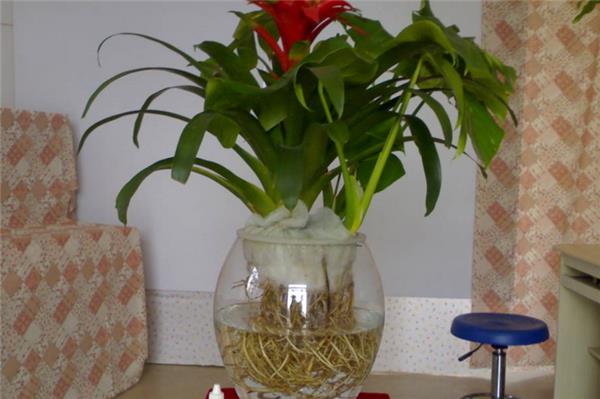
(3) Mixing of nutrient solution: Regarding the mixing of nutrient solution for hydroponic flowers, you can purchase the ingredients at a chemical reagent store according to the formula provided in relevant materials and prepare it; you can also use fertilizers such as urea for preparation research according to the local fertilizer sources, and after gaining experience, use it in hydroponic flowers. The principle for preparing other fertilizers is that the total concentration should be controlled at 0.1%-0.2%.
(4) Key points for transplanting flowers: For hydroponic flowers, the water level must be well controlled, and it is better to keep it low rather than high. Keep the plant roots in the water, or even less than that. This state should be maintained for an adaptation period of one month, and afterward the water amount can be gradually increased. During the hydroponic process, when water droplets appear at the tips of the flower leaves, the hydroponic water level needs to be appropriately lowered, and when just starting hydroponic cultivation, attention should be paid to avoiding direct sunlight.
3. Soilless trough planting
(1) Establishment and method of water propagation seedling beds: The water propagation seedling bed must not leak water. It is usually made of concrete or built with bricks along the edges and covered with film, about 1.2-1.5 m wide, with the length depending on the scale. It is best to build a stepped seedling bed, which helps water flow and maintains the oxygen content in the water. Lay an electric heating wire for water supply at the bottom of the bed to keep the water temperature stable at 21-25°C. Water propagation can be carried out all year round, and the water temperature should be controlled at around 25°C, not too high or too low. During water propagation, plant seedlings should be inserted shallowly, with water or nutrient solution at 5-8 cm in the bed. However, in order to keep the seedlings stable, clean sand can be placed at the bottom, or holes can be drilled in styrene foam boards, or a grid can be set up above the water surface, and the plant seedlings can be inserted into the board and placed in the water. During the rooting process, a water pump should be used regularly every day to circulate and pump water, so as to keep sufficient oxygen in the water.
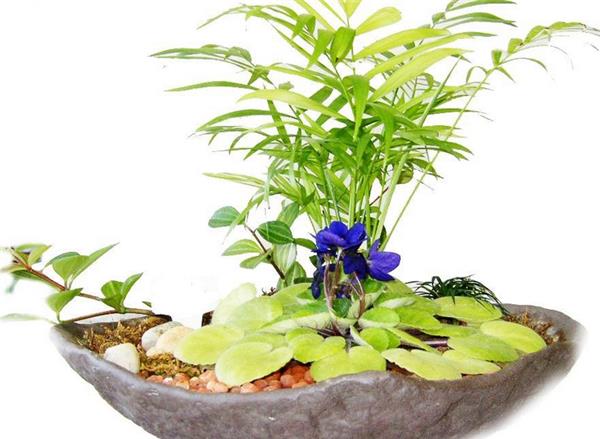
(2) Preparation of commonly used nutrient solutions for water propagation seedlings: Water propagation uses water as the medium, and there are no nutrient elements needed for plant growth in the water. Therefore, a certain nutrient solution must be prepared to provide the nutrients needed for plant rooting and the growth of seedlings before transplanting. The choice of nutrient solution formula is the key to successful water propagation, and different plants require different nutrient solution formulas, so when carrying out hydroponics, we must prepare the nutrient solution well according to the needs of the plants.
II. Advantages of hydroponic flower techniques
Compared with traditional soil-cultivated fresh flowers, hydroponic flowers have obvious advantages. They are not only fresh and natural, but also healthy and environmentally friendly. They are not only elegant in style, but also easy to maintain. They not only have strong vitality, but can also purify the air. Whether for home, office or venue decoration, they are all very high-end ornamental items. Each pot of hydroponic flowers ranges from several dozen yuan to several hundred yuan, while the cost is almost negligible, so it can be said to be a business with huge returns.
However, the current hydroponic flower market is mixed, with uneven quality, and it is hard to tell the genuine from the fake. According to surveys, there are very few enterprises specializing in the development, research and production of hydroponic flowers. We learned from Teacher Huang at the hydroponic flower experiential training base that many unscrupulous merchants certainly do not know the acclimatization and propagation techniques of hydroponic flowers. They simply wash the plant roots clean and put them in water to sell as hydroponic flowers. At first, they look no different from real hydroponic flowers, but their vitality is very short, and they will dry up and die within a few days. This kind of behavior that deceives consumers will not last long. Therefore, if we want to open a real hydroponic flower shop, we must learn the cultivation techniques and propagation techniques of hydroponic flowers.
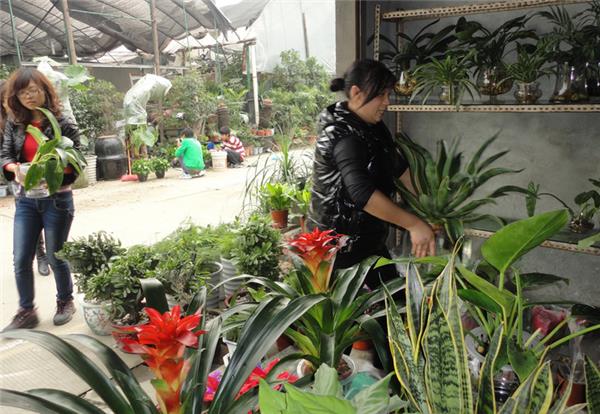
The above gives a detailed introduction to what hydroponic flower techniques there are, allowing us to have a deeper understanding of hydroponic flower techniques and have more choices for growing flowers at home.
At first, they look no different from real hydroponic flowers, but their vitality is very short, and they will dry up and die within a few days. This kind of behavior that deceives consumers will not last long. Therefore, if we want to open a real hydroponic flower shop, we must learn the cultivation techniques and propagation techniques of hydroponic flowers.
The above gives a detailed introduction to what hydroponic flower techniques there are, allowing us to have a deeper understanding of hydroponic flower techniques and have more choices for growing flowers at home.