The black diamond rubber tree combines masculinity and charm in one
The black diamond rubber tree is a newly bred variety of rubber tree. Because its leaves are red-black, it got this name, and it has an ornamental effect different from that of the ordinary rubber tree.
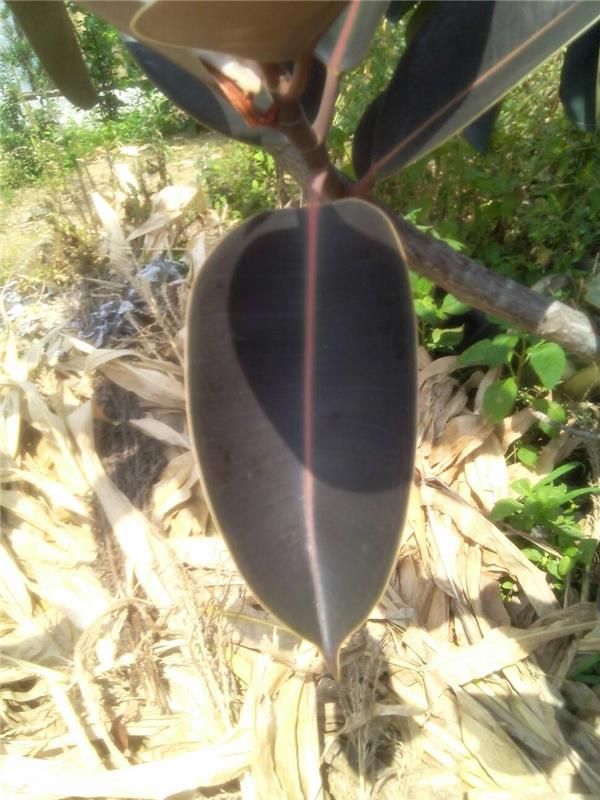
Introduction to the black diamond rubber tree
Morphological characteristics: The crown is large and widely spreading, and the bark is grayish white and smooth. The leaves have long stalks, are alternate, thickly leathery, long elliptical to elliptical, 8-30 cm long and 7-9 cm wide, with a rounded tip, a rounded base, and an entire margin; they are dark green and glossy, with many obvious parallel lateral veins. The stipules are solitary, lanceolate, and wrap the terminal bud, reaching up to 1/2 the length of the leaf; they are purplish red and leave a ring-like trace after falling off. It is monoecious, and the fruits are borne in pairs in the leaf axils of fallen leaves; when ripe they are yellowish green and ovate-long elliptical. The achenes are ovate and have small tuberculate protuberances.
Growth habits: Neutral, it prefers fertile and moist soil and likes acidic soil. The black diamond rubber tree grows quickly and has good adaptability. Usually, simply watering and fertilizing is enough, and no special management is needed. The black diamond rubber tree can be grown in pots or planted in the ground. In the north, it is more suitable for indoor care, while in the south it is an excellent variety for outdoor landscaping.
Landscape uses: Shade tree. Native to India, it is cultivated in all parts of Taiwan, China, and is a common ornamental tree and street tree in gardens. Among all plants, my value is quite high! Because I am an important raw material for making rubber products, such as tires. Plastic raw materials, street trees, and treatment for rheumatism, amenorrhea, stomachache, furunculosis, and other diseases.
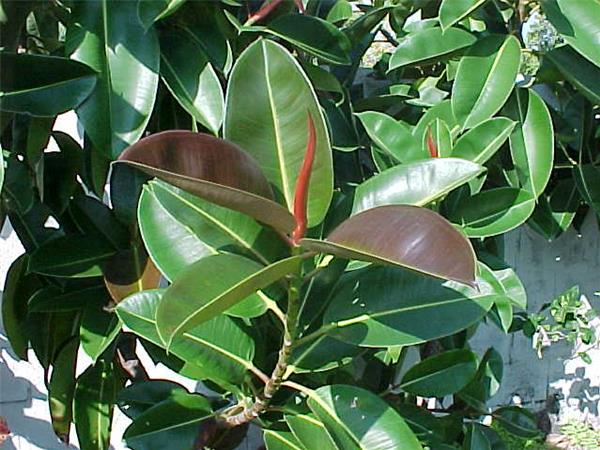
Characteristics of the black diamond rubber tree
Ordinary rubber trees are mostly green, and the color is slightly monotonous and lacks vitality. The new rubber tree variety introduced from Italy, the black diamond, adds some novelty to the monotonous and dull color of ordinary rubber trees. The name black diamond sounds somewhat masculine, but its red leaf sheath is like a shy young girl, bright red as if about to drip, revealing charm within its masculinity.
The biggest characteristic of the black diamond rubber tree is that the leaf color is especially red, and green shows through the red. In particular, unlike ordinary rubber tree varieties, its leaf sheath is very red, and the edges of the leaves have two rows of very neat small round dots, which is very distinctive and beautiful. The black diamond rubber tree has a graceful and substantial leaf posture, is robust by nature, and can grow all year round.
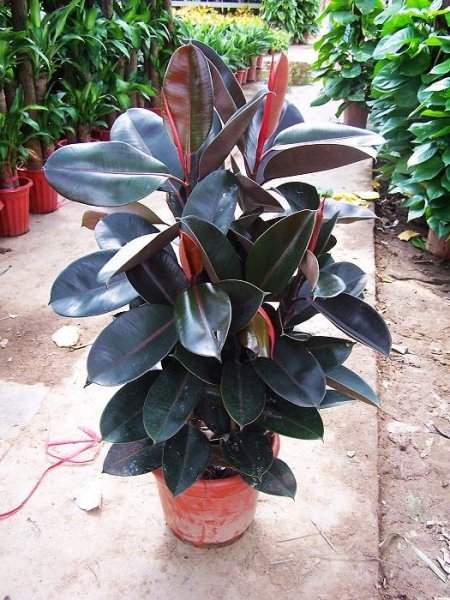
How to grow the black diamond rubber tree
1. Fertilizing. Fertilizing the black diamond rubber tree should mainly use nitrogen fertilizer, with a small amount of phosphorus and potassium fertilizer. Diluted fermented soybean water or bean cake water can be used to drench the roots, generally at a concentration of 20%. Inorganic fertilizers such as urea can also be used, but they should be applied little and often, not in strong doses, to avoid burning the roots.
2. Soil. When potting the black diamond rubber tree, it is best to use 1 part leaf mold, 1 part garden soil, and 1 part river sand, and add a small amount of base fertilizer to make the growing medium. It grows very quickly in a hot and humid environment, producing one leaf every 5-10 days, and during this period sufficient fertilizer and water must be ensured.
3. Light. The black diamond rubber tree likes strong sunlight. From spring to autumn, throughout the entire growing season, it should be placed in sunlight for cultivation, and in winter it should also be placed in a place with relatively strong light. However, it can also tolerate shade, and it also does fairly well when grown indoors under low light.
4. Temperature. The suitable growth temperature for the black diamond rubber tree is between 20-30°C, and it grows most luxuriantly at 25-30°C. Below 10°C, growth is poor. Its temperature must not be below zero; after falling below zero, it will suffer cold damage. If the black diamond rubber tree indoors is exposed to cold wind, yellowing leaves and leaf drop will occur.
5. Watering. Protected cultivation is generally recommended. When watering normally, keep the moist area a bit larger and water more.
6. Pruning. To make the black diamond rubber tree grow evenly and ensure a good plant shape, the seedlings should be pinched when they reach a height of 50-80 cm to promote the sprouting of side branches. After the side branches grow out, select 3-5 branches, and thereafter shorten the side branches once a year. After 2-3 years, a larger plant with a complete, rounded, and full shape can be obtained.
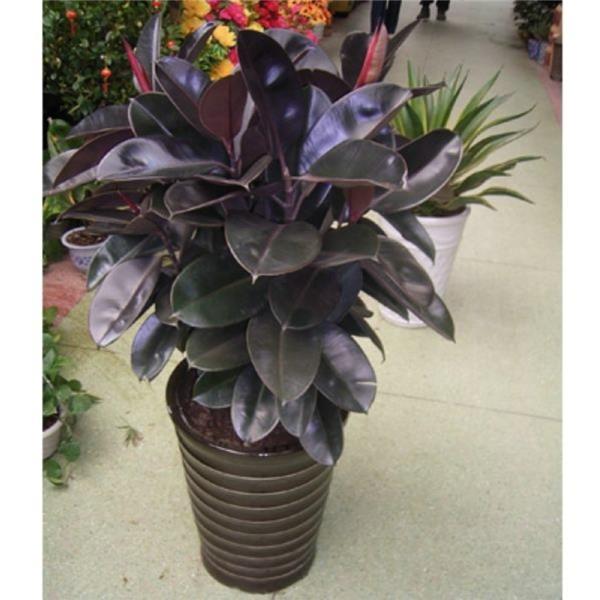
As mentioned above, although the black diamond rubber tree sounds very tough by name, when placed properly in a room it does not appear stiff or rough at all. Instead, it brings the room a contradictory beauty that is both dignified and charming.