A Detailed Guide to Pest and Disease Control Methods and Medicinal Benefits of Cornus officinalis
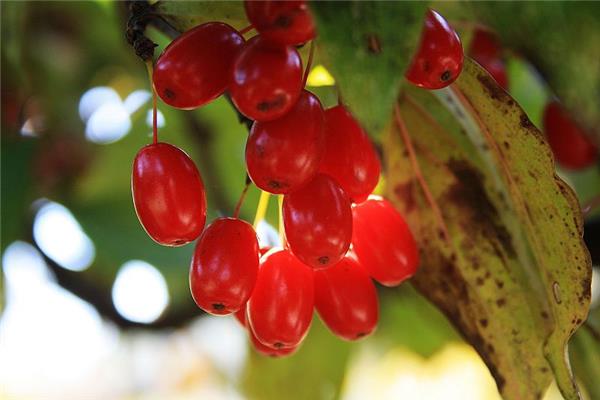
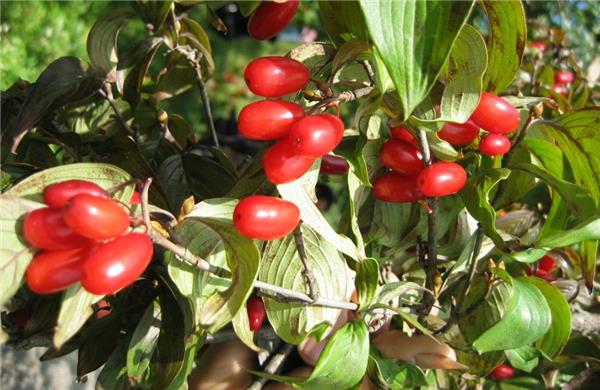
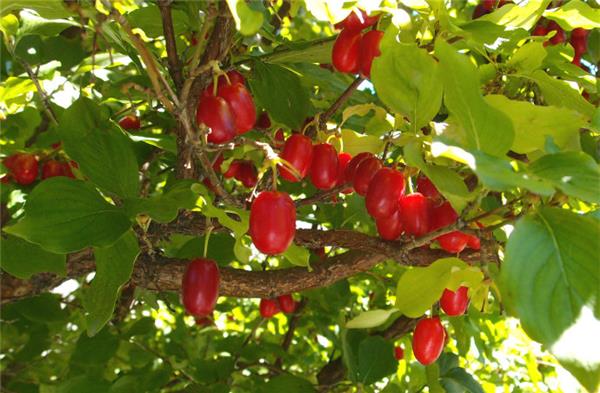
Cornus officinalis is a tree species that offers both ornamental value and medicinal value. Its fruit is not only pleasing to the eye but can also be used as medicine to treat conditions such as high blood sugar, shock and inflammation, making it a tree species with high economic value.
Propagation Methods of Cornus officinalis
It can be propagated by seed, and also by cuttings and layering.
Seed propagation: In autumn, mix fresh seeds with the pulp removed with 2 to 3 times their volume of moist sand, and store them in sand in a sunny spot outdoors, covering with straw and keeping them moist at all times. By March to April of the following year, when 30% to 40% of the seeds have sprouted, they can be sown. Sow in drills, opening furrows at a row spacing of 20 cm to 30 cm and a furrow depth of 3 cm to 5 cm. After sowing, cover with 2 cm to 3 cm of soil, add a layer of straw, and keep the bed surface moist. Seedlings will emerge gradually one week after sowing and continue until the spring of the following year. If fertility and water conditions are good, the seedlings can grow to 60 cm to 100 cm tall in the same year after emergence. Generally, they are planted out in the prepared plot after 1 to 2 years. It is best to lift the seedlings on a cloudy day, transplant them with soil, and water them promptly to improve the survival rate. After planting out, the clustered branches at the base should be pruned away, leaving only the main trunk.
Cutting propagation: In mid to late May, select one-year-old softwood shoots with terminal buds, cut them at 15 cm to 20 cm, keep 3 to 4 leaves at the upper end, cut the lower end into a slant, soak in a 50 PPm solution of ABT rooting powder for half an hour, then insert them into a seedling bed at 20°C to 25°C. Roots will begin to form after 10 days. During this period, relatively high humidity should be maintained, or a shed should be built above for appropriate shading. Strengthen fertility management, and lift and plant out the seedlings before winter or in early spring of the following year.
Layering propagation: After autumn or before buds sprout in spring, bend 1- to 2-year-old branches near the ground, cut and wound the bark near the main trunk, bury the branches in the soil, fix and press them firmly, leaving the tips of the branches exposed above the ground, and strengthen water and fertilizer management. In the winter of the second year or the spring of the third year, they can be separated from the mother plant and transplanted.
Pest and Disease Control of Cornus officinalis
1. Lepidosaphes salicina: In winter, spray the plants with 3 to 5 degrees Baumé lime sulfur mixture. During the nymph hatching period, spray 95% jiemanling emulsifiable concentrate at 400 times dilution or 10% imidacloprid wettable powder at 2000 times dilution to kill them.
2. Actias gnoma: During the adult stage, use black light traps to lure and kill them. During the larval stage, spray 90% crystallized trichlorfon at 800 times dilution.
3. Clania variegata: During the larval emergence period, spray 90% crystallized trichlorfon at 800 times dilution or 20% diflubenzuron suspension concentrate at 7000 times dilution to kill them.
4. Anthracnose: When it affects leaves, small reddish-brown spots appear on the leaves in the early stage of the disease. In the middle to late stages, the diseased spots perforate and fall off. May to June is the peak period of the disease. When it affects young fruit, it generally develops downward from the top of the fruit and gradually spreads to the entire fruit, causing the fruit to turn black and shrivel. August to September is the peak period. In the early stage of the disease, spray 75% chlorothalonil wettable powder at 800 times dilution three or four times in succession, with an interval of 7 days each time, which can effectively control the condition.
5. Angular leaf spot: It initially appears as small purplish-red spots on the leaves, with indistinct lesion margins and no obvious symptoms on the underside of the leaves. When angular leaf spot affects the fruit of Cornus officinalis, it appears as small light brown dots on the fruit. In the middle to late stages of the disease, these can join together into patches, forming brown patches on the skin, affecting both ornamental value and edibility. If it occurs, spray 60% carbendazim wettable powder at 800 times dilution in the early stage of the disease three or four times in succession, with an interval of 7 days each time, which can effectively control the condition.
Benefits and Effects of Cornus officinalis
1. Bidirectional regulation of the immune system. Cornus officinalis has a bidirectional regulatory effect on immune function. The sugars in Cornus officinalis have a clear effect of promoting immune reactions, while the total glycosides of Cornus officinalis clearly inhibit immune function and are immunosuppressive agents. Ursolic acid has the effect of killing immune cells in vitro, yet intraperitoneal injection can clearly enhance immune function. Even more interestingly, some chemical components contained in Cornus officinalis have a clear effect of enhancing immune function at appropriate concentrations, while at high concentrations they show an inhibitory effect. This shows the complexity of the chemical components and pharmacological effects of traditional Chinese medicine.
2. Blood sugar-lowering effect. Since ancient times, there have been records of using Cornus officinalis to treat diabetes (known in traditional Chinese medicine as "xiaoke syndrome"). Japanese scholars used Bawei Wan to treat diabetes and achieved relatively good results. Further research showed that it is mainly Cornus officinalis that exerts the blood sugar-lowering effect. Domestic scholars have also found that Cornus officinalis has no obvious effect on normal blood sugar levels, but has a clear blood sugar-lowering effect on elevated blood sugar caused by diabetes.
3. Others: Cornus officinalis also has effects such as anti-shock, cardiotonic, anti-inflammatory, antibacterial, antifungal and liver-protective effects.
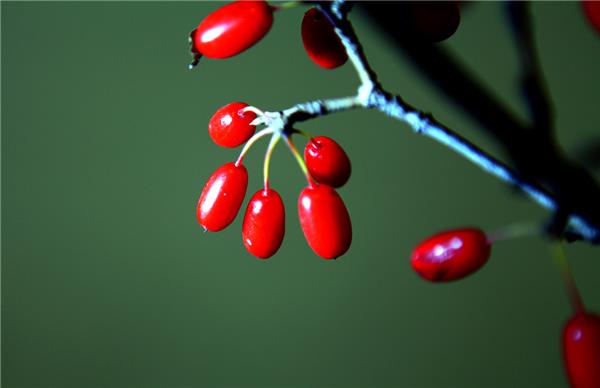
Of course, only proper cultivation can make the Cornus officinalis tree produce high-quality Cornus officinalis fruit. Only then can the fruit of Cornus officinalis play its original role. Therefore, for friends who want to plant and grow Cornus officinalis, learning some knowledge about cultivating and caring for Cornus officinalis is also very useful.
Of course, only proper cultivation can make the Cornus officinalis tree produce high-quality Cornus officinalis fruit. Only then can the fruit of Cornus officinalis play its original role. Therefore, for friends who want to plant and grow Cornus officinalis, learning some knowledge about cultivating and caring for Cornus officinalis is also very useful.