A Detailed Guide to the Cultivation Methods and Propagation of Yellow Flag Iris
The yellow flag iris is a plant species with relatively high ornamental value. It is a perennial emergent herbaceous plant with strong adaptability, able to tolerate low temperatures and also 30°C high temperatures, and it is very simple to cultivate.
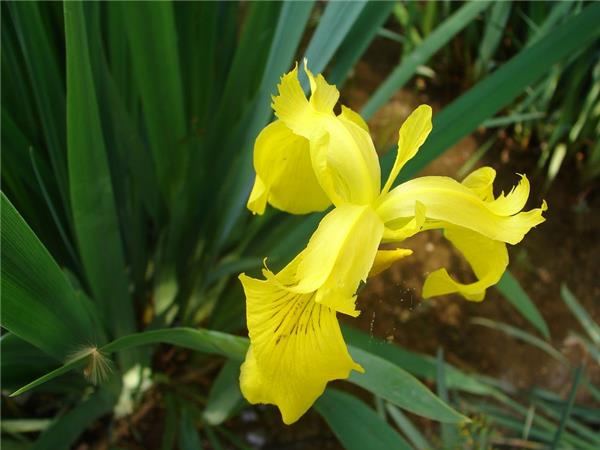
Introduction to the Yellow Flag Iris
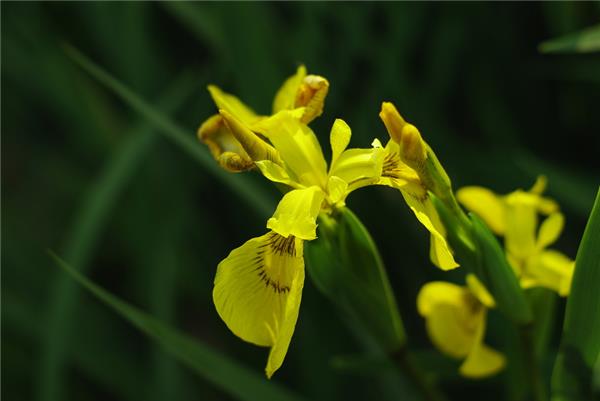
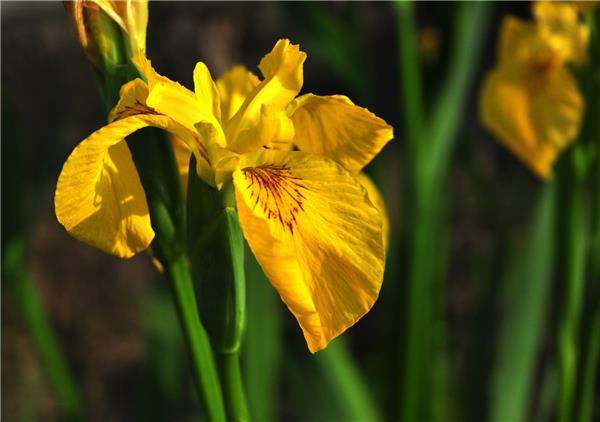
Morphological characteristics: The rhizome is thick and fleshy with many nodes. The leaves are basal, dense, long sword-shaped, arranged alternately, 60-100 cm long and 1.5-2 cm wide, with a prominent midrib and transverse reticulate veins. The flower stem is equal in length to the leaves or slightly shorter than the leaves. Each branching stem bears 4-12 flowers, with a flower diameter of 7-10 cm. The petals are yellow with brown or purple spots, and each drooping petal has a deep yellow band. The capsule is elongated, and the seeds are brown. The flowering period is April to June.
Growth habits: The yellow flag iris is a perennial emergent herbaceous plant that prefers warm, humid and sunny environments. It is cold-tolerant and slightly tolerant of drought and semi-shade. The suitable growth temperature is 15-30°C; below 10°C growth stops. In winter it can tolerate low temperatures of -15°C. In the Yangtze River basin, the leaves do not completely wither in winter.
Propagation Methods of the Yellow Flag Iris
Division: Before dividing, first dig up the mother plant, shake off the soil, cut off the leaf clump 2 to 3 cm above the soil burial line, then pry it apart along the natural direction or cut it apart with a sharp knife, ensuring each division has two or three buds. Then sprinkle plant ash or sulfur powder on the cut leaf surfaces, and after drying in the shade they can be planted. If producing and planting in a nursery, a plant-to-row spacing of 6 cm x 6 cm can be used; if applied in landscaping projects, a plant-to-row spacing of 10 cm x 15 cm can be used; if the purpose is to collect seeds, a plant-to-row spacing of 10 cm x 20 cm can be used. The planting depth depends on the soil type. If planted in clay soil, the soil burial should be 1 to 2 cm below the stem and leaf cut; if planted in sandy soil, it should be 1 to 2 cm deeper than when planted in clay. When planting, slightly expose the stems and leaves, and do not bury all the leaves, so as to facilitate growth and flowering.
Sowing: When propagating yellow flag iris by sowing, it can be sown in either autumn or spring, and sown as soon as collected. About 20 days after sowing, seedlings will emerge one after another. If the seeds are collected too late and dried too much in the sun, they can be soaked in 50°C hot water for 5 to 7 days to allow the seeds to absorb water and soften, improving the germination rate. The sowing depth should preferably be 2 to 3 times the size of the seed. If sowing is too late, the yellow flag iris will only grow radicles that year without sprouting; it will only slowly sprout the following spring when the weather warms and flowers bloom, and after two or three years it can flower and set seed.
Cultivation Methods of the Yellow Flag Iris
Time: The natural planting period is from late March to early April. To achieve year-round flowering, the planting period can be extended to early June. Starting from late March, plant a batch every 15 days. To prevent the bulbs from sprouting early, the bulbs can be stored in a 3-4°C cold room or cold storage.
Planting: In the winter of the first year, plow the land deeply to 20-40 cm, and apply 30000 to 5000 kg of decomposed compost per hectare. Build ridges and make beds; the bed width is 1 m, and the length depends on the terrain and topography. When planting, first open small furrows on the bed, apply base fertilizer and mix it with the soil. Plant at a plant spacing of 10 to 15 cm, a row spacing of 20 to 30 cm, and a planting depth of 8 cm. Plant 90000-135000 bulbs per hectare. The furrow spacing and plant spacing can be appropriately reduced to increase the sowing amount. To prevent the bulbs from rotting, soak the bulbs in 0.1% potassium permanganate solution for 15-20 minutes before planting.
Pests and diseases: There are not many pests and diseases on the yellow flag iris. In the hot and dry summer and autumn seasons, when rust disease first appears on the leaves, spray with 15% triadimefon wettable powder; use 20% fenvalerate emulsifiable concentrate to spray and kill sawflies.
Harvesting: About 45 days after harvesting, the aboveground part begins to turn yellow. When 1/3 of the leaf tips have turned yellow, dig out the entire clump together with the bulbs, cut off the clump, place the bulbs in a cool place to air for several days, and grade them into large, medium and small bulbs. Pack the graded bulbs in cloth bags or plastic woven bags with holes. Store them in a cool, ventilated and dry place for planting the following year.
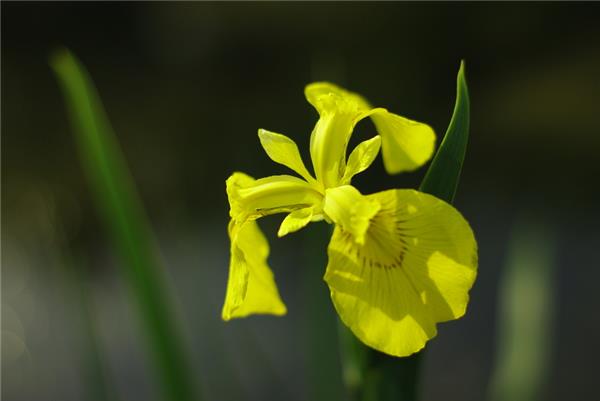
The yellow flag iris has strong adaptability, and its leaf clumps and flowers are especially dense. It is currently one of the more frequently used flowers in wetland waterscapes in various places. Whether arranged by the lakeside or beside a pond, the waterscape it displays is full of poetic charm. It is a plant with very high ornamental value, and it can be used both for potted cultivation to beautify the home and for ground cultivation to decorate a courtyard.