How Do You Manage Apple Trees at Different Stages? A Detailed Guide to the Key Management Points for Each Stage
The value of apple trees lies mainly in the food value of their fruit. Especially for fruit growers, only high-quality fruit and a high fruit-setting rate can guarantee relatively high economic profits. This requires us to put more effort into care and management.
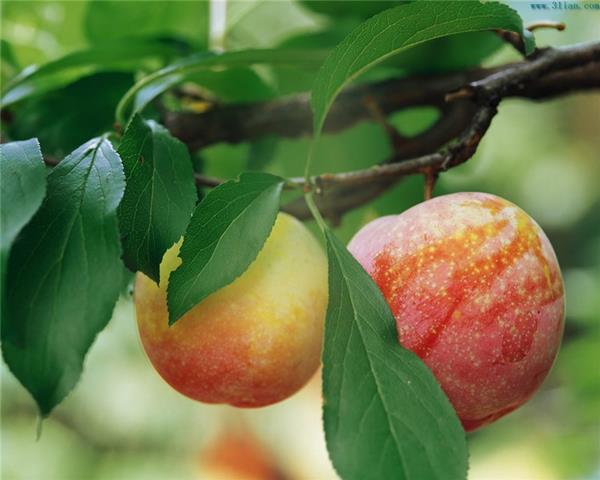
Management of Apple Trees During the Non-Fruiting Period
Water and fertilizer: After going through the heavy fruiting period, apple trees have used up their "energy" in every respect and need timely replenishment. After the autumn harvest, organic fertilizer should be applied. It is generally best to do this while the leaves have not yet declined in function and still have strong photosynthesis. At this time, nutrients flow back into the roots, which can promote root growth and the healing of injured roots, and help raise the tree's nutritional level. At the same time, combine this with irrigation, supplemented by a late-autumn foliar spray of 0.3-0.5% urea, to delay leaf aging, extend the leaves' photosynthesis time, and raise the tree's stored nutrient level, thereby ensuring the number of high-quality flower buds for the coming year. In addition, orchards with the conditions can water once before the soil freezes, which has an obvious effect on preventing freeze damage.
Pruning: Winter pruning of apple trees is a very important step. Winter pruning mainly adjusts the tree's framework structure, balances the growth vigor of all parts of the tree, and regulates the relationship between vegetative growth and reproductive growth. Currently, the more suitable tree shapes include: small-canopy delayed-open center form, free spindle form, slender spindle form, and trunk cylinder form. When pruning, adapt to each tree individually, focus on the tree structure, and keep large and small branches reasonably matched and evenly distributed, so as to make full use of light energy and achieve the goal of high quality and high yield.
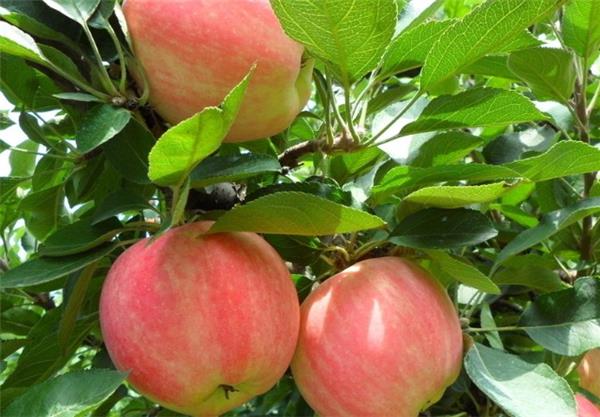
Management of Apple Trees After Picking
Disease prevention and leaf protection: After apple harvest, there is generally still 1 month of growth before leaf fall and dormancy. Disease prevention and leaf protection are extremely important, because complete and thick leaves are the guarantee for fruit trees to improve flower bud quality and carry out nutrient accumulation in autumn. After harvesting the fruit, spray insecticide, fungicide and foliar fertilizer 2-3 times in succession. Spraying pesticides and fertilizers can significantly extend the leaves' functional period and improve photosynthetic efficiency, so as to provide more nutrients for root growth and tree storage, which is beneficial for the fruit trees to overwinter and for growth and fruiting the 2nd year.
Thorough orchard cleanup: After leaf fall or in late November, spray pesticide to clean the orchard. Use Fulunte or Guokangbao plus Lesiben, and spray the whole tree thoroughly. The control effect on trunk diseases and overwintering insect pests is better than that of pesticide application in early spring. After the fruit is harvested, combine this with pruning: cut off all kinds of diseased twigs and buds and damaged branches, saw off and scrape off branches and trunks suffering from rot disease and dry rot disease, and collect and destroy them at any time. Thoroughly remove the residual branches and fallen leaves and the diseased and rotten fruit in the orchard, and bury them deep. For large branches and trunks with longhorn beetle or jewel beetle borings, use medicinal cotton, poison sticks or medicinal mud to plug the borings, eliminate the pests, and protect the tree. Destroy the insect cocoons on twigs and the hiding places of pests in coarse cracked bark, clean the orchard thoroughly, and leave no dead corners.
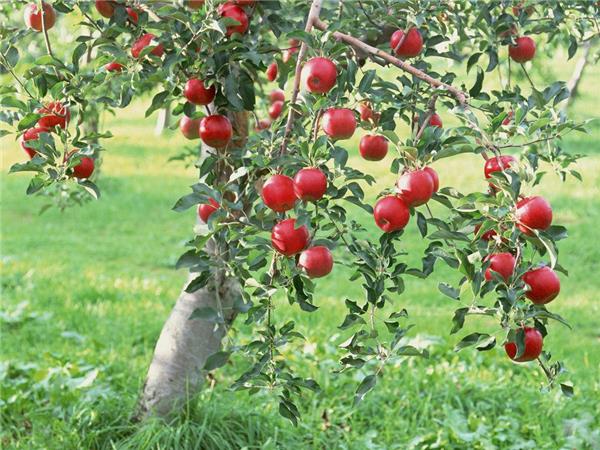
Management of Apple Trees During the Flowering Period
Pesticide use: Pay attention to doing hand pollination and flower thinning well. During full bloom, spray 300-fold borax plus 500-fold urea mixed solution 1-2 times, during which spray 800-fold Meiguolu once, and at the end of flowering spray 2000-fold fenvalerate plus 800-fold Dason M-45. For Delicious strains such as Xinxing, Red Delicious and Beidou, which are susceptible to moldy core, spray 1000-fold carbendazim once during full bloom.
Fruit thinning: Carry out fruit thinning half a month after flower drop. Generally, leave 1 fruit every 25-30 cm. When thinning, be careful to keep the fruit set from the central flower and remove the rest of the side-flower fruit. Thin out diseased and pest-damaged fruit, deformed fruit, round fruit, and short-branch fruit on the upper side of main and lateral branches. Keep hanging fruit, fruit with a regular shape, and oblong fruit. Through fruit thinning, ensure a reasonable crop load for the fruit trees, and control the yield per mu at about 250 kg. Based on the yield standard, determine the number of fruit left per tree according to tree age, tree vigor and other conditions.
Fruit bagging: On the premise that fruit thinning has been done well, promote bagging all the fruit on the tree in plastic film bags. In this way, after bagging, the fruit not only does not rot, but the fruit size increases and the yield rises. Moreover, after bagging all the fruit, there is no need to spray fruit-preserving pesticides, which saves the investment in pesticide use. After bagging all the fruit, only spray Bordeaux mixture 2-3 times in the whole year to control leaf diseases, with the focus on controlling pests and diseases such as red spider mites and leaf miners and other leaf-eating pests. When bagging, be careful to blow the plastic film bag open, and it is best to seal the opening with a clip to prevent rainwater from entering the bag. If sealing with incense, press it tightly and seal it firmly. The bagging order should be upper first and then lower, inner first and then outer. After bagging is finished, spray the whole orchard once with fungicide.
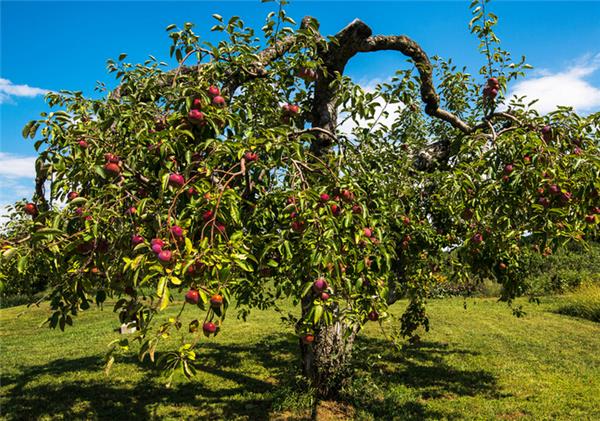
The fruit of apple trees is not only edible, but also has a very good ornamental effect. When the fruiting season of apple trees arrives and abundant fruit hangs all over the branches, it brings people not only visual enjoyment, but also a full sense of achievement.
The fruit of apple trees is not only edible, but also has a very good ornamental effect. When the fruiting season of apple trees arrives and abundant fruit hangs all over the branches, it brings people not only visual enjoyment, but also a full sense of achievement.