What to Do When Longhorn Beetles Harm Plants? A Detailed Guide to Longhorn Beetle Control Methods
The longhorn beetle is a rather ugly-looking insect that easily gives people the creeps, and not only is it unattractive, it also does great harm to trees. It is truly an insect that no one can love.
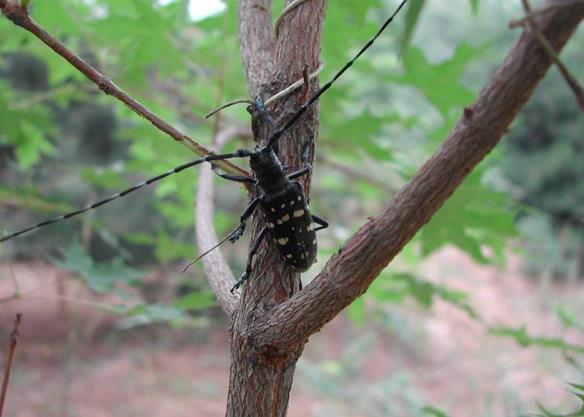
Morphological Characteristics and Occurrence Patterns of Longhorn Beetles
Longhorn beetles belong to the order Coleoptera, family Cerambycidae. The longhorn beetles commonly harming trees are mainly the citrus longhorn beetle (Anoplophora chinensis), the red-necked longhorn beetle (Aromia bungii), the mulberry longhorn beetle (Apriona germari), and the glossy-shouldered longhorn beetle (Anoplophora glabripennis), all of which overwinter as larvae inside the xylem of the host and bore and feed for long periods. The larvae bore into and feed on the trunks and branches of coniferous or broadleaf tree species (such as apple, cherry, peach, plum, poplar, willow, black locust, white ash, Chinese white poplar, Japanese red pine and many other forest trees).
Longhorn beetles generally complete one generation every 2~3 years. Adults mostly appear between June and August, but occur most abundantly from late June to July. After emerging, the adults first gnaw on the bark and then lay eggs inside it. The egg stage lasts about 10 days or so, after which the larvae begin to hatch. Newly hatched larvae first feed on the cambium beneath the bark, and as they grow older they gradually bore into the xylem. Sap often flows from the bore holes on infested trunks.
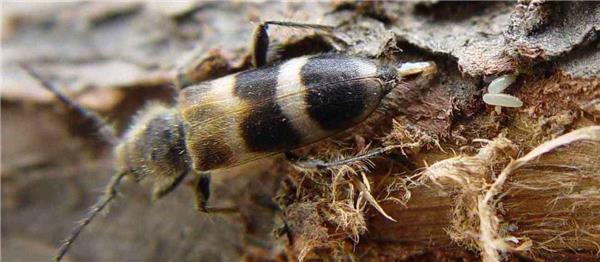
The Damage Caused by Longhorn Beetles
Longhorn beetles are important pests of street trees, shelterbelts, garden and park trees, greening trees in factories, mines and schools, and stump bonsai; arbor trees suffer more severe damage, and a few species harm herbaceous flowers. The larvae bore into and feed on the main trunk and roots, causing poor tree growth, weakened vigor, and dieback and breaking of branches. After several years of continuous damage, severe cases can cause the death of an entire stand. In infested trees, because the phloem and xylem are damaged, the transport of nutrients and water is blocked, so the trees are weakened and grow poorly; severely affected trees are prone to wind breakage, or the whole tree dies because the trunk is hollowed out, and the value of the timber is also reduced as a result. The feces excreted by longhorn beetles worsen the environment. Adults gnaw on the cortex of young branches, causing shoot dieback. The pine sawyer beetle (Monochamus alternatus) in particular, in addition to direct damage, also transmits the pine wood nematode, causing large areas of pine forest to die, and is an important quarantine pest.
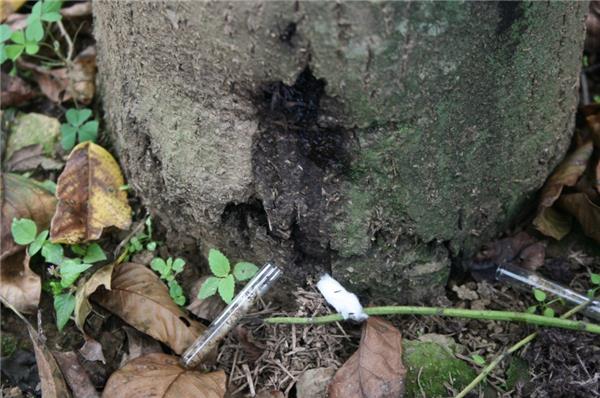
Non-Chemical Control Methods for Longhorn Beetles
1. Implement quarantine. Strictly prohibit the introduction of dangerous longhorn beetles from abroad, from outside the province, or from outside the city or county through logs, packaging timber, and insect-carrying trees.
2. Select insect-resistant tree species and varieties. Different garden tree species and varieties differ significantly in their resistance to longhorn beetles, so tree species or varieties that suffer light longhorn beetle damage should be selected.
3. Strengthen garden management. In combination with pruning and branch training, promptly cut off and dispose of insect-infested dead branches; weakened trees are prone to longhorn beetle damage, so forest management should be strengthened to promote vigorous tree growth and reduce damage. The pine sawyer beetle and others prefer to attack trees that are about to die or have already died, so each year before the adults fly out, cut down in time and thoroughly clean up and dispose of dead trees in the forest.
Chemical Control Methods for Longhorn Beetles
1. Green Weilei: Use a sprayer for routine spraying, diluting 300-400 times for spraying, and spray the diluted solution on the trunk above ground, large branches, and other places where adult longhorn beetles like to appear. Spraying on cloudy and rainy days, or if rain occurs within 6 hours after application, will greatly reduce the efficacy.
2. Chlorethoxyfos: Trunk coating: Chlorethoxyfos has extremely strong systemic action. You can scrape off the old bark of the trunk in a 20 cm wide band, slightly exposing the green bark, then wrap a wet cloth soaked with the agent around the scraped area, or use a brush dipped in the solution to coat the trunk. By virtue of its strong permeability, the solution is quickly absorbed into all tissues and organs of the plant, and as long as the pest feeds on the part containing the solution, the ideal control purpose can be achieved. The solution concentration is 1:1. This method is suitable when the pest population density is relatively low. After using the quarantine treatment, wrap the treated area with nylon film to prevent poultry from accidentally eating it and being poisoned. Injection: When controlling boring pests, the agent can also be injected directly into the plant body by drilling holes, and through the plant's systemic translocation the solution is delivered to the feeding sites of the pest; the pest dies of poisoning after feeding on the plant tissue containing the solution. The solution concentration can be controlled between 1:5 and 1:10. It is not restricted by high or low pest population density.
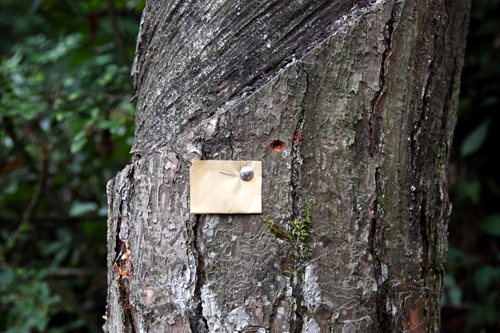
Longhorn beetle infestations occur almost every summer, so when planting and caring for plants, we must be extremely careful and strict, and absolutely must not give them any chance to harm our plants.