How to prune a big-leaf boxwood ball? Detailed explanation of pruning methods
Pruning a big-leaf boxwood ball into shape will undoubtedly enhance its own beauty and ornamental value, and it also allows for more flexible pairing with various garden tree species, so pruning big-leaf boxwood balls is an essential part of learning to grow big-leaf boxwood.
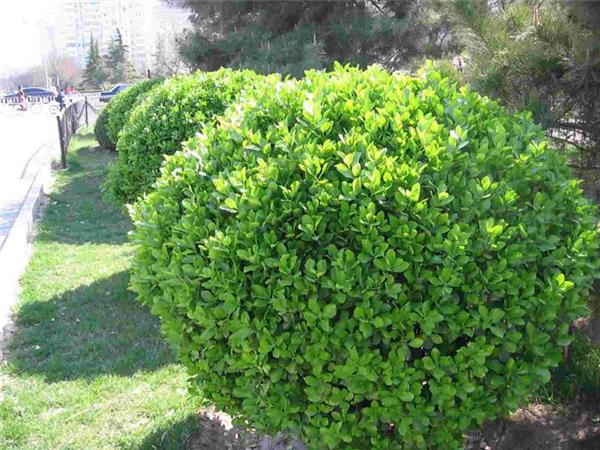
Pruning steps for big-leaf boxwood balls
1. Determine the amount of pruning: First observe the big-leaf boxwood ball that needs pruning, examining the growing conditions of the scaffold branches and large and medium-sized nurturing branches from different angles, first deciding which large and medium-sized branches to keep or remove and the degree of pruning, and estimating the amount of pruning to be carried out. If the estimated amount of pruning is too large, use a method of cutting in stages by season.
2. Judge the growth vigor of the big-leaf boxwood ball: Carefully observe the growth vigor of the current-year branches around the boxwood ball, the amount of growth, and the positions and uniformity of distribution of the flower buds, and determine the "vigorous, strong, weak" status of the topped boxwood ball, so as to set the corresponding pruning principles.
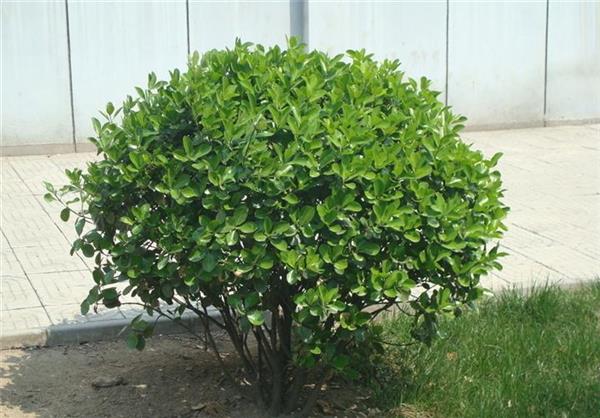
3. Operate in order: For a big-leaf boxwood ball of any shape, always handle large branches first, then medium branches, and prune small branches last; thin out branches first, then shorten them; prune the inner canopy first and then the periphery; prune the upper part first and then the lower part. The specific method is:
① Cut a horizontal band according to the size of the diameter. Note that at the beginning you should not cut too deep; if necessary, you can prune further.
② Turn the pruning shears over, and use the back side of the pruning shears to cut a curve on the plant.
③ Prune the top of the plant to determine the upper curve of the spherical shape.
④ Point the pruning shears downward, and turn them over again so that the front side faces the plant.
⑤ Cut away the excess branches and leaves at the top and middle of the plant.
⑥ Following the shape of the upper half of the plant, prune the branches and leaves of the lower half of the plant down to the ground surface. Use your hands to sweep away the cut branches and leaves.
⑦ Around the boxwood ball, repeatedly inspect the spherical shape you have pruned, and step back a few paces to see whether the spherical shape is symmetrical. If during pruning a gap is created on the surface of the spherical shape, especially on the upper part, you can wait for new branches and leaves to grow out and then fill it in.
⑧ In the summer of the following year, prune once or twice more, in mid-summer or late summer.
4. Correction and supplementation: After all pruning is completed, observe around the boxwood again, and make necessary supplements and corrections to areas that were missed or are unbalanced.
5. Clean up the site: Promptly remove the cut branches and dead leaves. Discarded branches and leaves should be carried out and disposed of promptly. Diseased plants should be pruned last; if diseased branches have already been cut, all tools should be disinfected to avoid contagion.
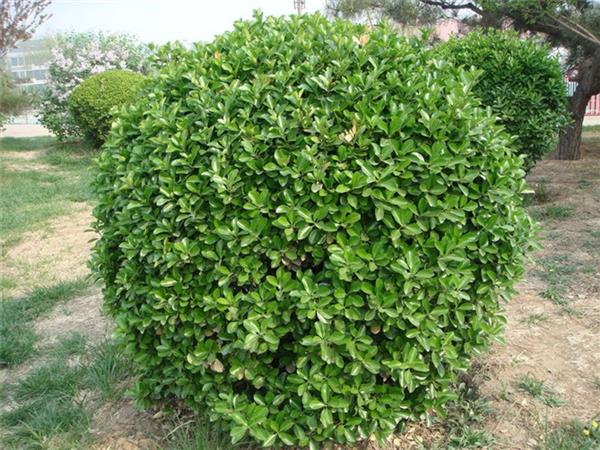
Pest and disease control for big-leaf boxwood balls
Big-leaf boxwood has very strong resistance; even in areas with extensive management, pests and diseases rarely occur. Common pests include aphids, scale insects, and so on.
Among them, the Japanese wax scale is relatively difficult to control. After discovering an infestation, it can be scraped off manually. Spraying pesticide on the leaf surface and trunk after the nymphs hatch and before the scale shell forms is very effective. Commonly used pesticides include Supujiesha or Jiepusha, and so on.
Common diseases include powdery mildew, sooty mold, leaf spot, stem rot, anthracnose, and so on. Current-year new branches are prone to powdery mildew infection when nutrition is insufficient and the climate is humid. In extensively managed areas, leaf spot, anthracnose, and stem rot easily occur where disease prevention and pruning disinfection are seldom carried out. When piercing-sucking pests cause damage, sooty mold often occurs. For the above diseases, broad-spectrum fungicides such as chlorothalonil, carbendazim, and thiophanate-methyl can be used; spraying two or three times is enough to control the condition, with an interval of 7 days to 10 days between applications. If the disease is severe, the interval can be appropriately shortened, spraying once every four or five days.
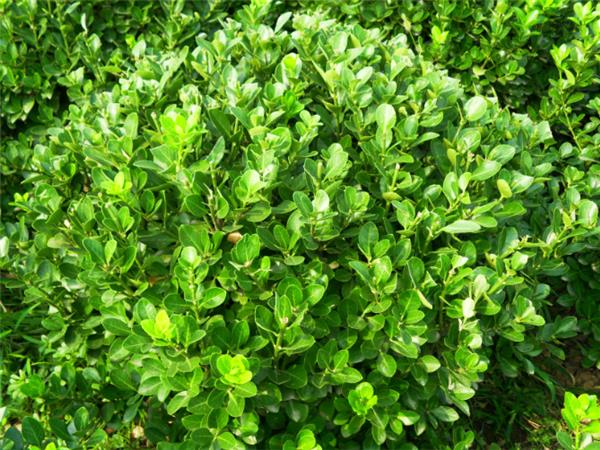
In addition, big-leaf boxwood grows new branches extremely quickly, so be sure to prune once a year to maintain the tree shape. Then promptly carry out pest and disease prevention, and you can increase its survival rate.