How to prune a camellia ball? Pruning principles and care precautions
Once a camellia has been pruned into a camellia ball, it is not only necessary to put more effort into learning pruning techniques; its daily care is also very important, otherwise the beautiful camellia ball may wither and die or lose a large number of leaves.
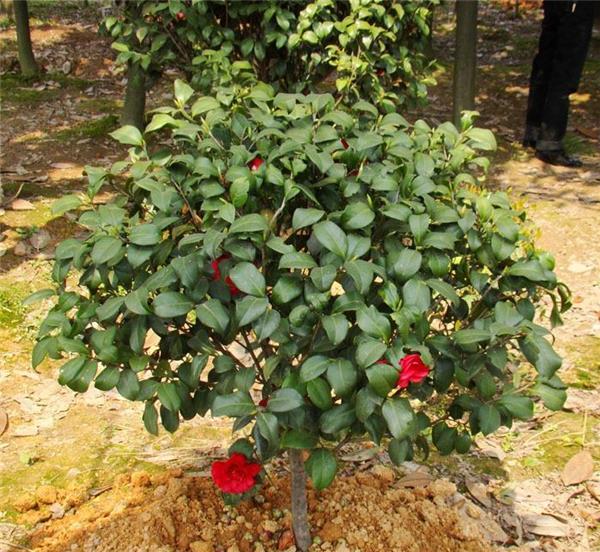
Key points for camellia cultivation and care
When growing camellias, pay attention to three periods of the camellia:
The first period is the peak growth period for new camellia shoots and new roots, roughly in March-April. The potting soil should be allowed to dry and then be watered wet, and nitrogen fertilizer should be the main type used. Here you can store the daily rice-washing water and use it after 4 to 5 days; the effect is very good.
The second period is the camellia flower bud differentiation period, in late June; at this time, fertilizer should be mainly phosphorus and potassium fertilizer. Potassium dihydrogen phosphate, superphosphate, etc. can be used for spraying, and 0.1% boric acid can also be added during spraying; boric acid can promote flower bud differentiation and make flower buds less likely to drop. When flower buds are forming, attention should also be paid to withholding water (reducing the amount of watering). In summer and autumn, place it outdoors under a shade shed for care, and avoid direct strong light.
The third period is the autumn-winter transition period. During this period, the camellia root system and leaf surface evaporate less, so potted camellias must not have overly dry soil; the potting soil moisture should be kept at a water content of 60% to 70%, and leaf surface moisture and humidity should usually be increased. In early winter, appropriately apply additional potassium fertilizer to enhance cold resistance.
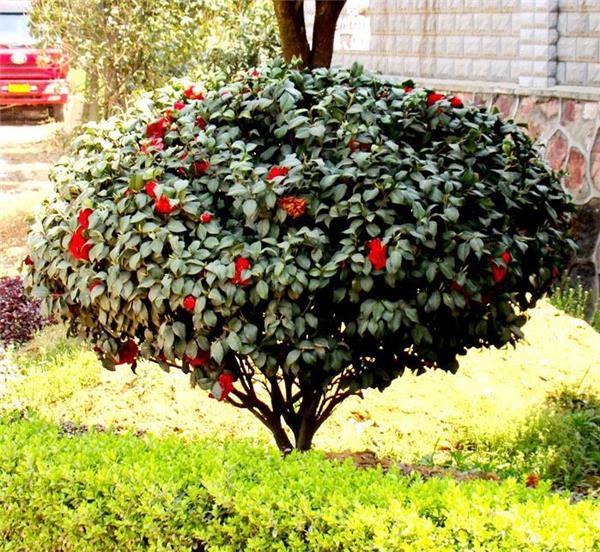
Pruning principles for camellia balls
Camellias are generally pruned in late autumn before winter begins. First cut off all diseased branches and dead branches, then shorten and prune leggy branches, and then prune into a pagoda shape, semicircular shape, umbrella shape, large tree shape, etc. according to your own ideas. Generally, it is best to prune according to whichever growth habit the variety being pruned has.
Camellia bud thinning generally begins when the flower buds are the size of soybeans. Strong trees can keep more, and weak camellias should keep as few as possible or none. We generally grow flowers for our own appreciation, so we need to both view the flowers and keep the tree healthy; therefore, keep as few flower buds as possible, and do not, like commercial flower growers, think the more buds the better for selling.
For camellia bud thinning principles, each branch can keep at most one flower bud. Thin and weak branches must not keep flower buds. However, note that thinning buds on Yunnan camellias must be done carefully; both hands must be used together, with one hand protecting the bud head to be thinned and the other hand doing the thinning, otherwise it is very easy to break it off together with the bud. This is because Yunnan camellia branches are relatively brittle. Yunnan camellias sprout relatively few shoots, so they can keep slightly more flower buds than East China camellias and foreign varieties.
How to handle camellias that have buds but do not bloom
Pay attention to frost protection. The suitable temperature during the camellia bud period is 10-15°C. In winter and early spring, cold air activity is frequent, and the temperature often suddenly drops below 5°C, which can cause flower buds to be frostbitten and fail to bloom. The remedy: during the day, place the flowers in a windless, sunny, warm place, and move them indoors at night; if the temperature is below 5°C, put a plastic film bag over the flowerpot to raise the temperature.
Maintain humidity. In winter and spring, after 10 a.m. on sunny days, spray water or mist on the camellias to maintain air humidity. Generally, water once every 3-5 days on sunny days, keeping the potting surface moist; it must not be too dry or too wet. Large pots can be watered once every 5-7 days. For camellias planted in the ground, misting or watering should be controlled flexibly according to the situation.
Prevent and control pests and diseases. The main pests during the camellia bud period are aphids and rust mites. Aphids can be killed by spraying with a 1000-fold dilution of 40% omethoate emulsifiable concentrate; rust mites can be controlled by spraying a mixture of 50 grams of washing powder, 10 milliliters of diesel oil, and 10 liters of water, stirred evenly.
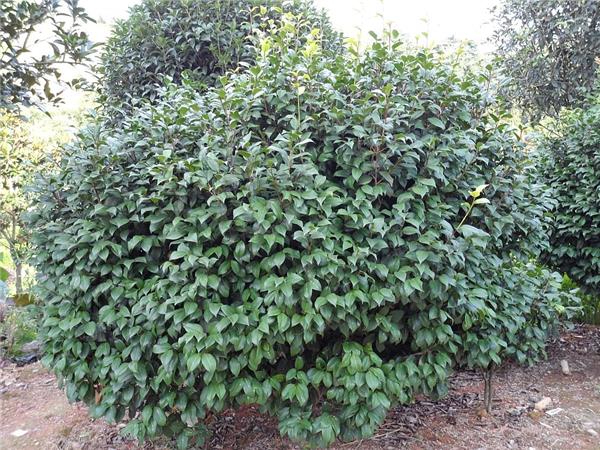
Overall, growing camellia balls is relatively easy, and the precautions for pruning are also relatively few, so it is very suitable for gardening beginners to plant and to practice shrub ball pruning techniques.