What are the planting management and care measures for Pinus tabuliformis seedlings
Pinus tabuliformis has relatively high ornamental value and also economic value at the same time, so overall it is a tree species that is relatively suitable for planting, whether planted in large quantities to obtain economic profit or planted in small quantities to decorate a courtyard.
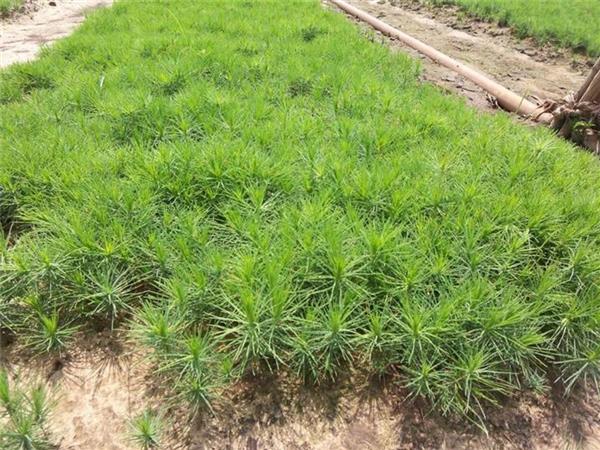
Pinus tabuliformis seedling sowing management
Soil selection: Choose a nursery site with flat terrain, convenient irrigation, good drainage, and deep, fertile neutral (pH 6.5-7.0) sandy loam or loam soil. It is advisable to choose a nursery site where the previous crop was Pinus tabuliformis, oak species, poplar, willow, false indigo, and other conifer species; newly reclaimed wasteland can also be used for raising seedlings. Avoid raising seedlings on sites where the previous crop was black locust, elm, date plum, and other tree species, or vegetable plots such as Chinese cabbage and potato.
Land preparation: Land preparation must be carried out before raising seedlings. For nursery land preparation, deep plowing in autumn is preferable, with a depth of 20 cm-30 cm, and no harrowing after deep plowing. After the soil thaws in the second spring, apply 40000 kg-50000 kg of decomposed organic fertilizer such as compost, green manure, and barnyard manure per hectare, and apply 300 kg-375 kg of superphosphate. Then shallow plow once more, with a depth of 15 cm-20 cm, and immediately harrow level.
Sowing: Soil disinfection should be carried out before sowing. Before sowing, the seeds should be disinfected with formalin or potassium permanganate. Soak the seeds in a 0.5% formalin solution for 15 min-30 min, remove them, seal them for 2 h, rinse with clean water, then spread the seeds thinly and dry them in the shade.
Irrigation: After sowing, try to avoid the surface soil drying out, especially in northern regions, where some small seeds are covered with relatively shallow soil after sowing and are susceptible to spring drought damage. Reasonable irrigation keeps the bed surface moist, prevents small seedlings from losing water, and can also regulate surface temperature to prevent sunscald. Generally, frequent irrigation is required, with a small amount of water each time.
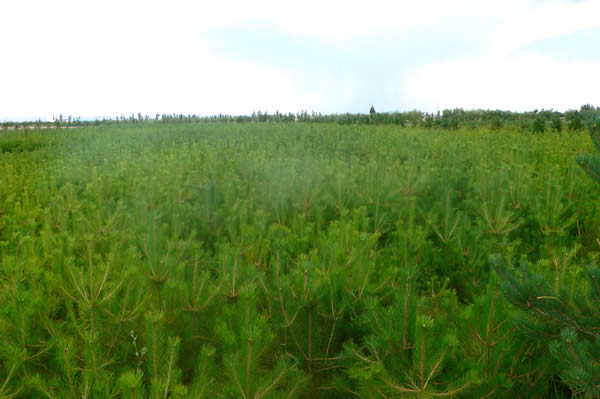
Irrigation techniques during the management period of Pinus tabuliformis seedlings
Cutting, layering, and buried-stem seedlings: The rooting and sprouting of these seedlings require a relatively large amount of water, especially at the stage when leaves have just begun to unfold but roots have not yet fully formed (that is, the false-survival period), when leaf transpiration is relatively high and soil moisture supply is relatively low; once the water supply is cut off, the plants will die, so timely irrigation is key. In the north, even more attention should be paid during dry seasons. The irrigation amount can be appropriately larger, but the water flow should be fine and slow, so that the impact of the water flow does not move the Pinus tabuliformis seedlings (especially cutting seedlings).
Division and transplanted seedlings: Because the root systems of these seedlings are injured during planting, the internal water supply of the Pinus tabuliformis seedlings becomes unbalanced, so water supply must be strengthened. After division and transplanting, irrigate three or four times in succession, with a relatively larger irrigation amount, and the intervals should not be too long.
Grafted seedlings: Grafted seedlings do not have a very large demand for water; it is enough to ensure the normal life activities of the rootstock. There should not be too much water, especially at the graft interface, where water must not accumulate, otherwise the wound will rot. Attention should also be paid when irrigation is necessary in dry weather.
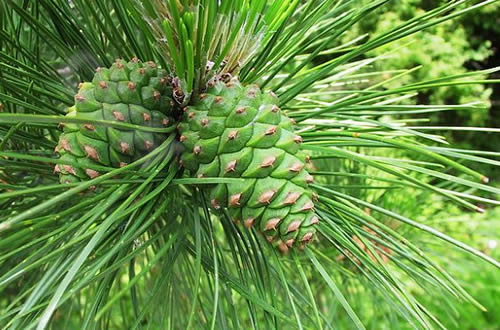
Main cold protection measures for Pinus tabuliformis seedlings in winter
1. Use a plow to plow the furrow (or bed path) into deep trenches, cover the soil turned up by the plow onto both sides of the ridge (bed), and carry out side irrigation on the ridge (bed) surface before the soil freezes, irrigating thoroughly and sufficiently, so that the Pinus tabuliformis seedlings and soil maintain sufficient moisture to meet the small amount of water consumption of the Pinus tabuliformis seedlings during overwintering and to avoid and reduce the occurrence of physiological drought.
2. Whitewashing for cold protection has a certain effect on the overwintering cold protection of Pinus tabuliformis seedlings. The specific method is: prepare a 1:1.5 1% Bordeaux mixture with increased lime content plus paste emulsion, and spray it on the Pinus tabuliformis seedlings. The spraying time is about before the soil freezes. Throughout the winter, the appearance of the Pinus tabuliformis seedlings is grayish white, which can both reflect sunlight and prevent rapid temperature changes, and also block leaf stomata, inhibit transpiration, protect the seedlings, and prevent diseases.
3. For evergreen conifer seedlings or broadleaf seedlings of some precious tree species and newly introduced tree species, when their growth is relatively weak, barriers can be set up for cold protection. In cold protection areas and heel-in areas, a cold protection barrier should be placed every 20 m-25 m using whole bundles of straw. The cold protection barriers should be removed in 2 stages within 3 days-5 days before lifting seedlings in spring, and should not be removed too early.
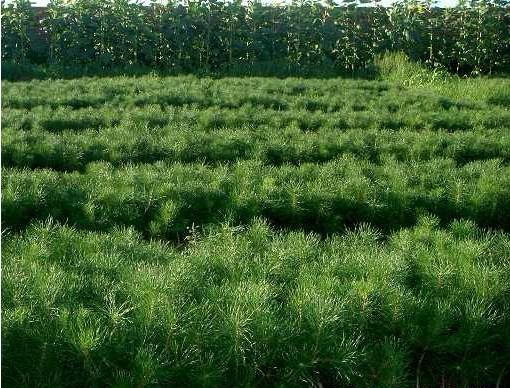
Because Pinus tabuliformis itself is an evergreen tree species, its planting and care methods are relatively simple. If any friends want to plant some tree species that are easy to keep alive in their courtyard, Pinus tabuliformis will be a good choice.