Winter Red Crabapple does not drop its flowers even in winter, making it truly a red beauty
Winter Red Crabapple is a type of crabapple with a very long flowering period that can also provide a flowering display in winter, so it can fill the gap left when the hundred flowers wither in winter, and it is loved by many people. Let us get to know it together below.
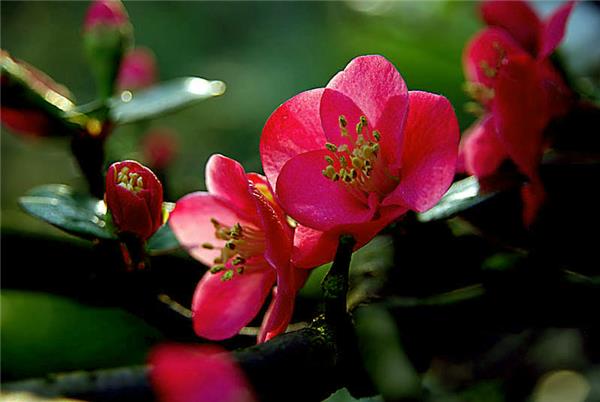
Introduction to Winter Red Crabapple
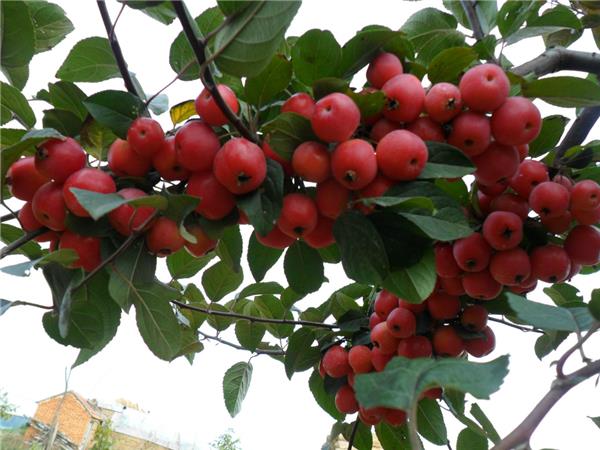
Morphological characteristics: Winter Red Crabapple, as one of the world's rare rare greening tree species for both flower and fruit viewing, was selected as a tree species by the Greening Committee of the 2008 Olympic Games. Genus: North American crabapple, Rosaceae, Malus, deciduous small tree. The Winter Red Crabapple tree can reach a height of 5-7 m; the crown is open, the branches are thick and strong, the leaves are thick and dark green, elliptical, with a rounded blunt tip and serrated edges. Palmately lobed, with short down on both sides when young, old branches purplish-brown, corymbose inflorescence: flowers in clusters of 5-12, calyx purplish-red, full bloom pink, flowering period in mid-month, self-pollinating, high fruit set rate, single fruit weight 6-10 g, diameter 2-3 cm, ripening period early November, the fruit starts from July: after turning from green to translucent golden yellow, it gradually transitions to red as the season deepens. When ripe, the color becomes completely dark red, and the fruit surface is clean and glossy, very beautiful.
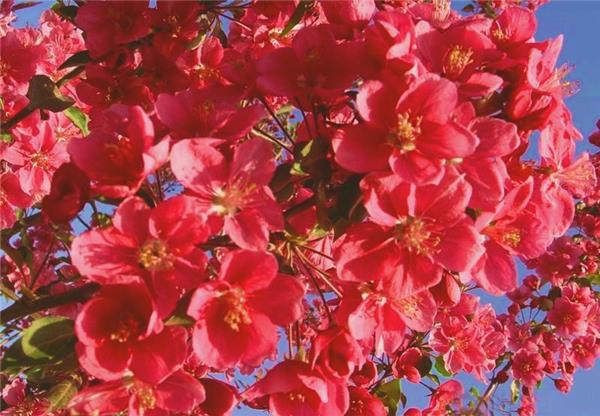
Growth habits: Propagation methods differ by type, including grafting, layering, cuttings, division, and seed propagation. It mostly prefers shady and moist conditions, and avoids high temperatures in summer; growth is poor when the temperature is above 32°C. Topdressing should be applied before flowering, and the amount of water should be gradually increased, while watering should be reduced after flowering. After planting, the soil should be kept loose and fertile regularly, and in autumn each year pond mud or fertile soil can be placed around the root zone. Prune once in spring, cutting off dead and weak branches, keeping the tree shape open and airy, with ventilation and light penetration. For fibrous-rooted types such as Wax Begonia, pruning after flowering is advisable to promote reblooming.
Ornamental applications: Winter Red Crabapple does not drop its fruit in winter and remains adorned until April of the following year, making it the variety with the longest fruit ornamental period in the crabapple family. Therefore, it perfectly solves the monotonous winter condition in landscaping landscapes. In the season of drifting snow, it can still be laden with fruit, truly making a beautiful scenic line.
Planting methods for Winter Red Crabapple
Propagation: Mainly by seed propagation, but also by layering or grafting. For sowing, collect seeds in October, air-dry with the fruit skin, cut open the fruit when sowing, and take out the seeds; the seeds can also be removed first, stored in sand over winter, and sown in spring the following year. Before spring sowing, the seeds must undergo 30 days to 100 days of low-temperature stratification to promote germination. Layering is mostly carried out in spring; small seedlings can be attached to the ground and pressed into the soil, while large seedlings can use the air-layering method. Spring layering and root cuttings. For grafting, crabapple or seedling stock can be used as rootstock, and cut grafting is done in spring. Graft before spring bud break or between July and September in autumn. Divide plants before spring bud break or after leaf fall in autumn or winter.
Soil: Winter Red Crabapple is not very demanding about soil, and slightly acidic soil is most suitable for planting Winter Red Crabapple. In autumn, after fertilizing, carry out appropriate soil renovation; cutting through the roots can promote the growth of Winter Red Crabapple, and when renovating the soil, pests hidden in the soil can also be killed, reducing the occurrence of pest damage, especially in rainy areas and environments with more weeds, where cultivation should be noted. Prevent soil compaction, as this will promote root respiration in Winter Red Crabapple. To obtain economic benefits from planting Winter Red Crabapple, it is still necessary to consider soil permeability and fertility. In places where the soil is unsuitable for crabapple, the planting of Winter Red Crabapple will be limited.
Care: Winter Red Crabapple has strong growth vigor, bears fruit two years after planting, and in three years the trunk diameter can reach 4.5 m, with abundant fruit. Planting time is suitable from after leaf fall in autumn to before bud break in early spring, with the best conditions being a cool and mild climate and deep soil. For the fruit yield of the following year, strong branches can be pruned in winter. Mainly prevent aphids and fruit borers.
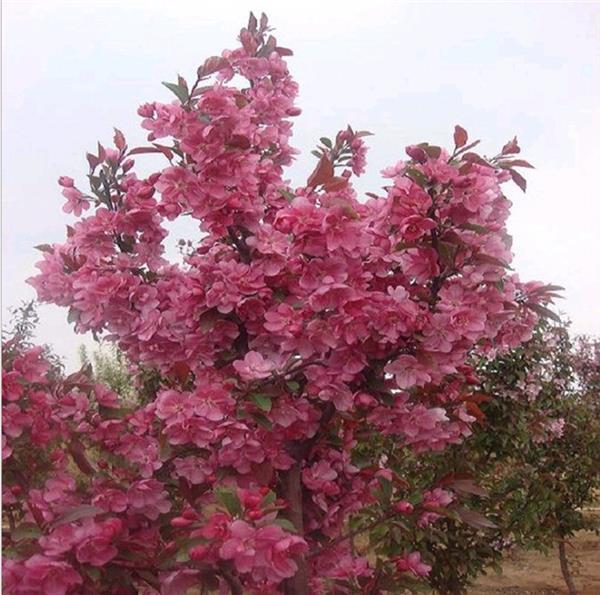
Winter Red Crabapple has a graceful plant shape and a long flowering period, with high ornamental value, and is especially suitable for planting on both sides of sidewalks, around pavilions, at forest edges, and beside waterside ponds, effectively enhancing the beauty of the surrounding environment. Of course, it can also be grown in pots, but measures such as ventilation and shading must be well managed during cultivation.