Lucky Bamboo Water Culture Methods and Experience Exchange
What exactly are the water culture methods for lucky bamboo? Many people who have witnessed the charm of growing lucky bamboo in water want to know. After all, we all want to keep beautiful things, so how exactly are lucky bamboo water culture methods carried out?
I. Lucky Bamboo Water Culture Methods
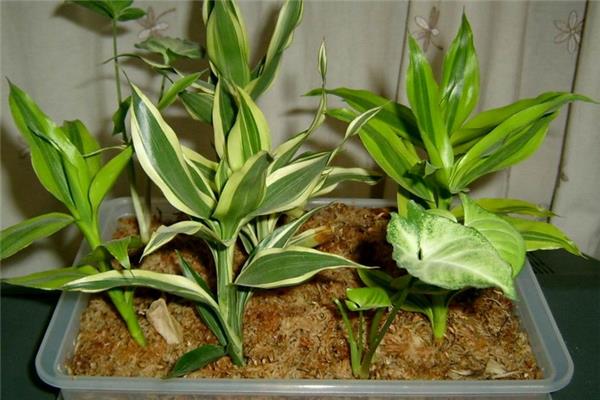
In spring, you can grow it in a pot with culture soil or wash off the river sand and grow it in water. During care, if there are rotten stems or rotten roots, they should be removed promptly, and the roots and stems should be soaked in a 75% chlorothalonil 1000-fold aqueous solution for 30 minutes, then rinsed with clean water and returned to water culture. If the plant has become very weak, it should be replanted in soil to restore its vigor.
The basic essentials are as follows:
1. Before placing it in water, remove the leaves from the base of the cutting and cut the base into a slanted opening with a sharp knife; the cut should be smooth to facilitate the absorption of water and nutrients. Change the clean water once every 3 to 4 days. Do not move its position or change its direction within 10 days. After about 15 days, silvery-white fibrous roots can grow.
2. After rooting, it is not advisable to change the water; only add water promptly after the water has evaporated and decreased. Frequent water changes can easily cause yellow leaves and wilted branches.
3. After rooting, apply a small amount of compound fertilizer promptly, and then the leaves will be glossy green and the stems sturdy. If fertilizer is not applied for a long time, the plant will grow weak and the leaf color will easily turn yellow. However, too much fertilizer should not be applied, so as to avoid "burning the roots" or causing excessive vegetative growth. In spring and autumn, applying compound fertilizer once a month is sufficient. According to reference materials, to prevent excessive vegetative growth in water-cultured lucky bamboo, do not apply chemical fertilizer; it is best to inject a few drops of brandy into the bottle about every 3 weeks, add a small amount of nutrient solution, and this can keep the leaves emerald green.
4. Do not place lucky bamboo next to a television or in places often blown by air conditioners or electric fans, so as to avoid dried tips and edges of the leaves.
II. Care of Lucky Bamboo
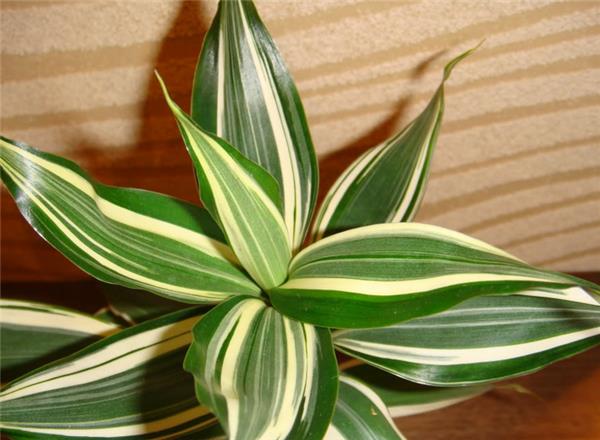
Lucky bamboo likes shade, humidity, and high temperatures; it is tolerant of shade, waterlogging, strong fertility, and cold; it likes a semi-shaded environment. It is suitable for growing in well-drained sandy soil or semi-muddy sand and alluvial clay, and the suitable growth temperature is 20-28°C. It can tolerate low temperatures of 2-3°C, but in winter it must be protected from frost. In summer and autumn, the high-temperature and humid season is very favorable for the growth of lucky bamboo and is its best growth period. It is not strict about light and is suitable for growing under bright scattered light. Too strong light or exposure to the sun will cause leaves to turn yellow, lose green color, and grow slowly. Therefore, when planting in the field, a shade net canopy 1.7-1.8 m high should be set up, with 75% shading being appropriate, to create a semi-shaded, scattered-light environment. Especially from April to September, avoid direct strong light, sun exposure, or excessive drought, otherwise the leaf surface is easily roughened, scorched, and weak in growth, and the leaves lack luster, reducing ornamental value. During the growing season, the soil should be kept moist regularly, and water should often be sprayed or sprinkled on the leaf surface to increase air humidity; after heavy rain, accumulated water in the field should be drained to prevent lodging. In winter, pay attention to cold protection and frost protection. Below 10°C, the leaves will turn yellow and wilt. At this time, the soil should be alternately dry and moist, but it should not be too dry or too wet; reduce watering and stop fertilizing. Characteristics: an evergreen subshrub-like plant. The plant height is more than 1 m, the plant is slender, upright, with branches on the upper part. The rhizome creeps horizontally and is nodular. Leaves are alternate or nearly opposite, papery, long lanceolate, with 3 to 7 obvious main veins, short petioles, and dark green color. The umbel inflorescence has 3 to 10 flowers born in the leaf axils or opposite the upper leaves, with 6 perianth segments, a bell-shaped corolla, and purple color. The berry is nearly spherical and black.
III. Is It Good to Put Lucky Bamboo in the Bedroom?
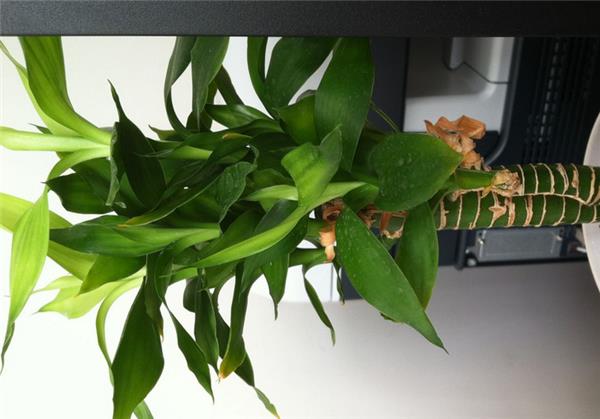
With a green leaf, lucky bamboo is elegant and dignified, implying wealth and good fortune, and placing it in the bedroom adds a touch of greenery. There is no need at all to worry about claims such as plants placed indoors at night "release carbon dioxide, compete with people for oxygen, and are harmful to health," which have no practical significance. According to scientific experiments, a potted flower consumes only 0.1 grams of carbon through respiration at night, so the total carbon dioxide released by ten potted flowers is no more than the carbon dioxide produced by smoking one cigarette. It can be seen that phenomena such as poor ventilation and stale air in the bedroom are completely unrelated to growing flowers.
The above has introduced lucky bamboo water culture methods, allowing us to accumulate experience with lucky bamboo water culture methods, and there are techniques to draw on when carrying out home water culture of lucky bamboo.