How to Make a Bonsai from Sageretia: Selecting the Stump and Caring for a Sageretia Bonsai
Sageretia (Sageretia thea) is a bonsai material with a rather long history. For the care of sageretia, generally you only need to pay attention to some everyday matters such as watering, fertilizing and temperature, and you can ensure its ornamental value.
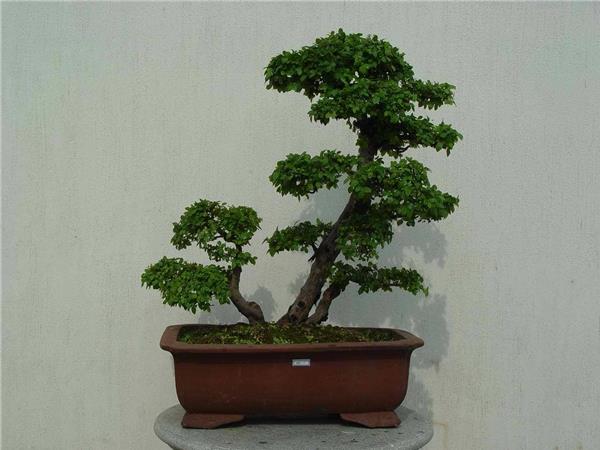
How to shape an old sageretia stump
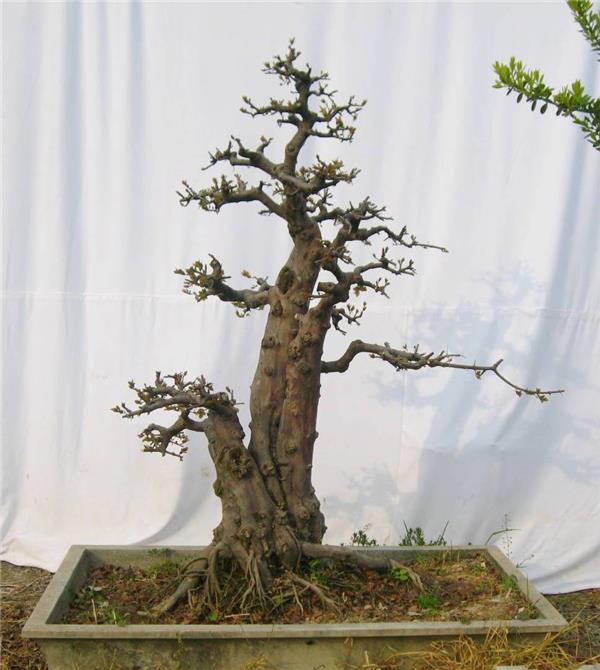
1. First, saw and cut the thicker branches and trunk according to their shape. Generally speaking, a single trunk should avoid being straight, so the curved, bent and twisted parts should be kept; if it is a double-trunk or multi-trunk style, attention should be paid to the variation in height, the contrast between straight and slanting, the difference in size and density, the variation in distance, and the echoing relationships between front and back, left and right; there should also be interweaving so that it is not monotonous and stiff but rich in variation. After the stump has been sawed and trimmed and has begun to take shape, further and more detailed processing and shaping are needed to make it more perfect. Pruning and binding are the main means of shaping and processing; the two methods can be used at the same time, and when necessary, the original branch pads can be adjusted so that they conform to the balance of the composition.
2. When wiring pads, a tree stump should not have two branch pads of the same size and shape existing together, and symmetry between front and back, left and right should be avoided. The branch pads on the lower part of the stump should be larger than those on the upper part. In addition, there should be a relationship of response between one branch pad and another. Each pad should take a natural form. For the bending of branches, lead wire and coir rope are generally used to make them bend into an irregular "S" shape; after bending, the branches should still retain their natural growth tendency and the beauty of their natural branch form.
Care methods for a sageretia bonsai
Watering: Sageretia likes a moist climate environment and requires the relative air humidity of the growing environment to be 70-80%. If the relative air humidity is too low, the lower leaves of sageretia will turn yellow and fall off, and the upper leaves will lose their luster. Potted sageretia should always keep the potting soil moist; especially in the high temperatures of midsummer and in dry weather, pay attention to watering and spraying frequently to prevent the potting soil from drying out.
Fertilizing: During the growing period of a sageretia stump bonsai, except during the plum rain season, thin cake fertilizer water or manure water should be applied frequently to make the branches and leaves emerald green and glossy and the growth vigorous.
Temperature: Because sageretia originates from tropical regions and likes a high-temperature, high-humidity environment, it has very strict requirements for winter temperature. When the ambient temperature is below 10°C, sageretia stops growing, and when frost occurs it cannot overwinter safely.
Light: Sageretia likes a semi-shaded environment; in autumn, winter and spring it needs sufficient sunlight, while in summer it should be shaded by more than 50%. When caring for sageretia indoors, place it in a bright place as much as possible, such as a well-lit living room, bedroom or study. After caring for it indoors for a period of time, move it outdoors to a shaded place for a period of care; alternating in this way allows it to grow well.
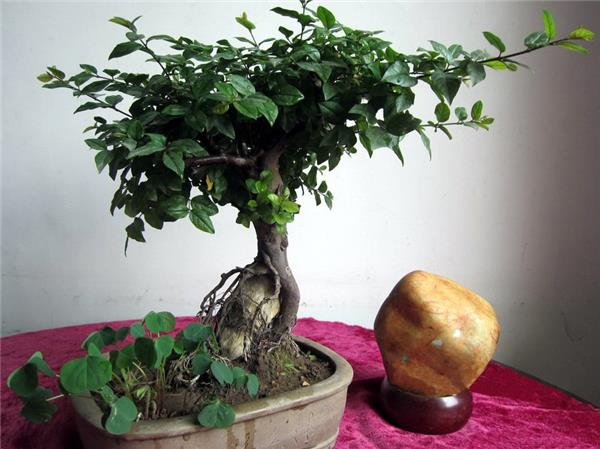
Pruning: Sageretia is very tolerant of pruning. After autumn each year, a shaping prune can be carried out, thinning out some overly dense branches and leaves and cutting off all kinds of messy branches or leggy branches, so as to maintain a certain shaping posture and promote lush branches and leaves. Sageretia has strong sprouting ability, so pinching should be carried out in time; this can make the axillary buds sprout side branches, and the more times you pinch, the denser the branches and leaves become.
Repotting: Carry it out once every 2-3 years, preferably in spring from February to March before budding. In conjunction with repotting, gradually carry out root-raising treatment. Replace more than 1B2 of the compacted old soil, and place base fertilizer at the bottom of the pot.
Pest and disease control: The main problems harming sageretia are insect pests. Longhorn beetles harm the trunk, and Bordeaux mixture can be applied; scale insects suck the tree sap and can be killed by brushing them off by hand.
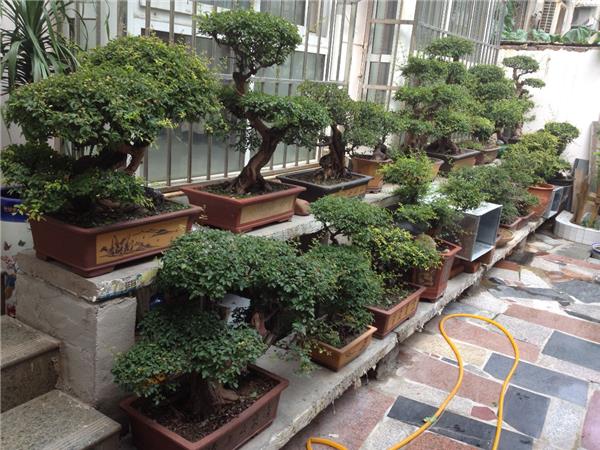
In addition, note that the digging up of old sageretia stumps is best done in spring from February to March before budding. When digging them up, be careful as well, to avoid damaging their roots and causing the premature death of the plant; this is also fundamental to ensuring its healthy growth.