Precautions for Planting and Caring for Dogwood and Methods for Pest and Disease Control
Dogwood is a plant that combines ornamental value with medicinal value. Because it mostly grows in mountainous areas, people also call it "mountain dogwood." It is a plant with very high cultivation value.
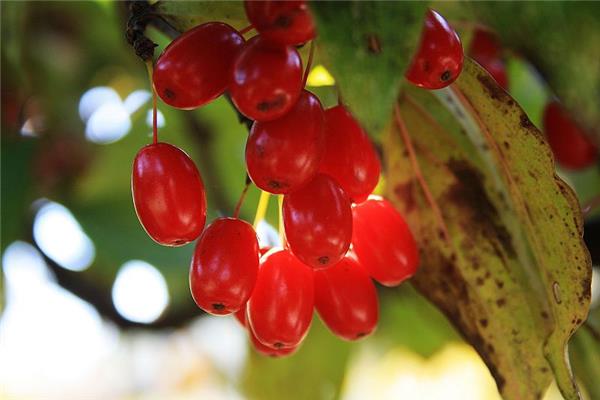
Dietary Therapeutic Effects of Dogwood
Sour and astringent in taste, slightly warm in nature. It enters the liver and kidney meridians. Moist in quality, it astringes and descends.
1. Tonifies the kidneys and benefits the liver, astringes essence and stops seminal emission. This product is sour and astringent and has a action; it nourishes the liver and kidneys and secures the kidneys and astringes essence. It is suitable for treating symptoms such as soreness and weakness of the waist and knees, seminal emission and slippery discharge, dizziness and tinnitus, and excessive menstruation caused by liver and kidney deficiency.
2. Restrains sweating and secures collapse. Frequent urination, diarrhea before dawn, incessant spontaneous sweating, metrorrhagia and metrostaxis, and palpitations.
3. This product is sweet, sour, warm, and moistening, mainly entering the liver and kidneys. It can both tonify essence and assist yang, and is especially good at securing and astringing the lower burner. It is a key medicine for liver and kidney deficiency and instability of the lower yuan.
4. Food incompatibilities: This product is incompatible with Platycodon grandiflorus (balloon flower), Saposhnikovia divaricata (siler), and Stephania tetrandra.
Guidance on Preparing Dogwood
Taken in large doses (30-60 grams), this product can treat the pattern of profuse sweating with yang collapse and impending desertion, and can be used together with ginseng and aconite.
For insufficiency of liver and kidney essence and blood with symptoms such as dizziness and blurred vision, tinnitus and deafness, soreness and weakness of the waist and knees, and steaming bone tidal fever, it can be combined with prepared rehmannia, Chinese yam, and tree peony bark; for depletion of kidney yuan and failure of storage with symptoms such as seminal emission and slippery discharge, it can be combined with dodder seed, schisandra fruit, calcined dragon bone, and calcined oyster shell; for qi deficiency of the lung and kidney and instability of defensive yang with incessant virtual sweating, it can be combined with ginseng, astragalus, prepared rehmannia, white peony root, and schisandra fruit.
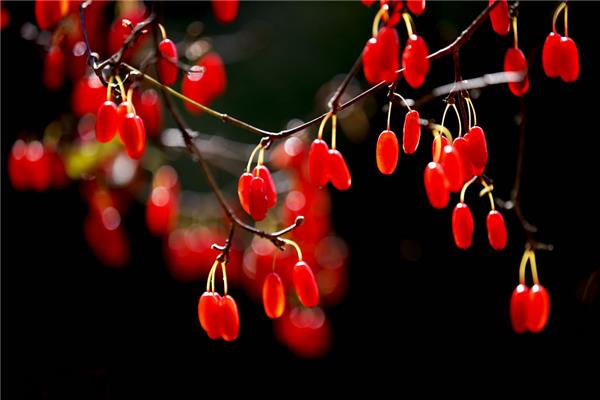
Precautions for Planting and Caring for Dogwood
Select excellent mother trees for seed collection that are robust in growth and free of pests and diseases, and begin collecting when the seeds are fully mature around September. Dogwood seeds have a deep dormancy characteristic; the seed stone is hard and contains a transparent mucilaginous resin that is impermeable to water and air, affecting seed germination. Therefore, seed pre-germination treatment must be carried out before sowing. Treatment methods include chemical treatment, stratification for germination, composting with human feces and urine, and burning on the seedbed surface.
Select sandy loam with flat terrain, fertile soil, and good drainage as the nursery site. In winter, apply sufficient base fertilizer and plow deeply; barnyard manure and plant ash are best for base fertilizer. Before spring seedling raising, shallow plow, harrow level, and then prepare the land into beds. For nursery land prone to underground pests such as mole crickets and white grubs, soil disinfection should be carried out when preparing the land into beds. Dogwood Propagation Methods
Spring sowing is usually carried out from February to March after the soil thaws, while autumn sowing is mostly carried out from September to November before the soil freezes. Drill sowing is used, with row spacing of 20 cm to 30 cm and furrow depth of 4 cm to 5 cm. After watering in the furrow and sowing, cover with soil 2 cm to 3 cm deep and place wet grass on top.
About 25 days after sowing, seedlings can emerge. When 70% of the seedlings have emerged, remove the covering grass from the seedbed in 2 to 3 stages. When the seedlings are more than 10 cm tall, thinning and final spacing can be carried out; at 20 cm, apply an appropriate amount of fertilizer; after the seedlings enter the rapid growth period in July, strengthen fertilizer and water management. Entering September, in order to accelerate lignification, stop applying nitrogen fertilizer and increase the application of phosphorus and potassium fertilizers. When the current-year seedlings reach 60 cm to 100 cm in height, they can be removed from the nursery.
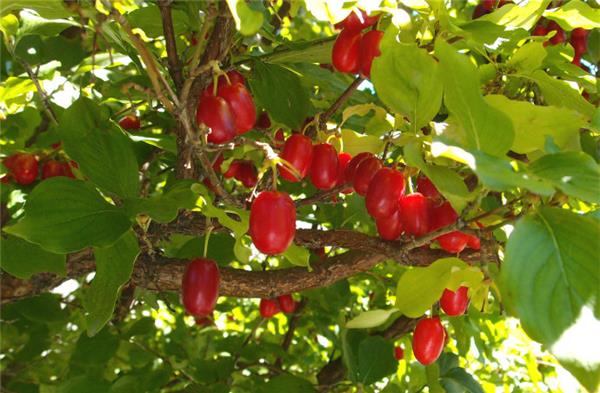
Pest and Disease Control of Dogwood
Dogwood borers. A very serious insect pest of dogwood is the mountain dogwood borer. It is a kind of caterpillar that tunnels into the tree trunk. Weak branches and old trees are the most susceptible to borers. If you notice liquid dripping from the dogwood tree, it may be a relatively obvious symptom. Once destructive pests such as borers are inside the tree, they are difficult to eradicate.
Scale insects. Scale insects are annoying small insects that affect the vigorous growth of dogwood. They can secrete a sugary liquid called honeydew, which can cause leaves to drip during weather with heavy rainfall. Large-scale infestations are more destructive than other insect pests. Using soap is an effective insecticidal treatment for this problem.
Tree aphids. Aphids usually affect ornamental trees, and they will suck the sap of dogwood. They also secrete honeydew, which can be easily recognized. Neem oil is a good way to control aphids on trees, or you can use a homemade organic control solution.
Dogwood sap. Not all dogwood problems are the result of pests and diseases. Dogwood sap can also be the result of improper pruning. Sometimes dogwood is injured for other reasons, such as storm damage. Because dogwood is known to "bleed," sap is released in response to the wound. In addition, you should prune your dogwood earlier in the summer to avoid injury and remove any weak or older branches.
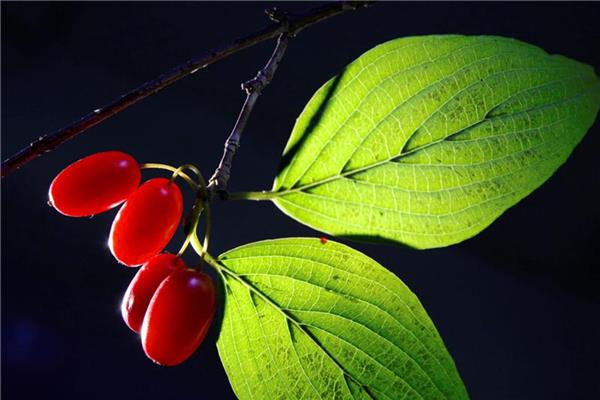
In addition to large-scale planting and cultivation in the open air, dogwood can also be propagated by cuttings through the method of taking cuttings. This method can be used in potted cultivation as well, and can also greatly enhance the aesthetic appeal of the home.
Dogwood can also be propagated by cuttings through the method of taking cuttings. This method can be used in potted cultivation as well, and can also greatly enhance the aesthetic appeal of the home.