How to care for a dichondra lawn so it stays disease-free
When caring for dichondra, we must be sure to weed, fertilize, irrigate and drain it at the right times, so that it does not pick up pests and diseases and lose the qualities it originally had.
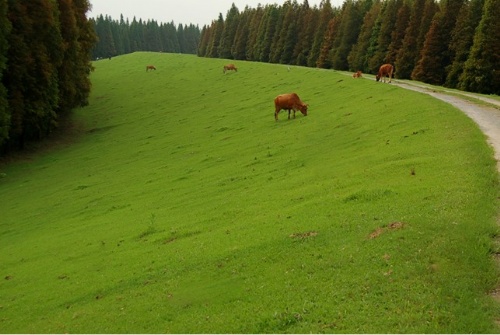
Planting and care of a dichondra lawn
Planting: Dichondra can be propagated either by seed or vegetatively, and its creeping stems are the usual method. Because dichondra spreads quickly along the ground, spot sodding is generally used: pieces of turf 8 to 10 cm long and 3 cm thick are laid out in spots on the planting site, at 20 to 25 pieces per sq m. After laying, water thoroughly; once no water stands on the surface, pat it flat with a wooden board so the turf makes close contact with the soil. The soil in the gaps between the sod pieces should be loose and slightly higher than the turf surface, which helps it knit into a continuous cover quickly.
Weeding: Because of various factors, and because the site already has a large weed seed bank, dichondra lawns generally suffer from a certain amount of weed infestation. Newly established lawns in particular have a greater variety and quantity of weeds, and if these are not controlled in time they will seriously affect the quality of the lawn. Before dichondra has completely covered the ground, weeds must be removed 2 to 3 times; this is the key to growing good dichondra. It is worth noting that herbicides work best when applied at the weed seedling stage.
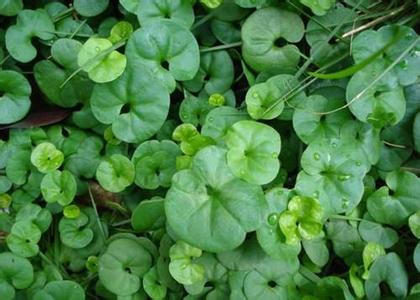
Fertilizing: Because dichondra creeps along the ground and its leaves are fairly broad, fertilizing is difficult. If fertilizing technique is not handled strictly, it can cause serious fertilizer burn. Generally speaking, if you use a highly soluble fertilizer, it is best to dissolve it first and then spray it with a sprayer; if you use a fertilizer that does not dissolve immediately, then after fertilizing you must water heavily, washing the fertilizer that has landed on the leaves down into the soil and dissolving it as quickly as possible, which reduces the degree of burn; alternatively, apply the fertilizer first, then sweep it under the leaves with a broom, and water afterwards. At the same time, avoid fertilizing during high temperatures.
Watering: Dichondra likes shade, and to keep it growing lushly with normal leaf color from June to September, water must be supplemented appropriately during dry periods. Each watering should penetrate to a depth of 10 cm; watering should be done in the evening, and automatic sprinkler irrigation should be used wherever possible.
Spiking: In September, when the established sod pieces show dense creeping stems or compacted soil, a spiking machine or garden fork should be used to punch holes in the turf, improving soil aeration, cutting some of the dichondra's creeping rhizomes and stimulating new root growth. Generally, where creeping stems are dense and the soil is only mildly compacted, the holes should be 2.5 cm to 5 cm deep; if the soil is severely compacted, the holes should be no less than 8 cm deep.
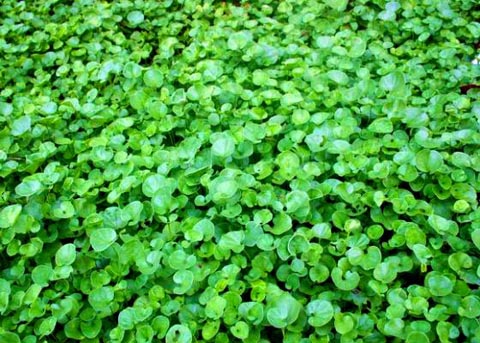
Pest and disease control for dichondra
1. Rust: the main symptom is reddish-brown powdery scabs or striped patches on the stems and leaves, which later turn dark brown. Rust spores generally begin to spread in April, appearing first on the leaves, and in summer spread to the whole plant; in severe cases the lawn can wither and die off in large patches. Control begins with avoiding nitrogen fertilizer in summer, and secondly with chemical control. You can use 20% triadimefon emulsifiable concentrate at 30 to 40 ml per mu, or 40% carbendazim suspension concentrate at 75 to 100 ml per mu.
2. Meadow moth: this insect causes serious damage to lawns, boring into the grass roots and stems so that the plant's water supply is cut off, and the stems and leaves turn yellow and eventually die. Control methods include catching and killing with black light traps, baiting with a sugar-vinegar solution, or spraying with 40% chlorpyrifos at 1000 times dilution.
3. Atractomorpha sinensis (pointed-head grasshopper) chews the leaves and tender stems, and in severe outbreaks the stems and leaves are completely eaten; damage is worst from June to August. For control, spray 0.5 kg of trichlorfon or dichlorvos per mu diluted in 500 kg of water, or gather people to hand-pick and kill them in the morning.
4. The black cutworm feeds exclusively on young tender stems and leaves, preventing the lawn from growing normally and, in severe cases, killing plants in large patches. For control use 50% diazinon emulsifiable concentrate at 50 to 100 ml per mu, or 25% carbaryl wettable powder at 200 to 250 g per mu.
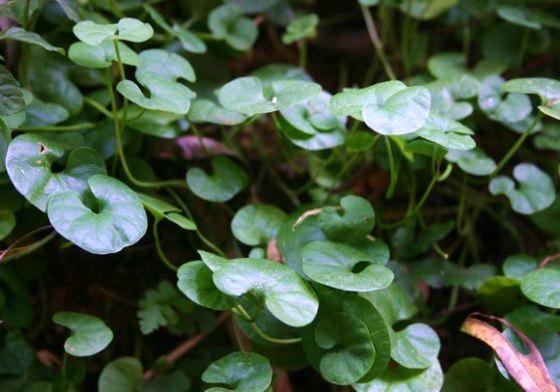
Generally speaking, soil and air that are too damp easily cause dichondra to pick up pests and diseases, and of course too dry is not acceptable either, so when growing it, the first thing to grasp is the "degree" of reasonable watering, reasonable fertilizing and weeding. Only in this way can its high quality be guaranteed.