What are the cultivation methods and precautions for large-flowered roses
Although the cultivation methods and precautions for large-flowered roses are fairly comprehensive, they are all easy to understand. Even beginners can easily learn how to grow large-flowered roses after studying them.
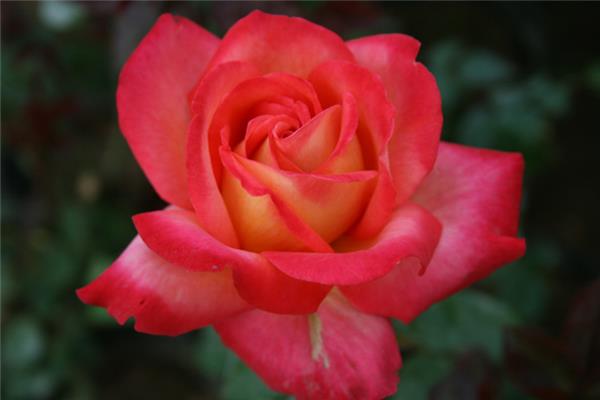
Cultivation methods and precautions for large-flowered roses
Seed selection: The requirements are cold resistance, strong stress resistance, resistance to pests and diseases, vigorous growth, stiff peduncles, abundant flowering, early flowering, large and brightly colored flowers, good flower form, long individual flowering period, and popularity in the market. Varieties with tightly spaced leaves, a short and sturdy plant shape, and shorter, stiffer peduncles are better and more suitable for pot cultivation. In addition, new varieties should be introduced every year to replenish the population and eliminate inferior old varieties. For commercial cultivation, there is no need to have too many varieties; around one hundred mainstay varieties are enough, while other distinctive and rare varieties favored by veteran gardeners can be appropriately collected.
Planting: The plant and row spacing for large-flowered rose cultivation varies according to the purpose of cultivation. For variety nurseries used for breeding or scientific research, the commonly used plant and row spacing is 150 cm x 80 cm. Before planting, the seedlings need to be pruned once, cutting off damaged branches, diseased branches, and weak branches. Damaged or overly long roots should also be cut off. After pruning, apply a callus and antiseptic film to the wounds so they heal quickly.
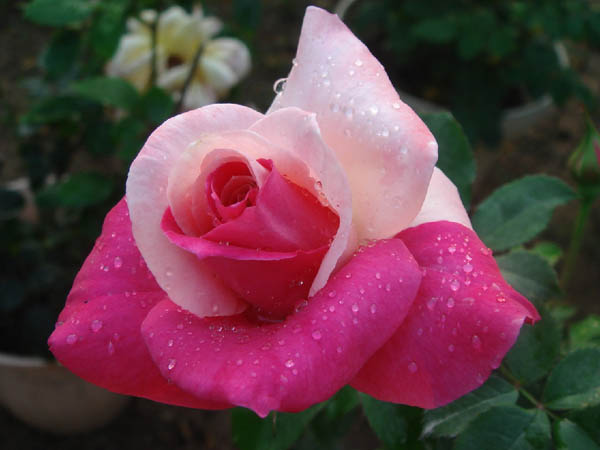
Environment: Large-flowered roses are light-loving plants. During cultivation, choose a sunny location and avoid planting beside tall buildings, under tree shade, or on the shady side of hillsides. The ideal soil for cultivating large-flowered roses should have good granular structure and be rich in organic matter.
Watering: After the Beginning of Spring, to prevent tender leaves from wilting, you can feel the rim of the pot with your finger. When the sand about one finger-joint deep on the surface is dry, it is time to water. Spray with a watering can and water thoroughly in two passes. It is best to keep a record after each watering, and also note the estimated date of the next watering. After a few times, you can find the general pattern. In short, do not let it dry out, do not let the roots become waterlogged, and do not let it grow leggy.
Fertilizing: The fertilizer requirement is not large. Basal fertilizer has already been applied during soil preparation, so there is no need to fertilize the soil again before transplanting the established seedlings, but foliar feeding is necessary. That is, one month after cuttings, apply foliar fertilizer once every half month, alternating between 0.3% urea liquid fertilizer and 0.2% potassium dihydrogen phosphate liquid fertilizer, to promote rooting.
Temperature control: A plastic shed can regulate the temperature and humidity of the soil and air, and a shade net can prevent direct sunlight and lower the temperature. The optimal temperature for large-flowered rose rooting is 20°C to 25°C. When the temperature is too high, in addition to covering with a shade net, you can also water to cool down and ventilate to cool down.
Overwintering: During the long winter of more than 5 months, to ensure the seedlings "sleep" safely and comfortably, special care is required. After Cold Dew, before the cold wave arrives, move the seedlings into a greenhouse and ensure they receive at least 4 hours of sunlight daily. After that, management consists of watering and temperature control. The daytime temperature should be 3-4°C, and preferably not exceed 5°C, otherwise ventilate promptly to cool down; the nighttime minimum is -4°C.
Other varieties of roses
Miniature rose: Among roses there are large-flowered roses, and of course there are also miniature roses. Miniature rose plants are short and highly branched, generally no more than 25 cm tall, with small and narrow leaves and smaller flowers about 3 cm in diameter, rose red, double or single. This kind of miniature rose is suitable for potted plants and bonsai.
Color-changing rose: A rose that changes color; the name alone sounds very appealing. The so-called color-changing rose does not mean the rose itself automatically changes color. Its color change occurs because during the flowering process the acidity and alkalinity absorbed by the corolla are inconsistent, resulting in a color-changing effect when it blooms because of differences in timing.
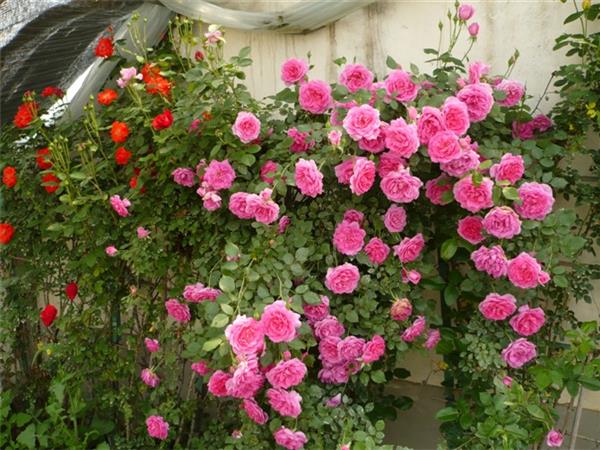
Climbing rose: Climbing roses have very strong resistance, and their canes develop extremely quickly and grow vigorously. A single climbing rose can produce 7-8 main branches in a year, and each main branch can further branch out. It has disease resistance. Climbing roses bloom continuously through the four seasons, with brilliant colors, a delicate fragrance, and a long flowering period. They can be used for landscapes such as flower balls, flower columns, flower walls, flower seas, arch shapes, and corridor shapes.
Groundcover rose: The growth form of groundcover roses is different from that of ordinary roses. Groundcover roses grow in a creeping, spreading state and have a very strong tillering rate. Each plant can produce more than 50 branches in a year, and each branch can bear 500-100 flowers. It is also a plant tolerant of cold and high temperatures.
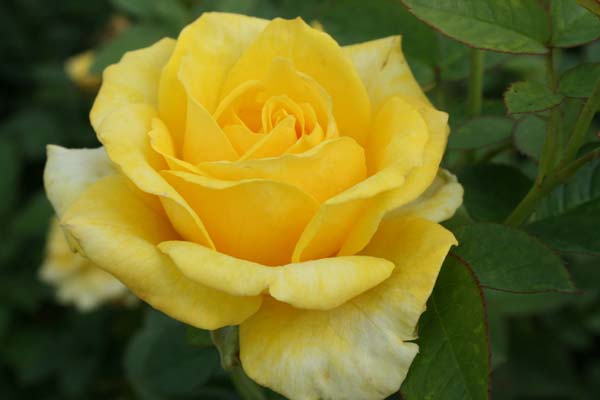
No matter which variety of rose it is, all have high ornamental value, and the large-flowered rose is undoubtedly outstanding among them. If there are friends who want to use some flowers to enrich their lives, then the large-flowered rose will be a good choice.
And the large-flowered rose is undoubtedly outstanding among them. If there are friends who want to use some flowers to enrich their lives, then the large-flowered rose will be a good choice.