Characteristics and Cultivation Methods of Ruby Crabapple
Ruby crabapple is a plant with very high ornamental value. When grown in the ground, with proper care and cultivation, it can grow vigorously and lushly, adding a great deal of color to our living environment.
Characteristics of Ruby Crabapple
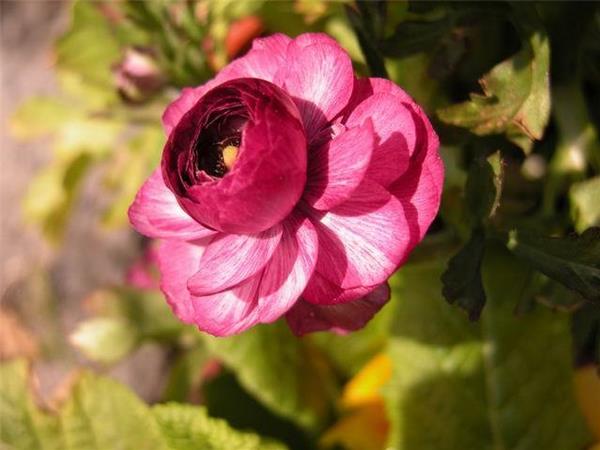
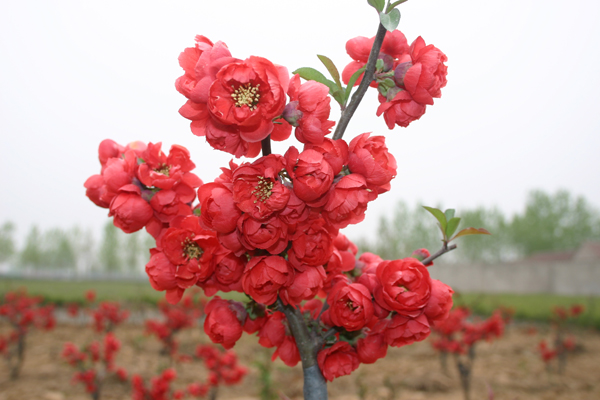
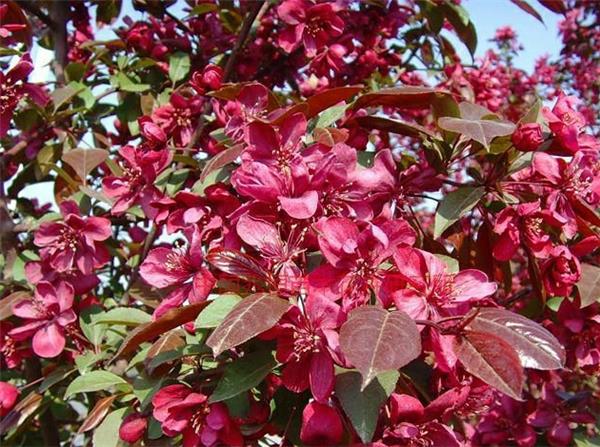
1. Good color: Ruby crabapple displays an overall red appearance throughout its entire growth period, with distinct layers of red. Its new buds are blood red, branches are bright red, leaves are purple-red, fruits are also purple-red, and flowers are pink. The whole plant has good color and a waxy, glossy sheen.
2. Strong adaptability: Ruby crabapple is highly adaptable and can grow well even in poor soil; it tolerates mild salinity and alkalinity, growing vigorously at a pH below 8.5; it is also cold-resistant and easy to prune and shape.
3. Easy to propagate: Ruby crabapple is generally propagated by sowing and grafting, and grafting can be done at any time, in spring, summer or autumn.
4. Simple to plant: Ruby crabapple has strong adaptability and does not have great requirements for soil, water, sunlight, fertilizer or temperature. Generally, as long as it is planted in the soil and given some water, it can survive.
Cultivation Methods of Ruby Crabapple
Sprouting: In late November, before the ground freezes, dig a pit in a location with high terrain and good drainage, 70 cm deep and 80 cm wide, with the length depending on the amount of seeds. In early spring, sprinkle some water on the seed pile to prevent it from becoming too dry. After the soil thaws, check the temperature and humidity in the pit weekly; the temperature in the pit should be kept at 0-5°C. From late March to early April, take the seeds out and place them in a greenhouse at 20-25°C to sprout. Once the seeds show white sprouting, they can be sown.
Sowing: Use wide-and-narrow row sowing, with wide rows at 60 cm and narrow rows at 30 cm. Lay 3 strips of film 60-70 cm wide in each bed, punch holes in the film every 5-6 cm, and sow 2-3 treated seeds per hole. The average sowing rate is about 1.5 kg per mu. After sowing, cover the film along the sowing rows with soil 5 cm wide and 2 cm thick. Seedlings emerge in about 1 week. Water only when the seedlings are 5-6 cm tall.
Thinning: When the spring seedlings grow 4-5 true leaves, promptly thin out seedlings that are too dense, and fill in gaps where seedlings are missing or rows are broken. Generally, thinning is done in 2 rounds. When the seedlings are 3-4 cm tall, carry out the first thinning. When the seedlings are 5-6 cm tall, finalize the spacing, removing the weak and keeping the strong, leaving about 15 seedlings per meter, with a yield of over 10,000 seedlings per mu.
Watering: After the seedlings have all emerged, when the leaves show wilting at noon, irrigate immediately. After that, irrigate once every 10-15 days, and stop irrigation in early September. Irrigate 9-10 times throughout the year.
Fertilizing: In the first year after planting, apply inorganic fertilizer in June, 50 g per tree, by digging a hole beside the tree and applying it, then water. Make sure to loosen the soil once after each watering. In the second year after planting, apply inorganic fertilizer twice a year, generally once at the end of May and once in mid-July, about 20-30 g per tree each time. At the same time, apply decomposed organic fertilizer once before the first cultivation.
Pruning: In the year of planting, it is the recovery period, so the amount of pruning should not be too large. In the second year, promptly cut off dry and withered branches. To cultivate scaffold branches, generally select and keep 4 pairs of healthy, evenly branched side branches as main branches, and remove the remaining side branches. It is best to have strong lower branches and weak upper branches. The main branches should form an angle of 40°-60° with the central leader, and the main branches should be staggered from each other, with a distance of 30-40 cm between each pair of main branches in each direction. The ratio of crown width to clear trunk height is generally 2:1, so that the whole plant forms a conical crown.
Weeding: For seedlings transplanted that year, during the growth period, cultivate and weed promptly in combination with irrigation. Generally, in mid-July, cultivate the soil, remove weeds, and keep the soil loose and weed-free, preventing weeds from competing with the seedlings for water and nutrients. At the same time, cut off diseased and withered branches of the seedlings.
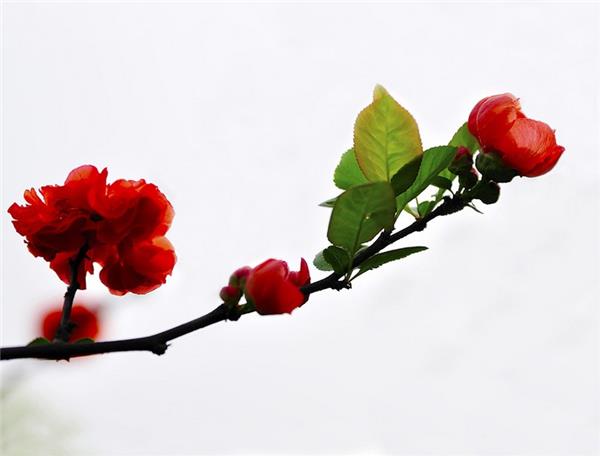
The flowers of ruby crabapple are as brilliant and eye-catching as rubies, and it has very high cultivation value. In addition to the ground-planting methods introduced above, it can also be grown in pots to beautify indoor environments.