How to correctly and scientifically carry out weeding care for plants
Using herbicides for weeding is one of the most common methods, but not all herbicides can be applied to weeding work under various conditions, and mastering the timing of weeding is also very important.
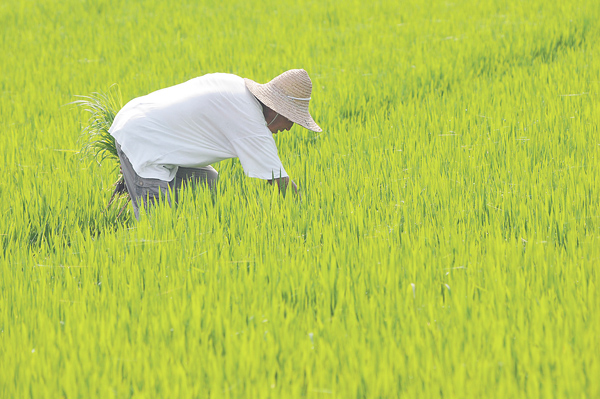
Why spring is the key period for garden weeding
1. Spring is the season when almost all weeds converge, and it is also the most critical period for "weeding early and weeding small." As temperatures gradually rise, overwintering weeds such as flixweed (Descurainia sophia), shepherd's purse (Capsella bursa-pastoris), cleavers (Galium aparine), and annual bluegrass (Poa annua) begin to enter a stage of vigorous growth; the perennial roots of weeds such as dandelion (Taraxacum), Japanese bindweed (Calystegia japonica), and field bindweed (Convolvulus arvensis) begin to sprout, turn green, and grow out of the ground; around March is the key period when various spring-emerging weeds germinate in concentrated fashion.
2. In spring, there are many methods for controlling newly sprouted weeds, the cost is low, and the effect is good. How much herbicide to mix with how much clean water and spray over how large an area is basically a set value; if the water volume is too large, the herbicide concentration becomes dilute, and it is not an effective weed-killing concentration, so the weeding effect will inevitably be poor; if the water volume is too small, the effective concentration increases, the weeding effect is very good, but it is very easy to cause herbicide damage, and the cost will also increase.
3. Weeding in spring, with one kill and one seal, and with appropriate measures, makes summer and autumn easy. Closed weeding, also called pre-emergence weeding. For turfgrass that has formed a lawn, before the main weeds germinate, use Bobingle to carry out soil sealing; the chemical film formed by the herbicide on the soil surface can not only contact-kill grass-family weeds, broadleaf weeds, and sedge-family weeds that germinate through seeds, but also has low cost and high safety, and can maintain an effective period of 2-3 months.
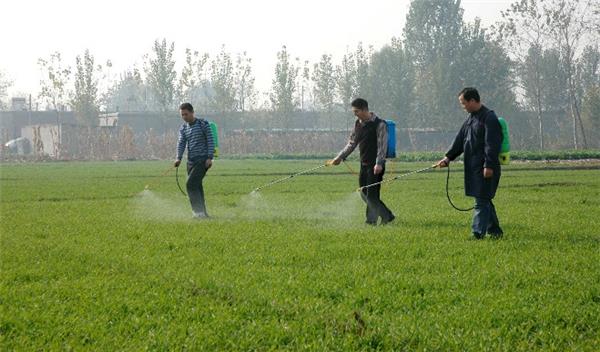
Commonly used herbicides for garden weeding
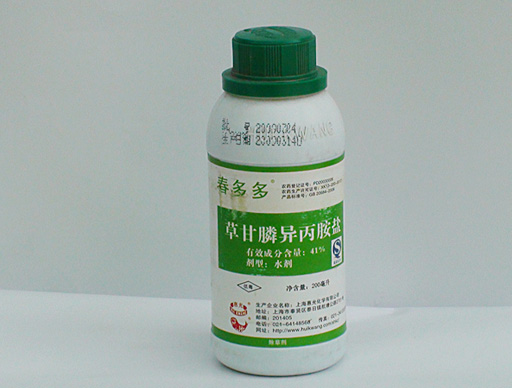
Chunduoduo: It is a new type of systemic conductive broad-spectrum non-selective post-emergence desiccant herbicide. It mainly inhibits enolpyruvylshikimate and phosphate synthase in plants, thereby inhibiting the conversion of shikimate to phenylalanine, tyrosine, and tryptophan, interfering with protein synthesis and leading to death.
Gedicao (Goal): It is a selective contact-type soil treatment herbicide. It mainly controls pre-emergence weeds by the soil treatment method, and can also be used during the weed seedling stage by stem-and-leaf spraying to kill emerged weeds; while killing emerged weeds, the liquid that falls into the soil can also control weeds that have not yet germinated.
Gaicaoneng: It is a highly selective post-emergence herbicide. It can be used both as a stem-and-leaf treatment and as a soil treatment; when carrying out stem-and-leaf treatment, the liquid that falls onto the soil still has a weed-killing effect.
Chungaiguo mixture: It is a mixture of three herbicides, Chunduoduo, Gaicaoneng, and Goal, mixed in a certain proportion; it gives play to the respective advantages of the three herbicides while overcoming their respective weaknesses.
Herbicides that should be used with caution in fields of flowers, plants, and nursery stock
1. Post-emergence herbicides for clearing broadleaf weeds. Bentazon, Kexiuling, Bacaodi, Shitalong, and Huhuang, among others; these herbicides are not permitted for application in nurseries, gardens, or Zoysia matrella lawns.
2. Herbicides with a relatively long effective period. For nurseries where we have already applied these herbicides, flowers and nursery stock cultivated after 3 years will all possibly suffer damage.
3. Post-emergence herbicides for killing grass-family weeds. For example, Jinghecaoke, Pente, Nabujing, and Shouletong, among others; when this type of herbicide kills grass-family weeds, it will also harm the lawn.
4. Herbicides with the ability to poison farmland soil. They will cause deterioration of soil structure and the appearance of compaction, are extremely unfavorable to the aeration of the soil around the root system of lawn crops, and further cause lawn plants to turn yellow.
5. Herbicides with very high toxicity or that can cause cancer. Paraquat and sodium pentachlorophenate are highly toxic and are absolutely prohibited from being applied in nurseries and on lawns.
6. Herbicides with drift pollution. If herbicides that drift relatively easily are applied on lawns, they will seriously affect the normal growth of surrounding flowers, plants, and nursery stock.
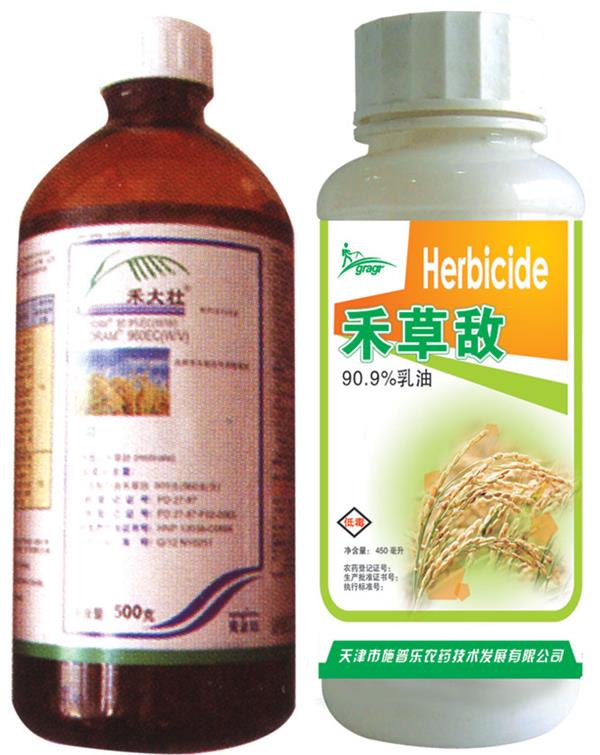
If herbicides are used improperly, they will pollute and harm the environment and plants; not only will they fail to protect them, but they will instead affect their growing environment. Therefore, when using herbicides, one must be rigorous and careful, and no omissions are allowed.