A Detailed Guide to Making and Caring for Juniper Bonsai
Cuttings propagation of juniper is a relatively cost-effective propagation method, so it is widely used. Making juniper bonsai is relatively simple, so let's learn about it together.
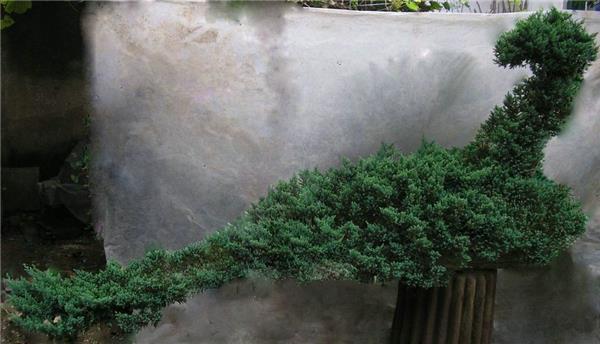
Juniper Cutting Propagation Techniques
Softwood cutting method: In mid-to-late July, select current-year leafy branches as cuttings, 10-15 cm long, and remove all the needles at the base 2-3 cm. Use a blade to cut a fresh wound at the base of the cutting, dip it quickly in a 500 ppm naphthaleneacetic acid solution, and then insert it into a sand bed. Density 6×6 cm, depth 3 cm.
Management after cutting: After inserting, use No. 8 galvanized wire or steel bars to set up an arch frame across the bed every 40 cm, with the top of the arch about 50 cm from the bed surface, cover it with plastic film, and press the edges tightly with bricks. Install a misting device inside the shed, and cover the shed with reed curtains for shade; the temperature inside the shed should be kept below 35°C, and when it exceeds 35°C, spray water to cool it down. The relative air humidity inside the shed should be above 85%, and when it is low, replenish water in time. After 30-40 days the cuttings begin to root, and the general survival rate reaches over 95%.
Transplanting method: Before planting, dig a hole 40 cm × 40 cm × 50 cm, place the seedling into the hole, and when filling the soil to 2/3, gently lift the seedling, then press it firm with your foot, continue filling soil until the pit is full, press firm again, and water thoroughly. After 6-10 days, water thoroughly once more and seal the pit. The survival rate is over 90%.
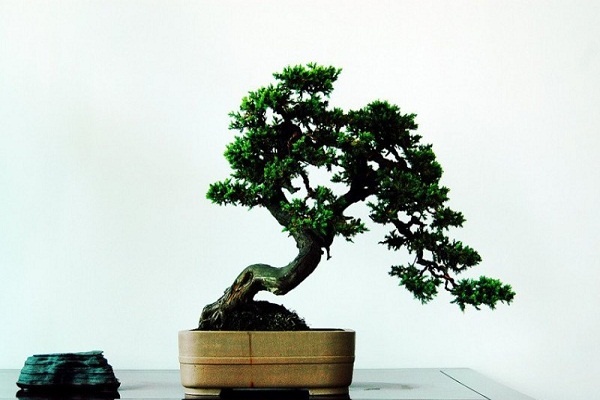 Making and Caring for Juniper Bonsai
Pot selection: Different pots should be chosen according to different styles. For the cascade style, a purple clay tall cylindrical pot is suitable, and the main root should be left somewhat longer to bear the pulling force of most branches and leaves hanging out and down from the pot; for the curved-trunk style, an oval purple clay pot or glazed pottery pot can be used; for the slanting-trunk and lying-trunk styles, a rectangular shallow purple clay pot is best, to display the graceful posture of the trunk.
Potting: Small seedlings that survive cutting are divided and potted in the spring of the following year. After about 3 years of cultivation they can be used for miniature bonsai, and after about 5 years of cultivation they can be used for small bonsai. According to the form of the young tree, preliminary styling should be carried out during cultivation. Purchase a potted juniper with a tree age of more than 10 years, observe the tree and then conceive the composition, cut off branches not needed for the styling, plant it into relatively fertile cultivation soil, and carry out preliminary wiring and shaping while cultivating. Generally, after 2 to 3 years of cultivation, medium-to-large bonsai can be made.
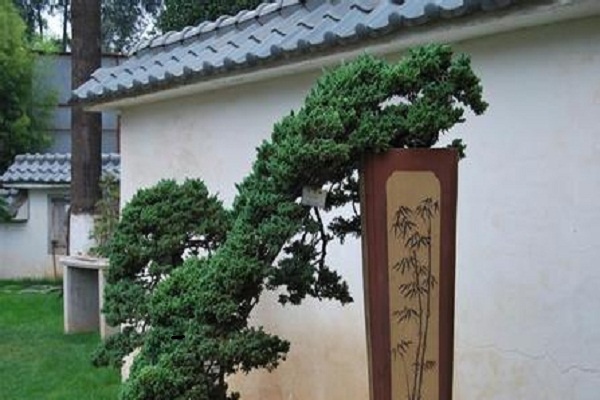
Styling: Juniper branches are slender and long, and soft, suitable for the cascade style, curved-trunk style, lying-trunk style, and various animal forms such as birds and beasts. When styling juniper, more wiring and less pruning should be used. The wiring material can be metal wire or palm fiber. After the general outline is wired, according to the needs of the styling, the small branches should be shortened or cut off from the base. Juniper generally needs about 2 years of wiring to set its shape; if the wiring is removed too early, the branches often return to their original state. After the shape is set, the metal wire should be removed in time, because if wiring lasts too long, the metal wire cuts too deeply into the branches, which is not only unfavorable to plant growth, but also the remaining marks are unsightly, and it takes about two years for the marks to disappear. The branches and leaves of juniper bonsai are mostly processed into cloud-like or natural forms.
Care: Juniper likes moisture, but there must be no water accumulation in the pot. In addition to watering the pot, water should also be appropriately sprinkled on the cultivation site, and watering should be reduced in winter. Formed juniper bonsai should not be fertilized too much; during the growing season, applying a once-monthly dilute decomposed organic liquid fertilizer is enough. In spring and autumn when the sunlight is not yet too strong, place the juniper bonsai in the sun for care; in summer when the weather is hot and scorching, place the juniper bonsai in a semi-shaded place or in a shade shed; in winter, a room temperature of about 5°C allows it to overwinter safely.
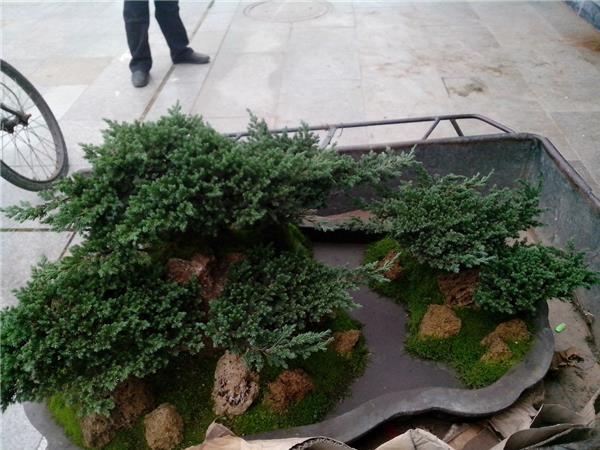 Alright, the above is all about juniper. Whether it is juniper or other cypresses, they all have the dual functions of garden application and bonsai shaping, so the cypress family is also a very impressive family.