How to configure and maintain ornamental grass species and turfgrass species
Turfgrass species are actually a category within ornamental grass species. Let's take a closer look at some knowledge about grass species.
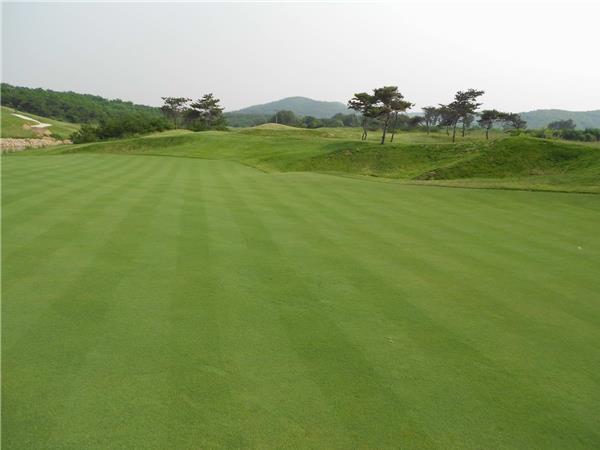
How to pair ornamental grass species
1. Ornamental grass is a highly versatile companion landscape plant. Besides being paired with water, rocks, trees, shrubs, flowers and other elements for landscaping, ornamental grasses can also be combined with different types of ornamental grasses to create more beautiful and novel landscapes. Below are some pairings between ornamental grasses.
2. Different ornamental grasses vary in plant height, leaves, inflorescences and so on, such as tall reeds, giant reed, reed canary grass, etc., low fescues, tufted hairgrass; clump-forming drooping sedges, fescues, scattered tufted sedges, switchgrass; green-leaved sedges, penni-setums, and colored-leaved zebra grass, "golden leaf" Japanese sweet flag, ribbon grass.
3. You can choose different types of ornamental grasses to configure together, complementing each other for a very good effect. For example, pampas grass, silvergrass, zebra grass, ribbon grass, tufted hairgrass, fescue, etc. configured together show a gradual decrease in height, while due to differences in leaf color and flower shape, they complement each other and create a rich landscape effect.
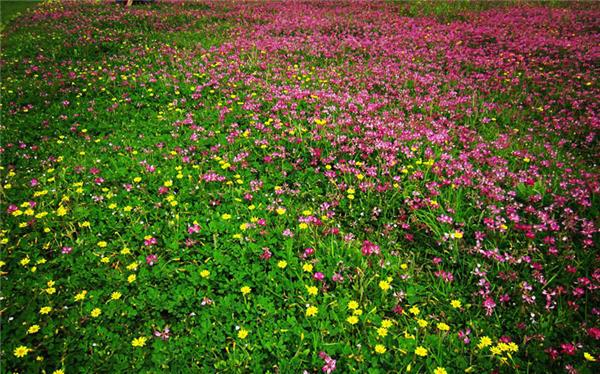
How to choose turfgrass species
1. Environmental and climatic conditions are the first factors to consider when selecting turfgrass species for sports fields, which is the so-called principle of adaptability. The selected grass species must first adapt to the local climate and environmental conditions to ensure normal growth of the turfgrass and to perform its intended function.
2. Sports fields differ greatly in grass species selection depending on their usage characteristics. For example, football field turfgrass requires strong trampling tolerance and good recovery ability; tennis court turfgrass, besides being trampling-tolerant and tolerant of low mowing, should also have good elasticity; the greens of golf courses require grass species with tolerance of low mowing, strong recovery and regeneration ability, and uniform growth.
3. When selecting varieties, not only should you pay attention to conventional indicators such as seed purity and germination rate, but you should also consider the reputation of the grass seed company and choose varieties with high recognition. Brand-name varieties mean high quality. High-quality varieties have undergone many years of evaluation in different climatic regions, and authoritative institutions rate them highly. The simplest way to know whether a variety you are interested in is excellent is to refer to the test reports of NTEP (National Turfgrass Evaluation Program) and STRI (Sports Turf Research Institute).
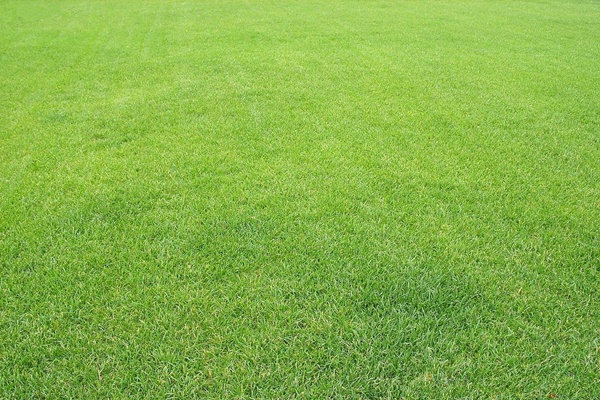
How are turfgrass species generally cultivated
Sowing rate: To make the lawn dense and lush, with relatively high density, good elasticity and vigorous regeneration ability, the sowing rate should be selected appropriately according to the germination rate of the grass seed, the lawn area, and the tillering ability after germination.
Sowing time: Determining the sowing time should mainly take into account the relationship between the lawn and the environment, and sufficient time should be given for the turfgrass to grow and develop so that it can pass through the "crisis period," such as high temperature and high humidity, drought, weed spread, and cold periods. Avoid sowing during the "crisis period," which can cause low germination rate, missing seedlings, coexistence with weeds, or weak seedlings with poor drought resistance.
Sowing method: Lawn sowing requires the seeds to be evenly scattered on the seedbed and mixed into the 1-1.5cm soil layer. Sowing is divided into mechanical sowing and manual sowing. After mechanical sowing, gently rake the seedbed level with a fine-toothed rake, then press it with a 10-200 jin roller so that the seeds fully contact the surface soil, then cover it with grass bags and spray water immediately. The spraying depth should soak through 5-10cm of the soil layer.
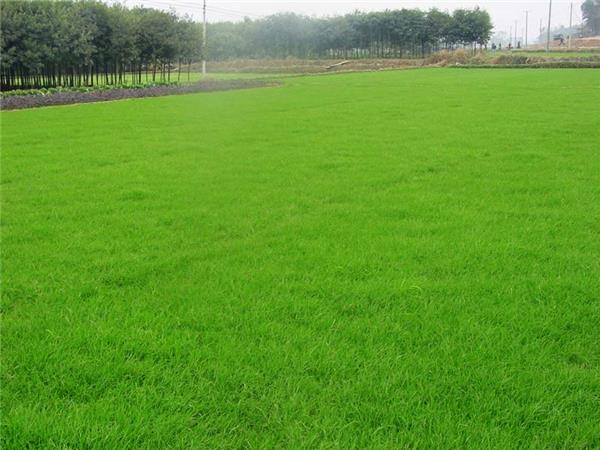
Nowadays many places need to lay lawns, so how to choose turfgrass species and learn to maintain turfgrass species is very important. I hope the knowledge introduced above can help everyone when maintaining and laying lawns.