How to grow azaleas? A step-by-step guide to care methods
The azalea is one of the more common flowering plants in our homes, and its role in home decoration should not be underestimated. Many people have experience with growing azaleas, so what exactly are the care methods for azaleas?
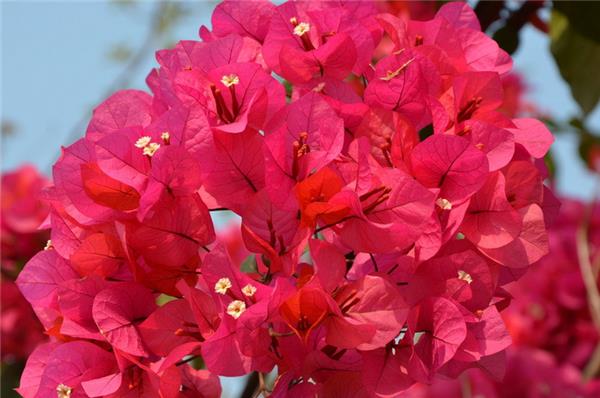
I. Azalea care methods
Azalea care methods: When growing azaleas at home, first choose a clay pot with a hole in the bottom, as this provides good aeration; for the potting soil, use a loose-textured, well-draining acidic soil. Next comes maintenance and management. Azalea roots are very fine and have poor absorption capacity, so when watering azaleas, except during the winter dormant period, you should water frequently to keep the soil moist. Azaleas need ample light, because only then will they bloom well; of course, in summer take sun protection measures and never leave the plant under direct sun. The fertilizing principle for azaleas is also light but frequent feeding, that is, apply a little at a time and feed more often.
II. Maintenance and management of azalea bonsai tree landscapes
Maintenance and management before the shape is set: refine the styling, adjust the shaping and layout of the trunk and branch pads, and promote a more perfect overall image. When the wire wrapped around the trunk to fix the shape shows signs of embedding into the bark, loosen it promptly. Once the shaped posture is basically set, the wire can be removed; for parts that are slightly off, after removing the wire, use coir rope to pull them into place.
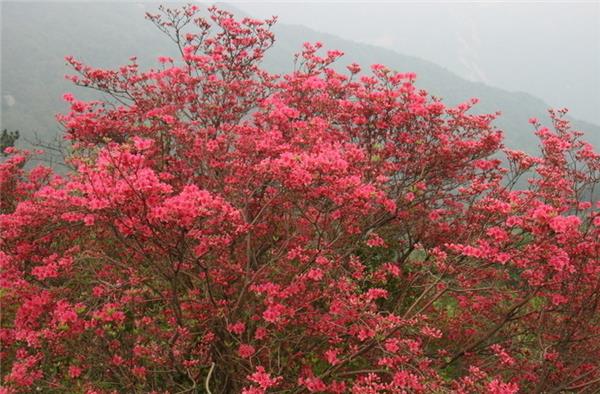
Maintenance and management of azalea bonsai tree landscapes after the shape is set: mainly maintaining the shape. Cut away branches that disrupt the shape to keep the tiers clear; for the remaining branches and leaves, regulate growth by pinching, pruning, and controlling water and fertilizer, so that the flowers are evenly distributed and bloom at the same time.
For azalea bonsai tree landscapes, repot generally once every 1-2 years; when repotting, remove about one third of the old soil, cut off a small amount of old roots, and replace with loose growing medium. After an azalea bonsai finishes blooming, remove all the flower bases to reduce nutrient consumption.
Azaleas prefer a warm, humid, well-ventilated semi-shaded environment. When the temperature is above 15°C, azaleas will produce flowers and leaves at the same time, causing a large number of leaf buds to compete with flower buds for nutrients, which leads to flower bud drop; promptly pick off the leaf buds sprouting around the flower buds with a fine bamboo needle to ensure normal blooming. The optimal overwintering temperature for azalea bonsai tree landscapes is 8-10°C.
Pest and disease control: Azalea bonsai should be kept in a ventilated, well-lit environment, and diseased leaves should be cut off promptly to reduce the occurrence of pests and diseases. Azaleas are prone to red spider mite damage; you can light a mosquito coil, place it in the pot of the affected plant, then tie the whole pot tightly in a plastic bag and fumigate for 60 min to kill eggs or adults. If black spots appear on the leaves, spray Bordeaux mixture promptly.
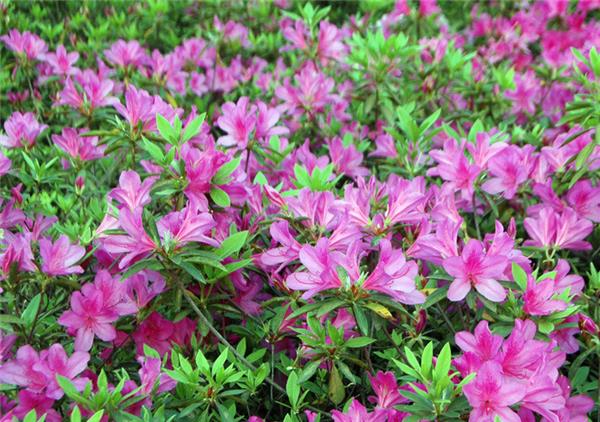
III. The role of azaleas in the home
1. Beautifying the environment and cultivating character
Green plants, whether in their form, color, texture, or scent, or in their branches, flowers, leaves, and fruits, display a vigorous, life-filled power that inspires people to strive upward and to love nature, love life, and love living. The process of a plant's growth is a process of struggling for survival and wrestling with nature; its form takes shape naturally, without any concealment or disguise. Many plants growing among mountain rocks and walls where water is scarce and soil is thin have tangled roots and interlacing, spreading and stretching in all directions, spreading widely and drilling deep, fully displaying their boundless vitality in the struggle for life; in form they are an abstract natural painting, and in content they are a hymn of praise to life. Their beauty is a natural beauty, clean, pure, and unadorned; even when pruned by human hands, with branches and trunks cut at will, they still display their noble character of unceasing self-improvement and life that never stops.
2. Softening space and adding vitality
Plants have ever-changing natural forms, colorful hues, a light and graceful spirit, and vibrant vitality, which form a striking contrast with cold, hard, rigid metal and glass products and stiff geometric shapes and lines. For example, trees or shrubs can cover part of an indoor space with their soft branches and leaves; vines, with their long slender branches, climb from one wall surface to another, or hang down from above onto wall surfaces, furniture, and so on, like strings of emerald-green decorations, and change the original form of the indoor space; large broad-leaved plants can, in a wall corner or beside a sofa, change the outline of furniture and equipment, thereby softening to a certain degree the artificial geometric indoor space, while vitality-filled green plants and colorful flowers truly add vitality to the indoor space. This cannot be replaced by any other indoor furnishing. The greenery of tall trees changes the original geometric form of a building, softening monotonous, hard, and cold building components, bringing natural sunlight and green leaves indoors, and filling the entire indoor space with vitality.
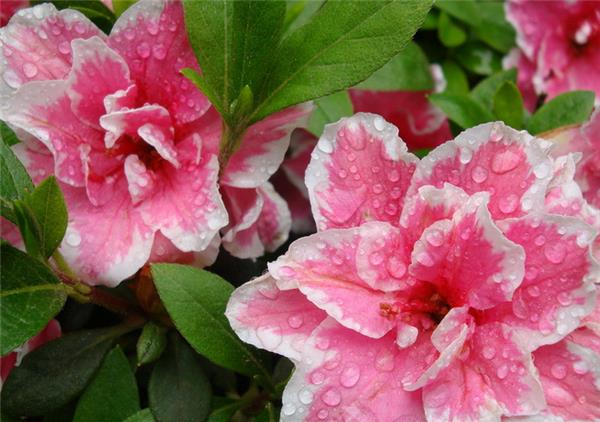
The above gives a detailed explanation of azalea care methods, giving us scientific theoretical guidance for growing azaleas, while also deepening our understanding of azaleas, so that azaleas bloom more beautifully indoors.
The above gives a detailed explanation of azalea care methods, giving us scientific theoretical guidance for growing azaleas, while also deepening our understanding of azaleas, so that azaleas bloom more beautifully indoors.