What Are the Benefits of Snake Plants? A Complete Guide
Regarding the benefits of snake plants, the leaf markings are an important feature and make them look unusual and interesting. It is a resilient plant, said to be well suited to home cultivation, and snake plants can absorb many harmful gases and purify the home.
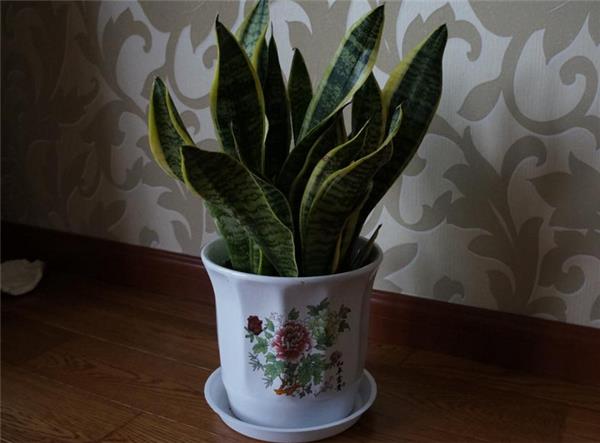
I. The Benefits of Snake Plants
1. Beautifying the Home Environment
Snake plants beautify and accent the home environment. Although they have no brightly coloured flowers and no showy, flamboyant form, they have a tender yet strong character and distinctive patterns on their leaves, making them one of the more unusual plants and giving them a rather good effect when used as an accent. A pot of vigorous snake plant placed in a corner of the home adds a great deal of colour.
2. Purifying Formaldehyde
Snake plants are perennial herbaceous foliage plants with creeping rhizomes and linear-lanceolate leaves. They are highly adaptable and not demanding about their growing environment, making them very suitable for decorating places such as living rooms and studies. Besides being ornamental, their greatest feature is their ability to purify the air. According to experts, snake plants can absorb more than 80% of indoor harmful gases, and their ability with formaldehyde in particular is extremely strong. The effect is especially noticeable in newly renovated homes or after newly purchased furniture, and snake plants can also guard against radiation, reducing the harm to family members from toxic gases and radiation.
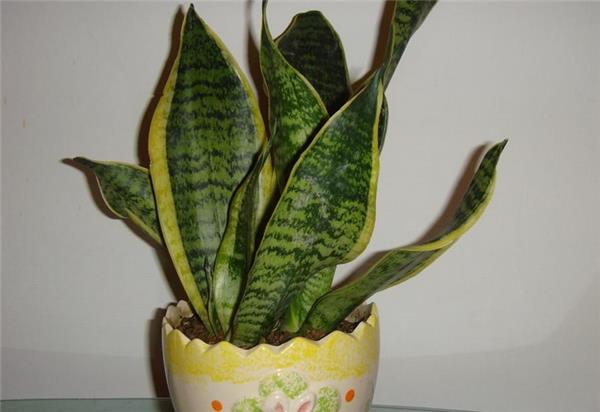
II. How to Grow Snake Plants
Snake plants are drought-tolerant, like sunlight and warmth, also tolerate shade, and resent waterlogging. They grow vigorously in well-drained sandy loam. They grow quickly in spring and summer, so more organic liquid fertiliser should be applied, while in late autumn and winter it is best to keep the potting soil slightly dry. They are not tolerant of severe cold; bring them indoors in late autumn and early winter. As long as the indoor temperature is above 18°C, they will flower from January to February, and they can overwinter safely at no less than 10°C. During the growing period, whether cared for indoors or outdoors, they should not be kept for long in deep shade or in strong direct sunlight, otherwise the yellow margins will narrow and fade. During the growing period of the sword-shaped leaves, the growing point curls and closes and turns dark brown, and unfurls during dormancy; beginners often think it is a dried tip and cut it off. Once the growing point at the tip is damaged, growth stops.
[Soil]: Snake plants are highly adaptable and can be managed fairly extensively. For potting, use 3 parts fertile garden soil, 1 part coal cinder, and add a small amount of soybean cake crumbs or poultry manure as a base fertiliser.
[Fertilising]: Snake plants have no great demand for fertiliser, but during the growing period, if a dilute fertiliser solution is applied once every 10 to 15 days, they will grow better.
[Light]: Potted snake plants should not be kept in a dark place for long periods; they should often be given diffused light, otherwise the leaves will turn dull and lack vitality. However, they must not be moved suddenly into direct sunlight; they should first be acclimatised in a dimly lit place.
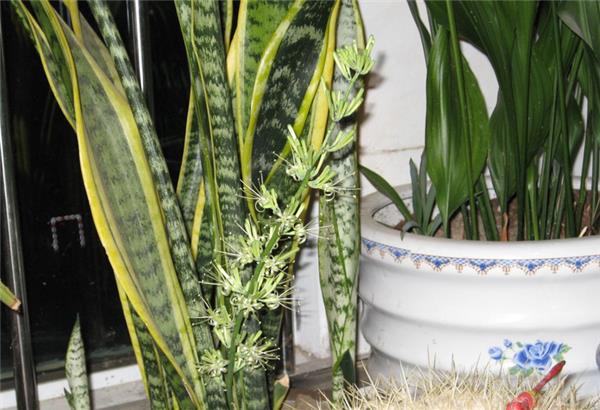
III. Caring for Snake Plants
Because snake plants are highly adaptable and easy to manage, the potting soil should be chosen for especially good drainage. Use 3 parts fertile garden soil mixed with 1 part coal cinder, and add a small amount of soybean cake or chicken manure as a base fertiliser. Bright, diffused light is preferable, and in summer they should be slightly shaded from the fierce sun. If placed in too dark a spot indoors for too long, the leaves will turn dull and lack vitality. In addition, if they have been indoors for a long time, do not move them suddenly into direct sunlight; first move them to a brighter spot so they have a period of adjustment before being exposed, otherwise the leaves are easily scorched. Watering should follow the principle of preferring dryness to moisture. When new shoots sprout at the root crown in spring, water somewhat more to keep the potting soil moist, and in the rainy season never let water accumulate in the pot. Ordinarily, the leaf surfaces can be wiped with clean water to remove dust and keep the leaves clean and glossy. They have low fertiliser requirements; in the growing season, applying a 15% soybean cake fertiliser solution once every half month is enough. Bring them indoors in early November; keeping the room temperature above 0°C is enough for them to overwinter safely, but during this period the potting soil should not be too wet, and they should be given plenty of sunlight.
Snake plants are propagated by division and by cuttings. Cuttings can be taken when the temperature is above 15°C; the method is to take a leaf 5-10 cm long, let it dry slightly, and then insert it into sand. When taking cuttings, the leaf must never be inserted upside down. Be careful to maintain a certain humidity, and roots will form after a month. However, for golden-margin snake plants, propagation by cuttings tends to make the golden margin disappear, so division is best. Division is done as follows: during the growing period, knock the plant out of its pot, divide it at the rhizome, and replant the divisions separately. Division should not be done too often, otherwise growth is affected; generally, divide only once the pot is full.

The above is a detailed look at the benefits of snake plants and an introduction to how to grow them. It is hoped that through this article, everyone can grow vigorous, upright snake plants.
It is hoped that through this article, everyone can grow vigorous, upright snake plants.