How do you care for anthuriums? These care methods are essential to master
What are anthurium care methods like? This is what people who have anthuriums at home want to know. I believe anthurium care methods will surely be a blessing for these friends, so that while cultivating the mind and character, they can also promote a friendlier indoor environment.
I. Anthurium care methods
Watering requirements: Potted anthuriums have different water requirements at different growth and development stages. During the seedling stage, because the root system is weak and distributed relatively shallowly in the growing medium, it is not tolerant of drought. After planting, water should be sprayed 2-3 times a day, and the growing medium should often be kept moist to encourage early growth and more new roots, and attention should be paid to the dryness and moisture of the growing medium on the pot surface. During the medium and large seedling stages, the plants grow quickly and need more water, so the water supply must be sufficient; during the flowering stage, watering should be appropriately reduced and phosphorus and potassium fertilizers should be increased to promote flowering.
Water temperature control: The water temperature for watering anthuriums should be kept at around 15°C (including the nutrient solution used for watering), which is especially important in severe cold and extreme heat. The moisture in the medium should not be too wet, because anthurium roots are semi-succulent and store a large amount of water themselves. Too much water in the medium causes a lack of oxygen in the medium, obstructing root respiration. Being in an overly wet state for a long time will cause root rot.
II. Pairing anthuriums with home decor styles
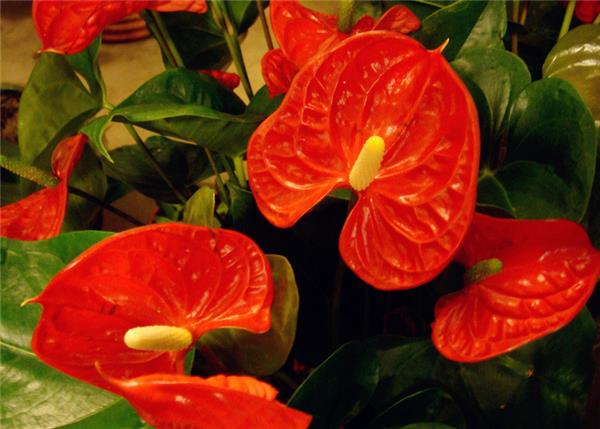
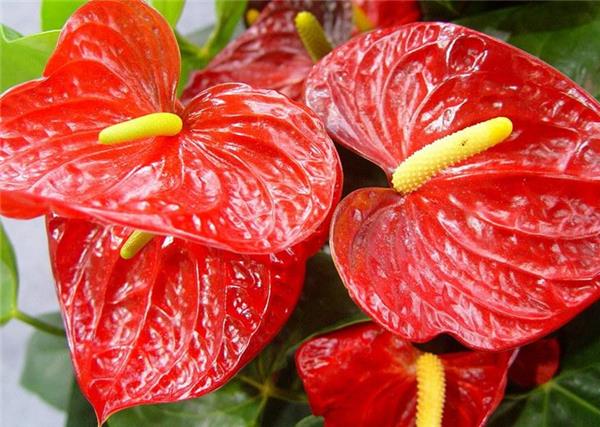
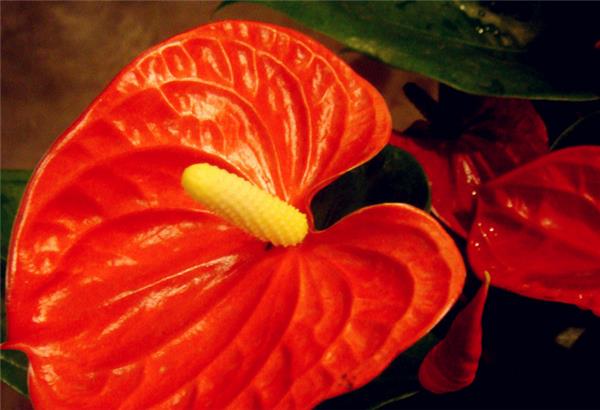
The anthurium has a unique appearance, with emerald-green leaves that seem about to drip, and fiery red spathe inflorescences sitting atop them. The pairing of red and green appears so eye-catching, and the yellow spadix set within that patch of fiery red serves as the finishing touch. We cannot help but praise such a combination as a masterpiece of nature. It is precisely because of its outstanding elegance that the anthurium is loved by many flower enthusiasts.
The anthurium and flowers of the same genus are emerging cut flowers and potted flowers both domestically and abroad. Each flower's flowering period can last up to one month, and they can bloom throughout the year. Because the spathe flowers are gorgeous, the plants are beautiful, and the ornamental period is long, market demand is increasing. Potted flowers are mostly used as decorative flowers on coffee tables and desks indoors.
Using the Western flower arrangement method, they are arranged in clusters in low, shallow vases, with small white or purple flowers placed around them as accents, making the hall appear exceptionally magnificent and luxurious. In addition, when a new store opens or at wedding celebrations, people also choose them to make flower baskets to add a joyful atmosphere. Japanese people skilled in ikebana crown it with the reputation of "large red round fan."
The living room is the face of the entire home. Flower arrangements should advocate a warm, beautiful, and uplifting mood, and the colors of the flowers should harmonize with the tone and style of the living room. In addition to buying some larger flowers, you can also choose brightly colored flower species such as the anthurium. Its warm, enthusiastic, passionate, and enterprising artistic conception makes people suddenly feel that life is full of brightness, making them forget worries and sorrow. I believe life can endow us with much enthusiasm, and we should face it with a positive and passionate attitude. On the bottom of flower stands, on coffee tables, or on TV wooden cabinets, you can also place a few pots of brightly colored anthuriums. These passionate and bold anthuriums placed in the living room will add special vitality to the home.
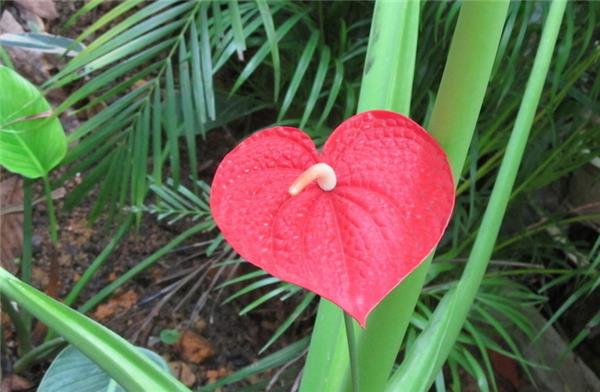
All flowers need our careful care to grow healthily. In summer, anthuriums can be placed on the shaded side of a room or in a position with scattered light in the hall, or outdoors where direct sunlight does not reach, or in the hall, or moved outdoors during the day and placed under tree shade, under flowers, or in a cool place. In winter, they should be placed on the sunny side of the room, and at night they can be placed inside curtains or near a heat source. Let this anthurium, representing enthusiasm and positivity, also convey a love of life to you.
III. Reasons for anthurium leaves turning yellow and drying up
1. Overwatering: Watering too much and too frequently will keep the medium in the pot overly wet for a long time, or even waterlogged, causing some fibrous roots to rot, hindering normal respiration and nutrient absorption, and causing leaves to gradually turn yellow and fall off. Preventive measures: water normally.
2. Uneven fertilization: Too little fertilization, or not changing the pot or soil for a long time, leads to a lack of nutrients such as nitrogen in the soil, causing weak branches and leaves, and thin, yellow leaves. In addition, excessive fertilization can also cause new leaves to become thick and uneven, while old leaves dry at the tips and turn scorched yellow and fall off. At this time, fertilization should be stopped immediately, watering should be increased, and some old soil should be removed and replaced with new culture soil for normal management.
3. Unsuitable temperature: If the indoor temperature is too low in winter, the leaves will turn yellow; if the room temperature is too high, the plant transpires excessively, and the roots cannot supply enough water and nutrients, which will also make the leaves turn yellow. Preventive measures: keep the greenhouse temperature relatively stable.
4. Unsuitable soil: In most areas of the north, the medium and water contain more salt and alkali. Because the medium lacks the soluble iron that the plant needs to absorb, the leaves will gradually lose green and turn yellow. Preventive measures: use oxalic acid and similar substances to treat the medium and the water used for watering flowers.
The above has sorted out the care methods for anthuriums. We can build on our own cultivation experience and combine these to raise our anthuriums even better.
The above has sorted out the care methods for anthuriums. We can build on our own cultivation experience and combine these to raise our anthuriums even better.