When does the Epiphyllum oxypetalum usually bloom? An introduction to its flowering period
We all know that getting an Epiphyllum oxypetalum to bloom even once is no easy feat, but it is not impossible to make it flower. Below, let us look together from several different angles at how to get Epiphyllum oxypetalum to bloom, and also when Epiphyllum oxypetalum blooms and how long its flowering lasts~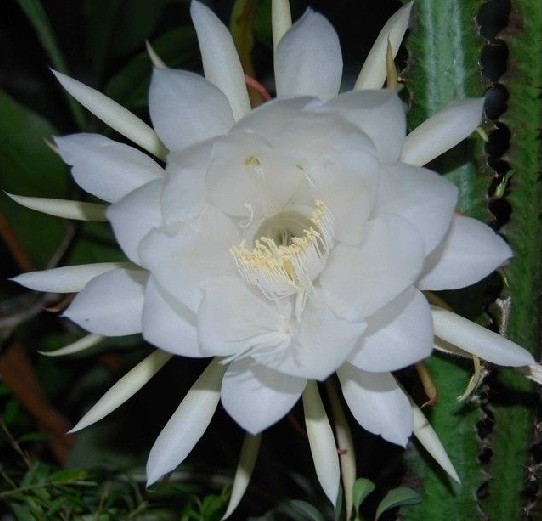
When does Epiphyllum oxypetalum bloom
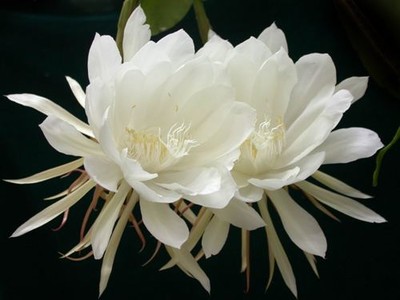
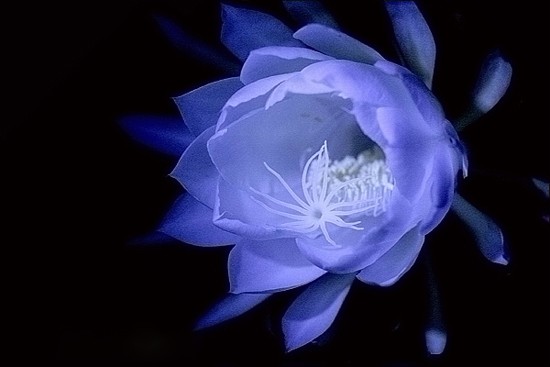
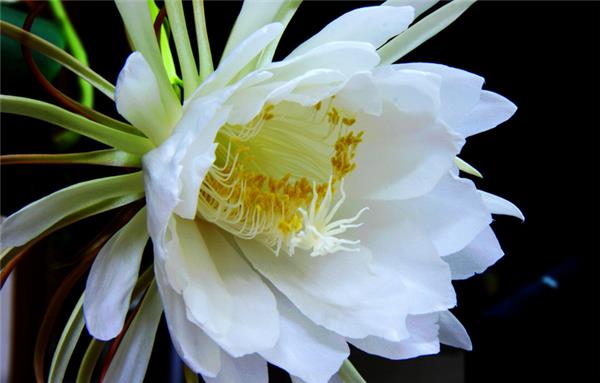
Epiphyllum oxypetalum usually blooms in the quiet depths of the night in summer and autumn, which is exactly when it flowers and reveals its beauty. Around 9 p.m. is when it most often lifts its charming figure into view: a purple flower stalk holds up a very large Epiphyllum bloom, with pure white petals neatly layered one around another, and the heavy, branch-bending flower trembling and swaying. As it trembles, the petals slowly open and spread, revealing a beautiful face. Dense, fine white filaments spiral out from the flower's core, and at the tips of the filaments are yellow, slightly swollen anthers - these are the stamens. The pistil of Epiphyllum oxypetalum is very distinctive, surrounded by the stamens, slightly thicker than the filaments, and also white, especially the stigma at the tip, which opens into a small white flower somewhat like a chrysanthemum. Elegant, pure white, delicate, it holds its head high and blooms. The whole flower is graceful and understated, its fragrance overflowing, and it dazzles the eye. It therefore enjoys the reputation of "Beauty under the Moon." Interestingly, after the flower gradually unfolds, it slowly withers again after 1-2 hours, and the whole process lasts only about 4 hours. Hence the saying "a fleeting Epiphyllum bloom."
How long does Epiphyllum oxypetalum bloom last:
The reason there is a saying about "a fleeting Epiphyllum bloom" is that the flowering period of Epiphyllum oxypetalum really is a little shorter than that of other flowers. After it is in full bloom, it usually withers in 3 to 4 hours, because when Epiphyllum oxypetalum is in full bloom all its petals are open, making it very easy to lose water; when water is insufficient, the petals close and the flower quickly withers.
How to grow and care for potted Epiphyllum oxypetalum and points to note
1. Potting soil
Epiphyllum oxypetalum likes humus-rich, well-drained, loose, fertile, slightly acidic sandy soil. The usual potting soil ratio is: leaf mold : garden soil : sand = 4:4:2. After mixing the soil, it is best to sun it to sterilize it. When planting, place a layer of broken tiles or brick pieces at the bottom of the pot to improve air permeability and drainage.
2. Watering
Epiphyllum oxypetalum likes moist soil and relatively high air humidity, and is afraid of waterlogging. When temperatures are lower in late autumn, winter and early spring, Epiphyllum oxypetalum is in a semi-dormant state, so watering should be strictly controlled to keep the potting soil on the dry side; once it has dried out completely, just water it lightly. After temperatures rise in spring, Epiphyllum oxypetalum begins to resume growth, and the amount of watering can gradually be increased to keep the soil moist. During vigorous growth, in addition to watering, water should also be sprinkled around the plant to increase air humidity, and ventilation should be improved.
3. Fertilizing
Epiphyllum oxypetalum relatively likes fertilizer and also has fairly high fertilizer requirements. Well-rotted organic fertilizer is best, plus a small amount of bone meal or superphosphate. Add it when preparing the soil and mix it evenly with the potting soil; the application rate is 1/20 to 1/30 of the potting soil. After new stems grow in spring, start topdressing. During growth, if the leaves turn yellow, apply one topdressing of 500 times ferrous sulfate solution; after flower buds appear, apply one topdressing of 1000 times monopotassium phosphate; after the flowers wither, apply an additional phosphorus and potassium fertilizer about every 20 days; fertilizing should stop in late autumn.
4. Propagation
Use leaf-like stems for cuttings. Cuttings can be taken in a greenhouse in all four seasons, but April to May is best. For cuttings, choose slightly older, sturdy leaf-like stems from the previous year (ones that are too tender rot easily), cut them into 10 cm to 15 cm sections, let them dry for 2 to 3 days, and after the cut surface has dried and sealed, insert them into a propagation medium or sand, with the insertion depth about 1/3 of the cutting (not too deep). If the soil is moist, do not water for the time being; afterward, keep the soil slightly moist and on the dry side. Roots begin to form in about 20 days. When the roots have grown to 4 cm to 5 cm, the plant can be potted. With proper management, even 2-year-old seedlings can bloom.
5. Repotting
Young Epiphyllum oxypetalum plants are repotted once a year, while established plants are generally repotted once every 2 to 3 years. Repot in spring when the temperature is above 12°C, or in September. Stop watering before repotting so the potting soil dries and the plant can be removed from the pot; handle it gently when removing it to avoid bumping the plant. After removal, remove the old soil outside the roots and prune away dead and broken roots. After planting, place it in a semi-shaded spot and do not water for the time being; water lightly after 2 days and keep the potting soil on the dry side.
I believe that after reading the above article, everyone has gained some understanding of when Epiphyllum oxypetalum blooms. I hope the above content can help everyone. For more wonderful content, please continue to follow our website~
I hope the above content can help everyone. For more wonderful content, please continue to follow our website~