How beautiful is the wax begonia? Its delicate, gorgeous blooms never grow tiresome to look at
Where does the name "wax begonia" come from? As the name suggests, it can provide us with lovely flowers all year round, with elegant forms that are very pleasing to the eye, hence the "four seasons" in its name. And it is precisely because of this flowering habit that the wax begonia has now become one of the flowers people mainly use to decorate their homes, bringing a touch of liveliness and vitality to our living environment. Now please follow along with the editor to get a general understanding of the wax begonia!
Wax begonia flower meaning: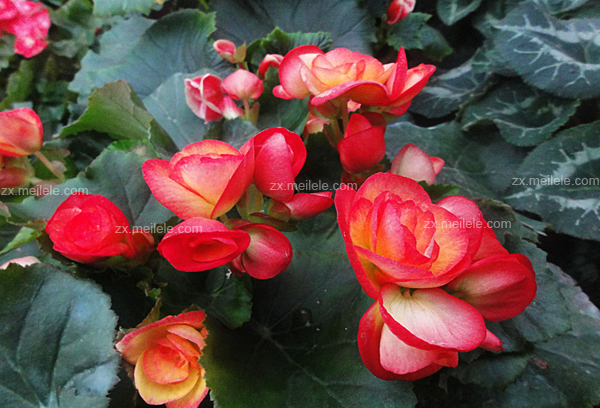
Nowadays people often assign a corresponding quality or flower meaning to a plant based on one of its traits or characteristics, and the flower meaning of the wax begonia is yearning, care, sincerity, unrequited love and bittersweet love. In matters of love it may seem a little sorrowful, but overall the flower meaning is still quite good.
Wax begonia habits: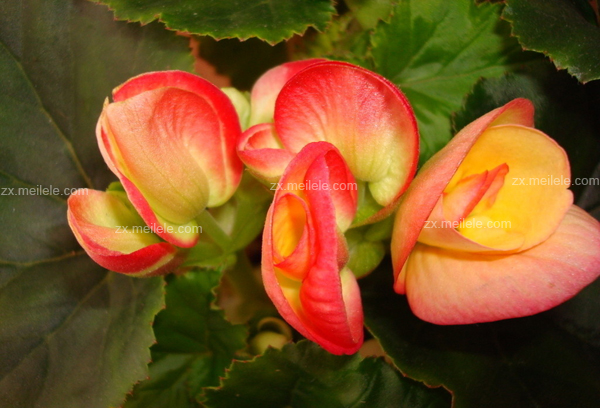
To understand the wax begonia we also need to start with its living habits, so that we can grow it well and let it add beauty and color to our homes. The wax begonia likes places with plenty of sunlight, so it naturally follows that it likes warm places too. It also has a certain resistance to shady, damp environments and moist soil, though it is not completely unable to accept them, so we must pay attention to this point when growing it. Speaking of the wax begonia's resistance, heat and waterlogging are probably the two most serious points. When growing it, we must take careful care of it!
Wax begonia propagation: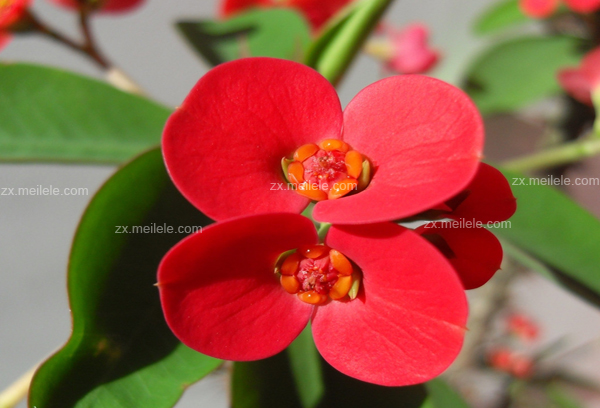
Friends who like growing wax begonia flowers are surely quite interested in its propagation! So below the editor will tell you about it. Because of the wax begonia's living habits, spring and autumn are the most suitable seasons for propagating it, and the main propagation methods are sowing, cuttings and division into separate plants. You can choose according to your situation!
Wax begonia growing methods: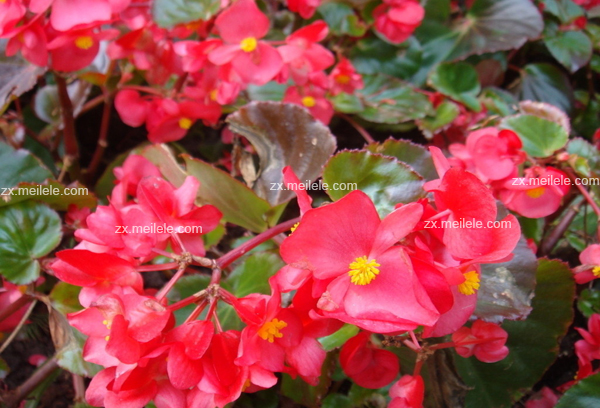
Sunlight
The editor introduced the wax begonia's living habits earlier, and everyone now knows it loves sunlight, so when growing it we must place it in a place with plenty of sunlight. If it can also be ventilated and breathable, even better, and this will certainly make the wax begonia produce bright, beautiful clusters of flowers.
Temperature
Having talked about sunlight, let's talk about temperature. Being afraid of cold is a trait of the wax begonia. In the very cold winter we can move it to a warm place, or move it indoors. If the indoor temperature is kept above 15°C, then the wax begonia really will be a "four seasons" begonia, because at such a temperature the wax begonia can still bloom.
Watering
No matter what plant you grow, the watering step is indispensable, and the wax begonia also has certain rules when it comes to watering. In summer, for example, we can water it once in the morning and once in the evening, while in winter we should water around noon. Remember not to water too much, otherwise it easily causes water to accumulate; in mild cases the leaves turn yellow, and in severe cases the roots rot and the plant dies.
Fertilizing
If you want a plant to grow well, fertilizing is key. During the wax begonia's growing period, apply fertilizer about once every ten days, and remember that the fertilizer must not be too concentrated! When growth slows, fertilizing can be reduced or stopped to avoid affecting the wax begonia's growth.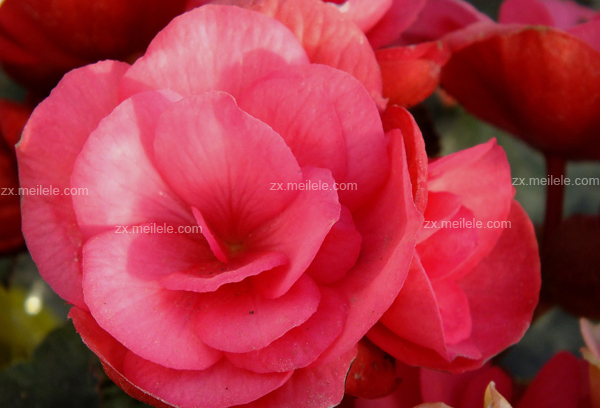
Summary: The above is the editor's general introduction to the wax begonia. I wonder if it has been helpful to you? If you want to learn more about the wax begonia or other topics, please follow Meilele, which I believe will bring you more wonderful content.
More information
| Golden-edge lucky bamboo | Is hyacinth fragrance toxic | Asparagus fern leaves turning yellow | Office green plants | Lithops |
| Lavender flowering period | Indoor foliage plants | Boston ivy | Orchid varieties | Benefits and effects of mint | How to grow mimosa |
| How to grow succulents | Osmanthus | Benefits and effects of jiaogulan | Crab claw orchid | Benefits and effects of honeysuckle | Kumquat |