A Detailed Guide to Phalaenopsis Orchid Flower Meanings and Growing Methods
Some friends love Phalaenopsis orchids but know nothing at all about how to grow them, so next the editor will introduce the growing methods for Phalaenopsis orchids, and also explain their flower meanings. I hope this information can help friends who need it.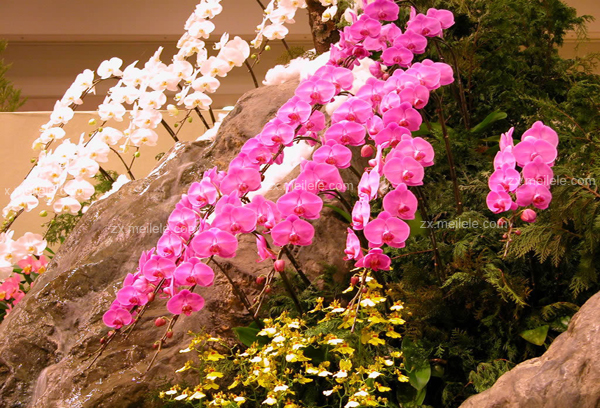
Phalaenopsis Orchid Flower Meanings
Phalaenopsis orchids of different colors carry different meanings. Let's take a look at the flower meanings of Phalaenopsis orchids.
◆ White Phalaenopsis: pure love, precious friendship ◆ Yellow Phalaenopsis: a thriving career, brisk business
◆ Mini Phalaenopsis: a happy angel in the prime of life ◆ Striped Phalaenopsis: everything goes your way, may all your wishes come true
◆ Red-centered Phalaenopsis: great fortune ahead, an enduring union ◆ Red Phalaenopsis: a smooth official career, happiness and fulfillment
◆ Phalaenopsis flower meaning: I love you, happiness is flying to you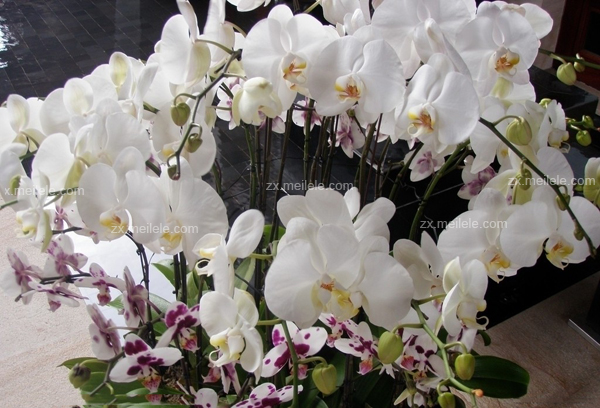
How to Grow Phalaenopsis Orchids
1. Temperature
When growing Phalaenopsis orchids at home, temperature must be ensured first. Phalaenopsis orchids like a high-temperature, high-humidity environment. During the growing period, the minimum temperature should stay above 15°C, and the suitable growing temperature for Phalaenopsis is 16-30°C. Therefore, in autumn and winter and at the turn of winter and spring, as well as when winter temperatures are low, attention should be paid to raising the temperature.
Generally, in rooms with heating equipment in winter, this temperature is easy to reach, but be careful not to place the flowers on or too close to the radiator. When summer temperatures are on the high side, cooling is needed, and attention should be paid to ventilation. If the temperature is above 32°C, Phalaenopsis orchids generally enter a semi-dormant state, so continuous high temperatures should be avoided. The peak flowering period is around the Spring Festival; a moderate drop in temperature can extend the viewing time. During flowering, the nighttime temperature is best kept between 13-16°C, but must not fall below 13°C.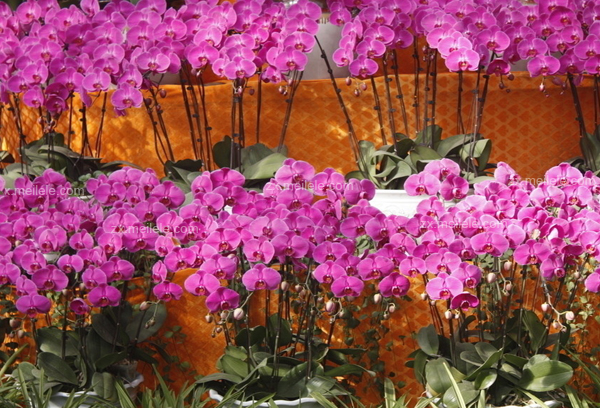
2. Watering
The place of origin of the Phalaenopsis orchid is in primeval forests, where there is a lot of mist and higher temperatures. Phalaenopsis orchids do not have thick pseudobulbs to store nutrients. If the air humidity is insufficient, the leaves will wrinkle and become weak and limp. Therefore, Phalaenopsis orchids are best cultivated and cared for in a ventilated, high-humidity environment.
The suitable air humidity for growing Phalaenopsis orchids is 60%-80%. Water more during the vigorous new-root elongation period, and water less during the dormant period after flowering. In spring and autumn, water once every day around five in the afternoon. In summer, when the plant grows vigorously, water once each at nine in the morning and five in the afternoon. In winter, when light is weak and temperatures are low, watering once every other week is enough. The best watering time is before ten in the morning.
When a cold snap occurs, it is best not to water; keep the soil dry and resume watering after the cold snap passes. The principle of watering is to water when dry and let it dry between waterings. When the surface of the growing medium becomes dry, water thoroughly once more, and the water temperature should be close to room temperature. When the indoor air is dry, you can use a sprayer to mist the leaves directly, until the leaf surface is moist. Note: during the flowering period, do not spray water mist onto the flowers. Tap water should be stored for more than 72 hours before use for watering.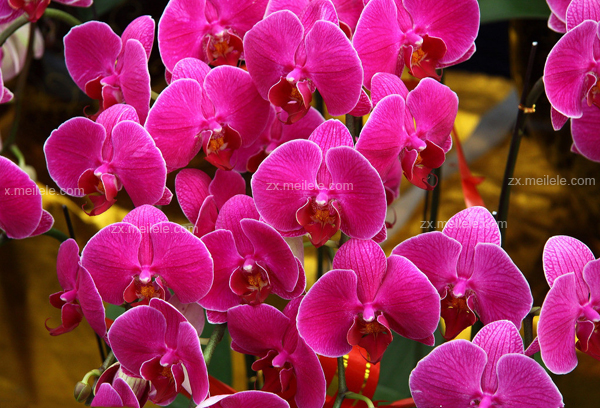
3. Light
Although Phalaenopsis orchids prefer shade, the plants still need to receive some light, especially around the flowering period. Appropriate light can encourage Phalaenopsis orchids to bloom, and the flowers produced this way are vivid and long-lasting. Generally, they should be placed in a spot indoors with diffused light, and not exposed to direct sunlight.
4. Ventilation
The normal growth of Phalaenopsis orchids requires circulating fresh air. When growing Phalaenopsis orchids at home, ventilation must be good, especially during the high-humidity period in summer. Good ventilation must be used to prevent heat stress, which can also help avoid infection by pests and diseases.
5. Nutrition
Phalaenopsis orchids should be fertilized all year round. Unless low temperatures persist for a long time, fertilization should not be stopped. Winter is the flower bud differentiation period for Phalaenopsis orchids; stopping fertilizer can easily lead to no flowers or few flowers. Spring and summer are the growing period, when a dilute liquid fertilizer can be applied once every 7-10 days. Organic fertilizer is best, or a special nutrient solution for Phalaenopsis orchids can be used, but do not apply it when there are flower buds, otherwise the buds may easily drop early.
After the flowering period, nitrogen fertilizer and potassium fertilizer can be applied. During the flower stalk growth period in autumn and winter, phosphorus fertilizer can be used, but it should be dilute, applied about once every 2-3 weeks. Fertilize in the afternoon after watering. After fertilizing several times, rinse the orchid pot and plant with plenty of water to prevent residual inorganic salts from harming the roots.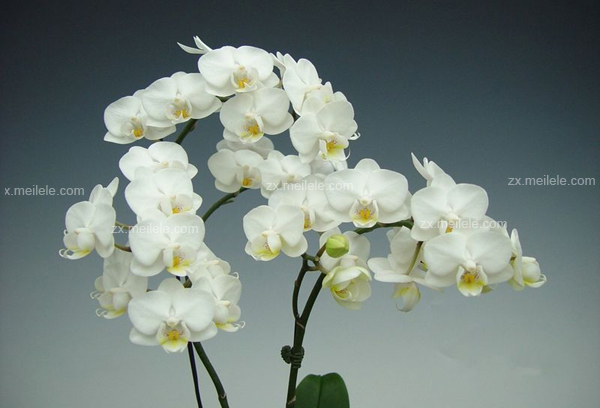
6. Post-Bloom Care
The flowering period is generally around the Spring Festival, and the viewing period can last as long as 2-3 months. When the flowers wilt, the faded flowers must be cut off as early as possible, as this can reduce nutrient consumption. If the flower stalk is cut off at the 4th-5th node from the base, it can bloom again after 2-3 months. However, this consumes too many nutrients from the plant, which is not good for growth the following year.
If you want it to produce good flowers again the next year, it is best to cut the flower stalk off from the base. When the growing medium ages, it should be replaced in good time; otherwise, air permeability worsens, which can cause root rot and weaken the plant's growth or even kill it. Generally, repotting in May, when new leaves grow out, is preferable.
Summary: The above are the growing methods for Phalaenopsis orchids and the related explanation of their flower meanings. Did everyone remember them? Different varieties of Phalaenopsis orchids differ in the details, so everyone should pay attention to that. When growing them, you must treat the flowers well and care for them carefully.
More Information
| What does a white rose represent | What plants protect against computer radiation | Pelargonium | How to grow rhododendrons and points to note | Chlorophytum comosum 'Picturatum' |
| Lavender flowering period | Indoor foliage plants | Boston ivy | How to fold a lily | The benefits and effects of mint | How to grow Mimosa pudica |
| How to grow succulents | Osmanthus | The benefits and effects of Gynostemma pentaphyllum | Handmade roses | The benefits and effects of honeysuckle | Kumquat |