How to Grow Water Gardenia: Notes on Cultivating Water Gardenia
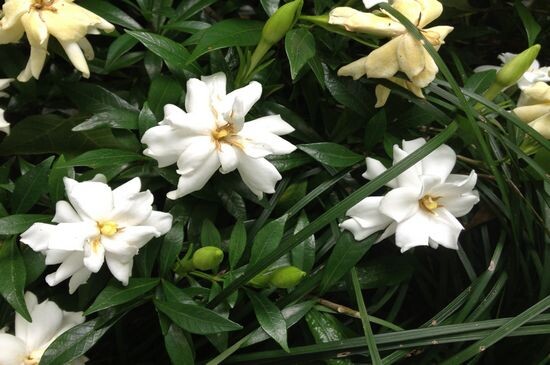
The flowers of the water gardenia are elegant and graceful in form, pure and understated white in color, and its foliage is a vivid green, giving it excellent ornamental value. It is a preferred tree species for landscaping gardens and courtyards, but to ensure its ornamental value, extra care must still be paid during maintenance.
Propagation Methods of Water Gardenia
Seed propagation: Each year in autumn and winter, the seeds can be harvested once the fruit skin of the water gardenia turns yellow or light red. After harvesting, dry the water gardenia in its shell in the sun or in the shade, then store it properly for later use. In spring of the following year, in February to March, cut open the fruit skin with scissors, take out the seeds, and soak them in 40-degree warm water for about 24 hours. Then rub off the shriveled seeds and impurities, scoop out the sunken, plump seeds, and dry off the moisture. When sowing, mix the seeds with plant ash and evenly scatter them in the sowing furrow, cover lightly with soil, then cover with rice straw and water to keep the soil moist.
Cutting propagation: Cutting propagation can be done in both spring and autumn. Select vigorous 1- to 2-year-old branches, remove the leaves but keep only the leaf stalks, and cut them into cuttings about 20 cm long. Insert them obliquely into a prepared seedbed at a row spacing of 12 cm and a plant spacing of 5 cm, burying about 2/3 of the cutting in the soil. Press the soil around the cuttings lightly, water them, and keep the soil moist. After the cuttings take root, after about 1 year of growth, they can be lifted out and planted in the following year.
Division propagation: Division propagation is mostly carried out in spring. Select root suckers 15-25 cm tall that have sprouted from the base of the water gardenia, then dig away the soil around the base of the water gardenia to expose the root system. Next, cut off the roots connecting the sucker plant to the mother plant, keeping as much of the sucker's root system as possible. Once the sucker plant is removed, it can be planted.
Notes on Cultivating Water Gardenia
Planting and establishment: Planting can be done on cloudy days in March to April. When sown seedlings or cutting seedlings have grown to more than 20 cm tall, they can be transplanted and established. When transplanting, dig holes at a spacing of 1 m x 1 m, with each hole 40 cm long, wide, and deep. After the holes are dug, mix the broken topsoil evenly with green manure, farmyard manure, and human waste manure, and backfill during transplanting. Plant 1 plant per hole, lift the seedling slightly during transplanting, and let the root system of the water gardenia spread out naturally. When backfilling, fill the soil slightly higher than the ground surface, and water thoroughly to settle the roots.
Fertilizer and water management: After planting, cultivate and weed and apply topdressing 2 times each in spring and summer every year, applying 30 t of human and livestock manure, stable manure, or compost per hectare each time. During the full flowering period of the water gardenia in summer, apply 2250 g of potassium dihydrogen phosphate per hectare, mixed with 50 kg of water, as a foliar spray. Around the Start of Winter, apply 75-150 kg of ammonium bicarbonate, 90 kg of calcium superphosphate, and 75 kg of potassium chloride per hectare.
Pruning and deep plowing: After the water gardenia is harvested, cut off the shaded branches and non-fruiting branches so that the tree shape of the water gardenia becomes umbrella-shaped, allowing ventilation and light penetration, which can reduce disease. After clearing away the cut branches and leaves, carry out 1 deep plowing of the water gardenia orchard, with a depth of no less than 15 cm. This can enhance soil aeration and water permeability, strengthen drought resistance, and at the same time destroy the living environment of overwintering pests, reducing the pest population density the following year.
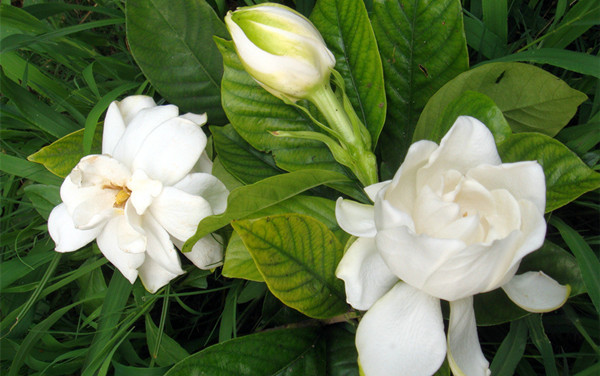
Disease and pest control: Spray the water gardenia once each at the bud stage, early flowering stage, and mid-fruiting stage. Insecticides such as Lubaishi, Yashijing, Shachongshuang, and Liersha can be used, sprayed on sunny days. The first two sprays can be applied together with foliar fertilizer. The pesticides should be used alternately to prevent pests from developing resistance. Spray thoroughly, and do not miss or under-spray, otherwise the insecticidal effect will not be achieved. Fertilizer deficiency or other improper management measures can easily lead to conditions such as low disease resistance of the tree. Comprehensive measures such as reclamation, pruning, and increased application of phosphorus fertilizer (or potassium fertilizer) can be taken to improve disease resistance.
Harvesting and processing: In areas below 300 m elevation, harvest after the "Start of Winter"; in areas from 300 to 600 m elevation, harvest from the "Start of Winter" to "Minor Snow." If harvested too early, the fruit is not yet ripe, the yield is low, and the quality is poor; if harvested too late, drying is difficult, and the fruit is prone to rotting. When harvesting, generally pick by hand, and do not break the branches. When picking, regardless of size or whether green or yellow, harvest all at once and do not need to pick in batches. The fresh water gardenia fruits picked and brought back should have the fruit stalks and debris removed, then be sun-dried or dried over a gentle fire, left to absorb moisture for 3-5 days, then dried again for 1-2 days. After they are fully dry, take them out, spread them out to cool, and they are ready.
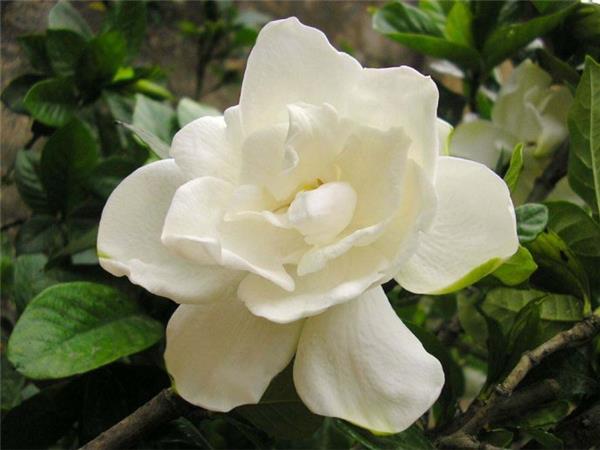
Besides being used for ornamental purposes, the water gardenia is also a very good traditional Chinese medicinal material, so growing the water gardenia at home can be considered an act that achieves multiple benefits at once, and it has relatively high cultivation value.