How to Grow Ornamental Peach: Cultivation Methods and Pruning Techniques for Ornamental Peach
If the cultivation methods are appropriate, the flowering period of the ornamental peach can be manually controlled. Let's take a detailed look below.
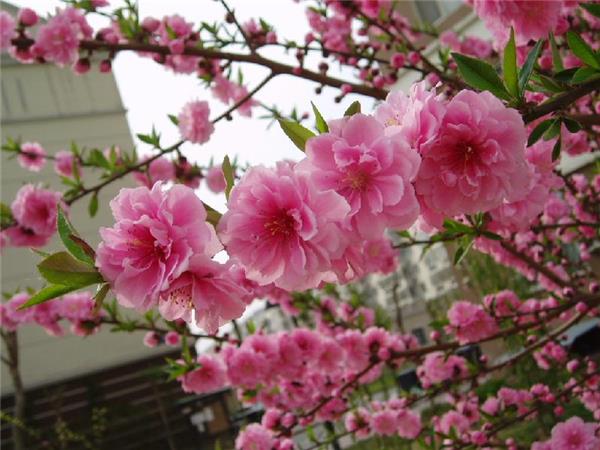
Cultivation Methods for Ornamental Peach
Propagation of seedlings: Grafting is mainly used, though sowing can also be used. For grafting, wild peach (Prunus davidiana) or peach (Prunus persica) is used as the rootstock; seedlings of apricot, plum, Japanese apricot, and dwarf flowering peach can also be used as rootstocks, but compared with wild peach and peach as rootstocks, they have the disadvantages of lower survival rate and slower growth after survival, while their advantages are longer lifespan and fewer pests and diseases. Grafted plants are moved indoors after winter begins, and moved back outdoors for cultivation the following year. Strengthen water and fertilizer management during the growing period; as the plant grows larger, replace it with a larger pot the next year, and it will basically take shape in about 3 years.
Fertilizer and water management: Ornamental peach is relatively sensitive to fertilizer, so during the growing period, whether to apply fertilizer should be decided according to the plant's growth vigor. If growth is excessive, it is unfavorable for flower bud formation, so there is no need to fertilize; if growth is weak, apply organic fertilizer once around the plant before and after leaf fall, and apply one topdressing of diluted human manure or compound chemical fertilizer before flowering. Normally, pay attention to timely intertillage and weeding, and water in time according to drought conditions. During the rainy season, pay attention to drainage and prevent waterlogging to ensure robust plant growth and normal flower bud differentiation. Irrigate once with antifreeze water before frost.
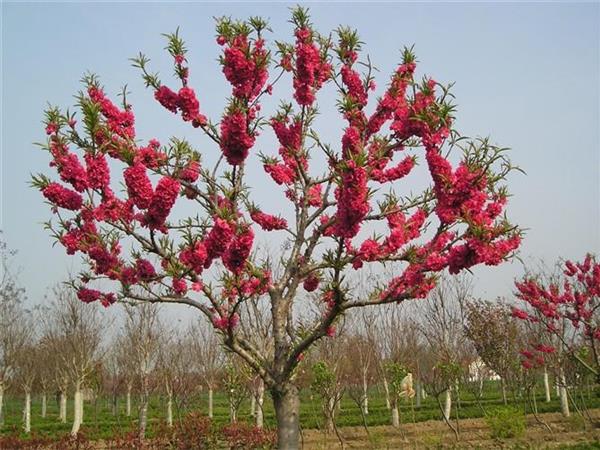
Pest and disease control: The main insect pests of ornamental peach are aphids and red spider mites. When they occur, deltamethrin 3000-fold solution can be sprayed to kill aphids, and dicofol 1800-fold solution can be sprayed to kill red spider mites. However, dimethoate should be avoided to prevent leaf drop. Diseases include peach leaf curl and brown rot, which can be controlled by spraying 705% thiophanate-methyl wettable powder 1000-fold solution.
Flowering period regulation: In early December, move potted ornamental peach indoors for cold room treatment, with a temperature of about 6 degrees being suitable, then gradually increase the temperature so that the flower buds undergo programmed catalytic development. After 10 days, gradually increase the temperature to 6-16 degrees; after 20 days, increase it to 16-23 degrees, and after a few more days, increase it to above 24 degrees. However, it must be noted that water and fertilizer should be applied according to the gradual increase in room temperature; the temperature can only increase gradually and must never be raised abruptly, otherwise adverse consequences such as bud drop or premature opening, or even death, may occur. Through such a method of gradually increasing room temperature, ornamental peach can be made to bloom early during the Spring Festival.
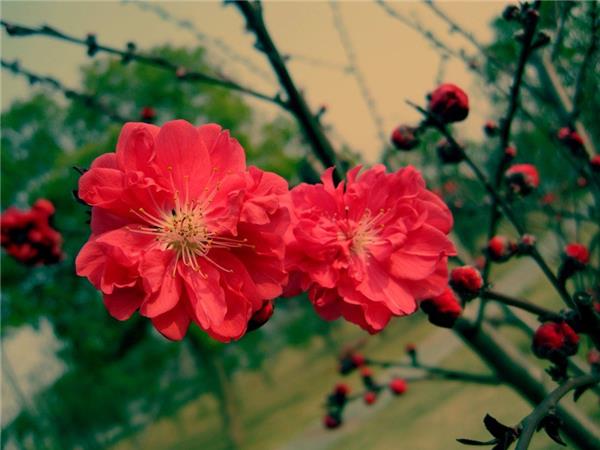
Pruning Methods for Ornamental Peach
1. First determine the tree's scaffold branches. Ornamental peach generally has 3-5 main branches. Clarify the subordinate relationships among the main branches and lateral branches at all levels, find the tips of each main branch, and balance them according to the growth vigor of each main branch, mainly by heading back. Through the method of suppressing the strong and supporting the weak, balance the vigor among branches. When a main branch extends too long, it should be retracted in time, and a suitable branch should be selected to replace the original branch tip for heading back. The tip of the main branch must be higher than the other branches, and should be left longer.
2. Next, remove useless branches. Thin out crossing branches, overlapping branches, diseased and dead branches, damaged branches, thin and weak branches, and unnecessary water sprouts. Then prune the branch groups. If, when pruning, attention is paid only to the arrangement of scaffold branches and not to the cultivation of flowering branch groups, the flowering position will quickly move upward, inner canopy branches will die, and flowering will become planar. Flowering branch groups can be divided by branching order into large, medium, and small types. Large branch groups generally have more than 4 levels of branching and are positioned in the middle and lower parts of the canopy and on the dorsal and oblique sides of the main branches.
3. Finally, prune the flowering branches. Keep more long flowering branches; medium-growing long branches bloom best and should be retained and headed back leaving 8-12 flower buds; medium flowering branches should retain 5-6 buds; short flowering branches should retain 3-4 buds; the bud at the cut should be a leaf bud; bouquet-like branches are not headed back.
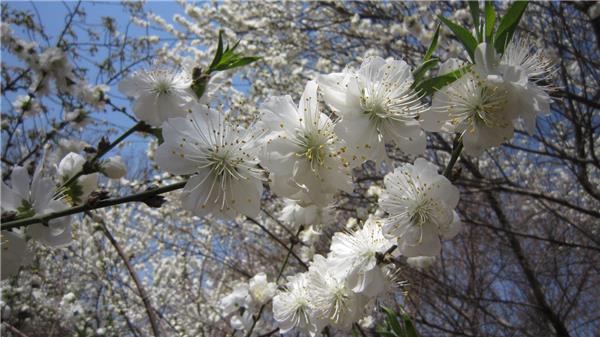
Pruning is a very important part for any plant, and ornamental peach is no exception. Only by reasonably and correctly pruning and shaping ornamental peach can its ornamental value be better enhanced, making it beautiful and abundantly fruitful.