Grafting Techniques and Care Management Key Points for Large-Leaf Privet
The ornamental value of large-leaf privet lies mainly in its tree form; it is a highly shapeable and very pruning-tolerant tree species. Large-leaf privet propagated by grafting has a relatively higher survival rate.
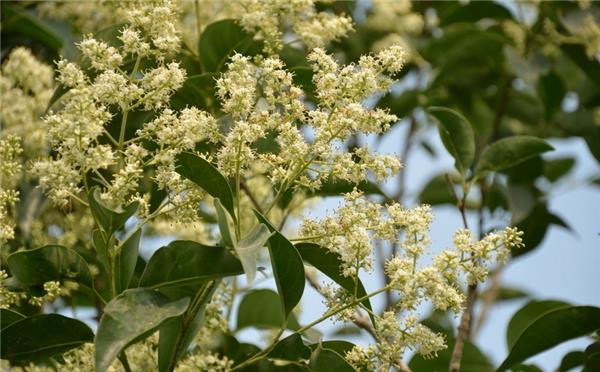
Grafting Techniques for Large-Leaf Privet
First, choose the height of the rootstock and the angle of the branches. On the inner side of the base of a rootstock branch, use a sharp knife to cut a slit about 2 cm long; it is best if the slit just reaches the xylem. The scion can be 3 cm to 5 cm long, whittled with a knife into a regular wedge shape about 2 cm long. The slit on the rootstock should be slightly longer than the cut surface of the scion.
Next, quickly and accurately align the cambium layers of the two. If the rootstock slit is too wide, two scions can be placed side by side.
Then, use a plastic strip of moderate thickness and flexibility to wrap upward from the lower part of the rootstock slit. When wrapping the joint between the two, you can apply more force; when wrapping up to the upper part of the scion where there is no slit, wrap it evenly and firmly onto the rootstock. At this point, the scion must be wrapped tightly and securely, otherwise the scion may dry out in the wind or heal incompletely. After grafting is completed, some branches and leaves of the rootstock can be appropriately thinned out; this work can also be done before grafting.
For spring bud grafting, use a knife to cut a slit about 2 cm long at an appropriate position on the rootstock. When cutting the scion, be sure to include some wood (not too thick), then align the cambium layers of the two, and wrap upward from the bottom with a plastic strip. When wrapping over the bud point, use less force to avoid damaging the bud. Whether the bud point is exposed depends on the weather.
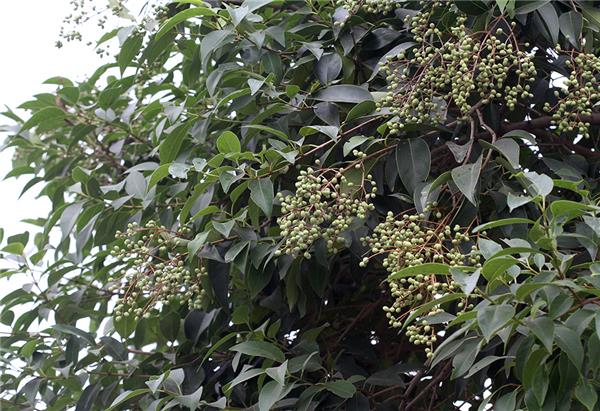
Care Management for Large-Leaf Privet
1. Privet is a plant that tends to prefer moisture, but excessive water can easily cause disease, so water must be strictly controlled. Spraying water every day is needed to meet privet's requirements for its growing environment. Spraying can be done using sprinkler irrigation facilities; this method can ensure the area over which water is distributed, maintain ground humidity well, and also reasonably control water so it is not excessive. The best time for spraying is 8 a.m. to 10 a.m. every day, or 4 p.m. to 6 p.m.; the water volume is best at about one to two hours each time.
2. Large-leaf privet likes fertilizer. Before planting, apply decomposed and fermented barnyard manure as base fertilizer. In March, in conjunction with watering to thaw the soil, dig a ring-shaped trench around the tree at a distance of 50 cm from the trunk and apply a certain amount of farmyard manure. In mid-May, apply 50-100 g of nitrogen fertilizer. At the end of November, in conjunction with watering to seal the soil before freezing, apply a small amount of semi-decomposed barnyard manure.
3. When the light is especially strong, we should pull open the shade net to avoid the high temperatures brought by strong light, which can affect the growth rate of young seedlings. After 4 p.m., when the light is weaker, the shade net should be drawn closed. However, it should be noted that the shade net is like a shade shelter, able to give the plants a comfortable environment; without a shade net, they can still grow safely and healthily.
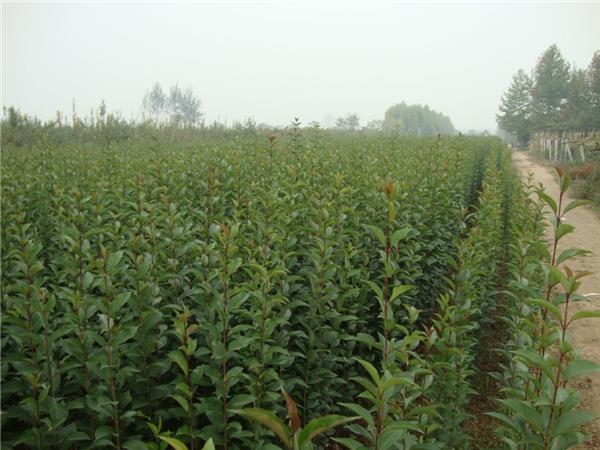
4. The purpose of shaping and pruning large-leaf privet is to keep its tree form perfect and full. First, remove the dense branches, dead branches, and diseased or weak branches within the crown. Then, according to the growth direction of the side branches, retain the side branches that are needed; for side branches that are not needed, determine whether to shorten them or remove them according to the needs of the tree's crown shape.
5. Common pests of large-leaf privet mainly include the spotted lanternfly, the privet leaf-curling woolly aphid, and the pomegranate pouch scale, among others. For outbreaks of the privet leaf-curling woolly aphid, spray the plants in early April with 10% imidacloprid wettable powder at 2000 times dilution or matrine soluble liquid. For outbreaks of the pomegranate pouch scale, choose a highly penetrative pesticide such as 40% Guoguang Bizhi diluted 750-1000 times and spray it, focusing on the parts where the scale insects occur, spraying until wet but not dripping.
6. Weeding at the seedling stage has two parts: one is manually removing weeds within the nutrient soil bags, and the other is chemically removing weeds on the ground cloth in the operation paths.
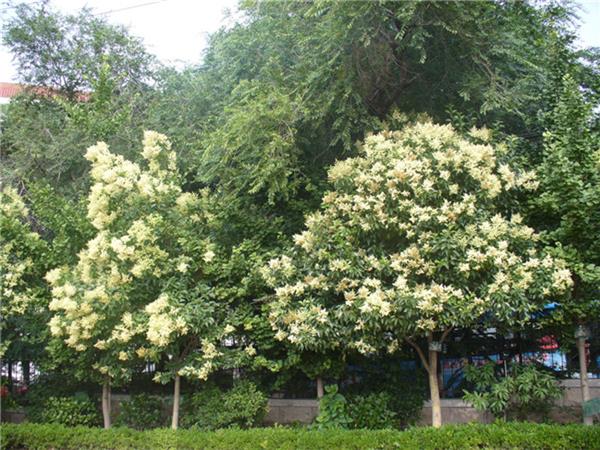
In addition to being used in garden landscaping, large-leaf privet can also be grown in pots. However, pot cultivation requires timely pruning even more, because we need to prevent it from growing too large and becoming messy or growing out of the flowerpot.