How to Grow Golden Euonymus (Euonymus japonicus 'Aureo-marginatus')? A Detailed Guide to Care Points
Golden euonymus is a colorful-leaved landscape tree often used in garden landscaping. It is an evergreen shrub that can purify many harmful gases, so it is very suitable for planting in cities for urban greening.
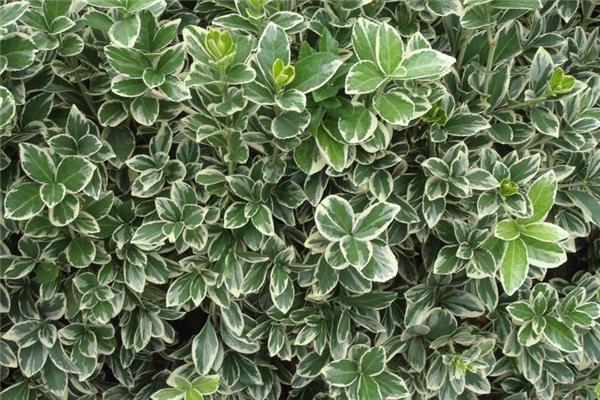
Introduction to Golden Euonymus
Characteristics: Golden euonymus is a cultivated variety of Euonymus japonicus, named for its golden-yellow leaf margins. It branches low, with slightly angular branches and green twigs. The leaves are opposite, obovate, 3-5 cm long and 2-3 cm wide, bluntly serrate, leathery and glossy. The flowers are greenish-white in cymes. The capsule is nearly spherical. The flowering period is May, and the fruiting period is September to October.
Habits: Golden euonymus prefers warm, humid environments with plenty of sunlight, with an optimum growing temperature of 10-25°C. It is drought-tolerant and does not wither during long periods without rain, recovering quickly after rain. It is cold-tolerant and can still survive at -20°C. It is not demanding about soil and can grow smoothly in soil with a pH of 7. In deep, fertile, well-drained sandy loam, its branches and leaves are luxuriant and it grows well.
Uses: Golden euonymus is resistant to harmful gases and smoke and dust, and is also a guardian of family health, making it an ideal greening tree species for polluted areas. Therefore, this tree species has extremely high ornamental value and economic practical value in gardens. In gardens, golden euonymus is mostly used as a courtyard "green" hedge, a family bonsai, or planted in groups in flower beds and lawns. Some are also planted beside doors and pruned into various shapes for people to admire.
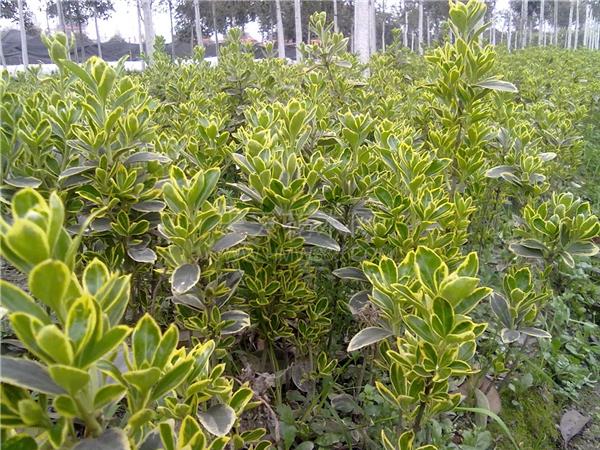
Planting and Management of Golden Euonymus
Cutting shoots: From the middle and upper parts and the periphery of the crown of Euonymus japonicus, cut healthy, pest- and disease-free current-year semi-lignified young branches. After collecting them, place them indoors or in a cool place, then cut them into 7-10 cm long cuttings with a flat top and slanted bottom. Keep 2 leaves on the upper part of each cutting and remove the rest of the leaves to reduce water evaporation, and remove overly tender shoot tips.
Cuttage: Use cuttings immediately after cutting. Before inserting, they can be quickly dipped in a naphthalene acetic acid solution, or directly inserted. The insertion depth is 2/3 of the cutting, and the insertion density is 60-70 plants per sq m. After insertion, spray the substrate thoroughly with 800-1000 times diluted carbendazim solution for disinfection. After the seedbed is full, spray immediately. On sunny days, spray twice daily in the morning and afternoon, and once every half hour at noon. In hot summer, increase the number of sprays as needed to lower the temperature.
Transplanting: One month after insertion, gradually open and remove the plastic film so the plants gradually adapt to the open-field environment. After another month, when the new roots have strengthened their lignification, they can be transplanted. When transplanting, try to keep the root system intact and water immediately after planting to ensure survival after transplanting.
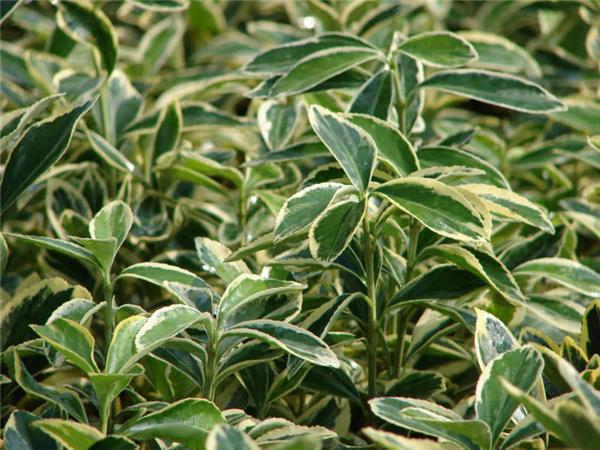
Common Pests and Diseases of Golden Euonymus
Box tree pyralid: The larvae spin silk to connect surrounding leaves and tender branches into temporary nests, then feed inside them. In severe cases, they eat all the leaves and cause the seedlings to die. They can be controlled by manual capture. During the adult egg-laying period, combine with pruning the seedlings, remove egg masses and worm bags, and burn them in a centralized manner. Black light traps can also be used to trap and kill adults during the adult stage. When larvae damage is severe, spray 50% fenitrothion emulsion at 1000 times dilution, or 4.5% beta-cypermethrin at 2000 times dilution.
Peach aphid: Wingless viviparous female aphids and nymphs gather on branch tips and the undersides of tender leaves to suck sap. The damaged leaves often have white waxy secretions, which easily cause sooty mold. In severe cases, the branches and leaves turn black, affecting plant growth and ornamental value. For control, protect natural enemies such as ladybugs and green lacewings. Chemical control can also be used, choosing 20% fenvalerate emulsion at 2000 times dilution or 2000 to 3000 times diluted imidacloprid powder for spraying.
Powdery mildew: It damages the leaves of golden euonymus. Affected plants show shrunken and deformed leaves, affecting growth. At the early stage of the disease, alternately spray 25% triadimefon at 1300 times dilution, 70% thiophanate-methyl at 700 times dilution, and 50% thiram wettable powder at 800 times dilution.
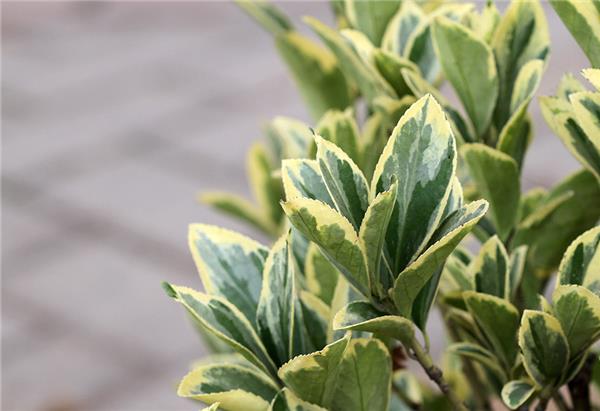
In addition to the knowledge introduced above, when planting and caring for golden euonymus, we also need to pay attention to reasonable fertilization and watering, and timely pruning and shaping. If it is field-planted Euonymus japonicus, we should also pay attention to removing weeds for its healthy growth.