Key techniques for soil culture and soilless culture of chrysanthemum seedlings
Chrysanthemum seedlings can be planted either by soil culture or by soilless culture, because chrysanthemums themselves have strong adaptability. A detailed introduction follows below.
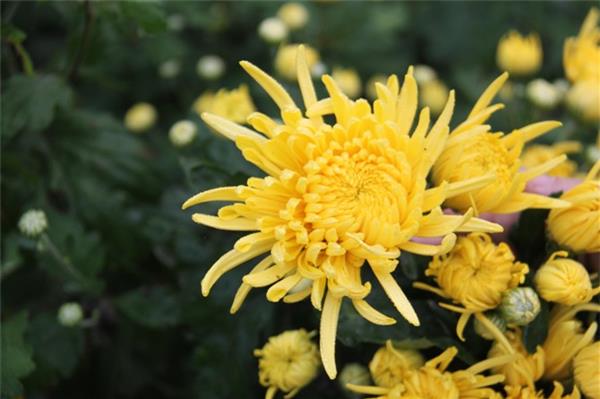
Cultivation methods for soil-cultured chrysanthemums
Potting soil: Choose loose, fertile, slightly sandy soil for the pot. If the chrysanthemums are from cuttings, pot them up promptly after the cuttings have rooted, on a cloudy or overcast day. They can also be planted into pots under a shade shed or shade net, and kept under the shade net or shade shed for 3-5 days before returning to normal care. As the plants continue to grow, they should be repotted 2-3 times. When repotting for final planting, if you can use six parts leaf mold, one part cake fertilizer residue, and three parts sandy soil, the plants will grow lush branches and leaves in summer and autumn, and the likelihood of flowering branches suffering pest and disease damage can be reduced.
Watering: Whether watering is reasonable has an important bearing on how well chrysanthemums grow. Water should be given at the right time. In the hot summer season, when water evaporates quickly, it is best to water once in the early morning and then supplement once more with "leaf water" in the evening. When applying "leaf water," it is best to use a fine-nozzle watering can to spray the entire chrysanthemum plant, so as to increase the humidity of the surrounding environment and the air around the chrysanthemums, but do not wet the potting soil, so as to avoid excessive vegetative growth. Watering in summer and autumn should also be determined by the different growth stages of the chrysanthemums and different climatic conditions, in terms of both frequency and amount. If it is rainy, there is no need to water; on cloudy days water less, and on sunny days water more. In autumn, water moderately; in the hot summer, water more.
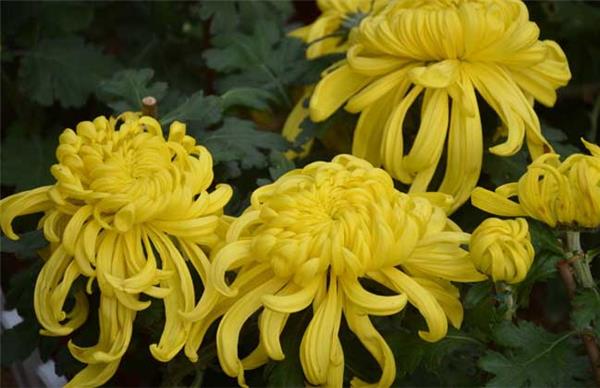
Fertilizing: During the seedling stage, the need for fertilizer is not great. Apply a nitrogen-based fertilizer once every half month to promote strong seedling growth. When fertilizing during high temperatures, the fertilizer solution should not be too concentrated, so as not to damage the plant roots. After pinching, the plants grow vigorously and their fertilizer demand increases accordingly, so apply a nitrogen-based fertilizer once every 10 days. However, in order to control the amount of growth, fertilization should be "light and frequent." In late August, nitrogen fertilizer should be stopped and phosphorus and potassium fertilizers increased, to benefit flower bud growth; too much nitrogen fertilizer will cause excessive vegetative growth and be unfavorable for flower bud differentiation and bud formation. After the flower buds appear, even more attention should be paid to applying phosphorus and potassium fertilizers to promote bud growth. After the flower buds show color, fertilization should be stopped.
Temperature: It prefers a cool climate, and the suitable growing temperature is 18?221, of which daytime is 20-22°C and nighttime is 16-18°C. It can endure high temperatures above 401, but growth slows when the high temperature is above 30°C. After the autumn cools, it enters a period of vigorous growth, and the suitable temperature for branch and leaf growth is 18?221; a temperature of about 20°C during the day and about 15°C at night is favorable for flower bud differentiation; the most suitable temperature during flowering is 13?15°C; developed flower buds can still flower normally at 5°C, and opened flowers will not suffer cold or freezing damage under short-term frost and snow.
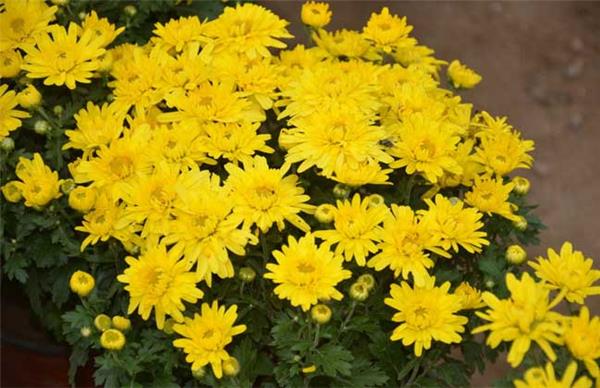
Cultivation methods for soilless-cultured chrysanthemums
Potting up: Place the surviving rooted cuttings, together with the plastic nutrient bag, into a 7-inch clay pot filled one-third with coal cinders. Then slowly fill with a clean mixed substrate (vermiculite 2 + perlite 1 + peat 2) to one-half, then two-thirds of the pot rim, shaking gently to settle it, and water thoroughly with a watering can. Place on a semi-shaded cultivation rack. The mixed substrate can be added as the chrysanthemum plants grow, in 2-3 rounds until fully topped up, with no need for repotting. Cover the substrate gradually with broken clay pot pieces to help conserve moisture and stabilize the plants.
Light: The flowers like light, but direct light should be avoided. After the chrysanthemum seedlings are potted up, in the early stage they need to be placed on a cultivation rack under a 50% shade net; after 20-30 days of cultivation, they only need shading at noon. In the high-temperature season from July to August, strong light often scorches chrysanthemum leaves, and the soilless substrate loses water quickly, with the greatest evaporation, affecting chrysanthemum growth, so a 50% plastic shade net or reed curtain is needed for shading. While shading, spraying water inside the shed several times around noon can lower the air temperature by 2°C-3°C, which is favorable for normal chrysanthemum growth; from late September to October and afterward, no shading is needed all day.
Nutrient solution: Management of the nutrient solution and water: The chrysanthemum nutrient solution is a complete-element nutrient solution. Apply it with a watering can. Before the Start of Autumn, the concentration is 0.1%-0.2%; after the Start of Autumn, it is 0.2%-0.3%, once every 7 days; after mid-September, the concentration is increased to 0.3%.
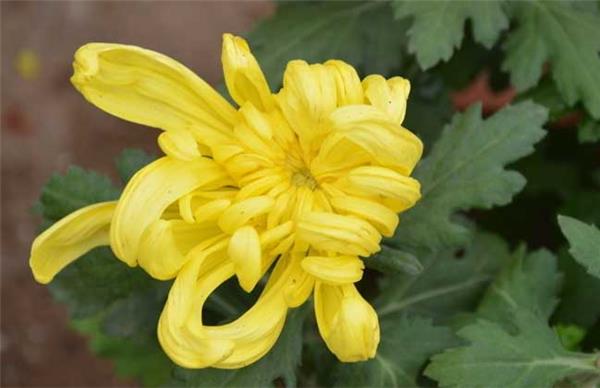
The chrysanthemum is a flower that can instantly attract viewers. Whether planted in the ground or in pots, chrysanthemums can beautify the surrounding environment. They are a very sought-after ornamental flowering plant.