How to Grow Spider Plants? A Complete Guide to Care Methods in One Article
Spider plant (Chlorophytum comosum) has slender leaves shaped like orchids, making it a very stylish decoration for homes or offices, and it is also excellent at purifying the air. How do you grow a spider plant? What are the care methods and precautions for spider plants? What types of spider plants are there? What should you watch out for when growing spider plants?
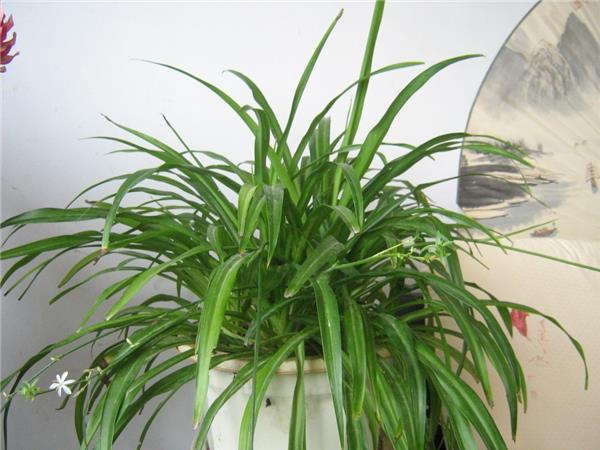
Spider Plant Care Methods
Temperature: Spider plants like to grow in semi-shady and warm environments. In winter, be sure to protect them from the cold; spider plants suffer cold damage when the ambient temperature drops below 4°C.
Light: Never let direct sunlight hit the spider plant, otherwise the leaf tips will turn yellow and wither. If the light is too strong, it is advisable to shade it by 50%. In winter, no shading is needed.
Air humidity: In summer and autumn, the air is relatively dry, which is not suitable for spider plant growth, so during this period you should frequently spray water on the leaves to increase humidity.
Water: Spider plants like moisture. Watering once a day is ideal, but do not let water accumulate in the pot. You can fertilize appropriately when watering, but be careful not to over-fertilize.
Propagation: Spider plants are fast-growing plants and can be propagated by cuttings, division, or sowing seeds.
Feng Shui Considerations for Placing Spider Plants
Placing Spider Plants in the Kitchen
The rate at which plants appear in kitchens is second only to living rooms, because some family members spend a lot of time in the kitchen every day, and the humidity there is also very suitable for most plants. In addition, kitchens in most homes use white or light-colored decor and stainless steel sinks, so colorful plants can soften the hard lines and inject a breath of life into the kitchen.
It is usually located in a north-facing room with fewer windows, where some potted plants can be used as decoration to eliminate the feeling of cold. Since there is little sunlight, shade-loving plants should be chosen. The kitchen is a workspace with frequent activity and scattered items, and both smoke and temperature are relatively high, so large potted plants are not suitable; hanging potted plants are more appropriate. Among them, spider plants are the best choice. Placing a pot of spider plant in a room can absorb harmful gases such as carbon monoxide, carbon dioxide, sulfur dioxide, and nitrogen oxides within 24 hours, acting as an air filter.
Placing Spider Plants in the Bedroom
Bedrooms generally need to be quiet, peaceful, and cozy. Spider plants, lilies, tuberoses, calla lilies, and others can be used. They can make the relationship between husband and wife harmonious, and both body and mind can rest in warmth and quiet.
Spider plants are easy to grow and highly adaptable, and are one of the most traditional hanging plants for indoor spaces. Its leaves are slender and soft, and small plantlets grow out from the leaf axils, hanging down from the edge of the pot, spreading and trailing like flowers, evergreen all year round. Spider plant is the "king of formaldehyde removal" among plants.
Precautions for Growing Spider Plants
Watering should follow the principle of keeping the potting soil moist; if the soil is too dry, the leaf tips are likely to dry out. Spider plants can also be grown indoors for viewing all year round. Hang the pot in a well-ventilated place with scattered light and water it in a timely manner. About once a week, take the pot down and rinse the dust off the leaf surfaces.
Water culture of spider plants: Take the plant out of the pot, rinse the soil off the roots, place it in a transparent container and secure it, change the water once a week, and a small amount of potassium dihydrogen phosphate can be added to the solution. Water-cultured spider plants have more tender and elegant stems and leaves, like grass after spring rain, so green it looks about to drip. The new roots grown in water are crystal white, spreading out in coils, like uneven coral, and also like ice hangings of the northern country. Placing it on a desk gives people a beautiful enjoyment.
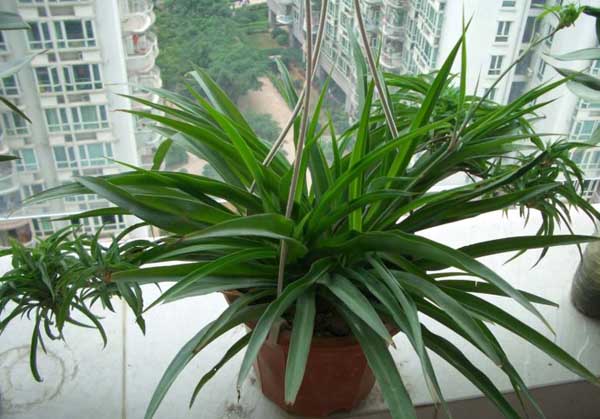
When grown in pots, repot once every 2 to 3 years and remake the growing medium.
If used as a hanging display, it is best to plant it in a small or medium-sized flower pot. Prune appropriately when necessary so that the stolons that grow out can radiate, extend, and trail downward around it. During the growing season, apply a liquid fertilizer mainly based on nitrogen fertilizer once a month.
That is all for now on spider plant care methods. I hope the above content can help you better understand this topic. Stay tuned for more wonderful content~