What is the flower language and symbolism of the dandelion?
Dandelions grow by the roadside and beside ponds, and they are flowers we see all the time. When autumn comes, dandelions drift away with the wind, looking especially beautiful. What is the flower language of the dandelion? What beautiful and moving legends does the dandelion have? Today the Tubatu editor will share with you the dandelion's flower language and the legends of the dandelion.
Dandelion flower language
The dandelion's flower language represents being full of vitality. The dandelion has yellow flowers, and its flower language is "cheerfulness," with wind as its attribute. The dandelion also has another flower language: love that cannot stop, love that cannot stay.
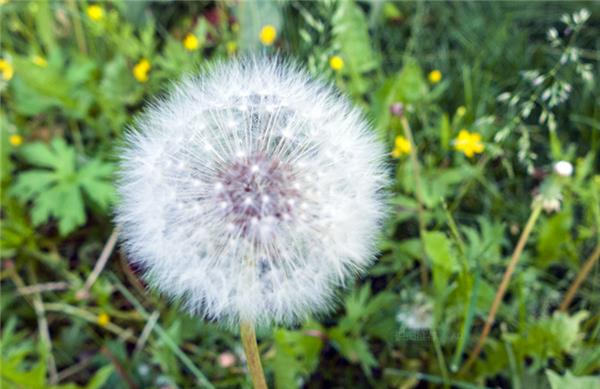
There is a legend that whoever can find a purple dandelion flower will obtain perfect love. The petals of the purple dandelion are light purple, and the flower language of the purple dandelion is: the legendary purple. There is also the arrow dandelion, which people have given the name "flying arrow," and the flower language of the arrow dandelion is "aiming at the marble." In people's eyes, the dandelion has small white wings, flitting about in the wind. You cannot catch it; even if you get it and hold it tightly in your hand, it will soon wither and fade. As soon as the wind blows, the dandelion will drift with the wind, freely floating into the distance.
A touch of faint color cannot hide a deep and persistent feeling; the slowly drifting seed fluff cannot block the earnest conveying of tender love. The dandelion's scattering is not a lonely wandering, but the continuation of life, blending with the essence of nature. Occasionally I recall the dandelions growing in clusters by the roadside in my memory, and I would often pick a few and tuck them into a woven straw hat, then happily crowd together and head home; occasionally I recall the dandelions growing in the countryside in summer, and I would often break off a few stems and hold them up in the high long wind, letting the fluff fly away with the breeze. They simply embody the simple joys of childhood; unadorned, they bring people musings of flying toward the sky.
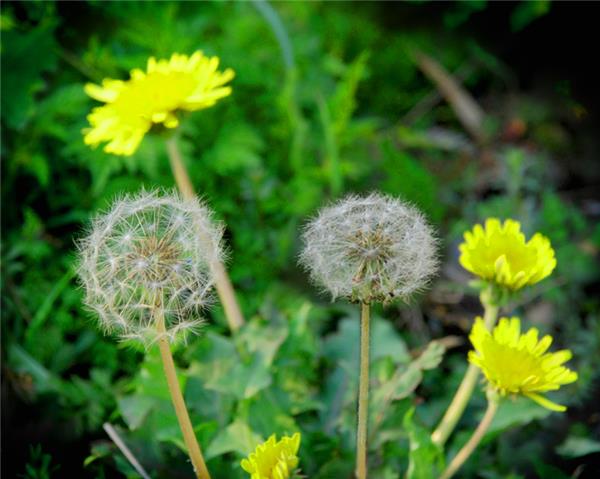
The dandelion's flower language is love that cannot stay. Life is brief, always ready to welcome new life with its swirling flight.......
The contented dandelion always dances in the air, occasionally pausing to rest but immediately setting off again, always feeling that this place is not the one it likes best, until one day it is tired and stops, wanting to stay in a somewhat comfortable place. But just when it wants to stay, the wind carries it away again, and finally blows it into the soil. Therefore the dandelion's flower language is love that cannot stay.
Purple dandelion: a light purple dandelion, its flower language is "the legendary purple," with darkness as its attribute.
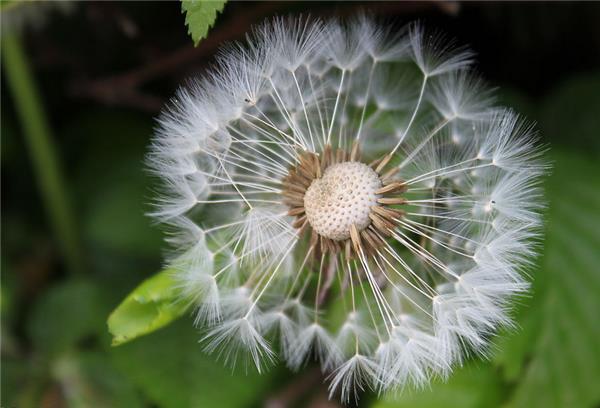
Legend says that what the dandelion loves is the wind, so whenever the wind calls, it will willingly fly away with the wind, even if it means leaving the beloved earth. But it cannot accompany the wind forever. Once the wind stops, it will fall from high in the sky. Perhaps it hurts a lot, yet it still deeply loves the wind, so deeply, so deeply~~~ and never regrets it.
Of course, legends are just legends. The editor believes that after reading this article, everyone will surely love dandelions even more. Actually, the editor also hopes that one day the editor can fly freely like a dandelion, or, like the dandelion's flower language, have a love that cannot stay.
Dandelion information
Dandelion, also called yellow-flower dandelion, po-po-ding, hua-hua-lang and so on, is a perennial herbaceous plant of the genus Taraxacum in the family Asteraceae. The dandelion's root is conical, with a brownish surface, shriveled. The edges of the dandelion's leaves sometimes have wavy teeth or deeply pinnatifid lobes, narrowing at the base into a petiole, and the petiole and main veins often carry a red-purple tinge.
The upper part of the dandelion's flower scape is purplish red, densely covered with arachnoid white long soft hairs; the flower head is a capitulum, the involucre is bell-shaped, the achene is dark brown, and the long pappus is white. Its flowering and fruiting period is April to October. On the dandelion's seeds there is a fluffy ball formed by white pappus, and after the flower opens, it drifts with the wind to a new place to nurture new life.
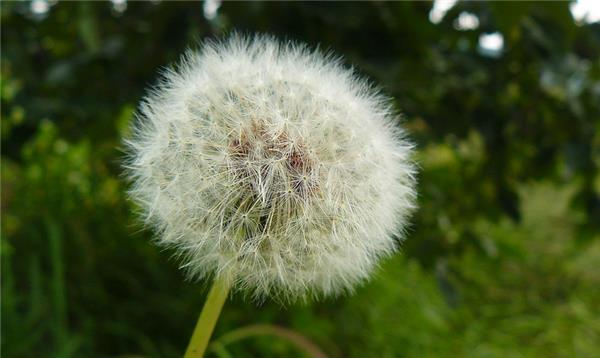
The dandelion also has the effects of clearing heat and detoxifying, promoting diuresis and dispersing nodules. Dandelion can treat acute mastitis, lymphadenitis, scrofula, furunculosis and swollen sores, acute conjunctivitis, cold with fever, acute tonsillitis, acute bronchitis, gastritis, hepatitis, cholecystitis, and urinary tract infections. The dandelion has high medicinal value, and it can also become a delicious dish.
I believe that after reading the above article, everyone has gained some understanding of the content related to the dandelion's flower language. I hope the above content can help everyone. For more exciting content, please continue to follow our website~
I hope the above content can help everyone. For more exciting content, please continue to follow our website~