What are the planting and management methods of oak trees and their effects and benefits?
The oak tree is a landscape tree species often used in garden design. Its unique tree shape, as if shaped by an artist, gives it a good ornamental effect whether planted alone or in groups.
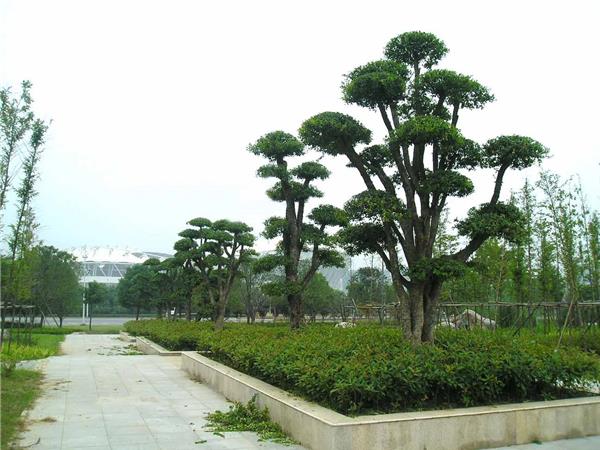
Planting and management techniques for oak trees
Seed collection: when the fruit ripens, it falls naturally or can be shaken down from the tree, and the seeds are picked up from the ground. The 1000-seed weight is 3000-4500 grams, and the nursery stock seeds have a high germination rate.
Sowing: can be done in autumn-winter or spring. Autumn-winter sowing is carried out in November-December, generally sowing immediately after the seeds mature. Autumn-winter sowing can be used in areas where frost is not severe, and it conforms to the characteristics of oak species. It also reduces storage, and in the following spring the seeds germinate and emerge early, with a higher survival rate than spring sowing. Spring sowing should be early to avoid germination and mildew of stored nursery stock seeds. Nursery stock seeds are often damaged by weevils, so before sowing they can be soaked in warm water at 55°C for 10 minutes for insect-killing treatment. The oak tree is a mycorrhizal tree species, so mycorrhizal soil should be mixed with the seeds. Drill sowing is used, with a row spacing of 20 cm and a seed spacing of 10 cm. The sowing rate per 667 sq m is 150-200 kg. When sowing, the nursery stock seeds need to be placed horizontally, which is beneficial for emergence and root establishment. After sowing, cover with 3 cm of soil, or cover with mycorrhizal soil to facilitate mycorrhizal development. The thickness of the covering soil must be uniform, otherwise emergence will be uneven.
Management: seedlings emerge about 1 month after sowing. When the seedlings emerge, the young roots have already penetrated deep into the soil. To promote the formation of lateral roots, 1 month after emergence, use a sharp spade to cut the main root of the seedlings, and water promptly after root cutting. Seedlings with the main root cut temporarily grow more slowly. During the fast-growth period, both height growth and diameter growth are relatively rapid, so fertilizer and water management should be strengthened. The oak tree is a whole-season growth type, and diameter growth does not end until early November. One-year-old seedlings can reach 40-60 cm in height.
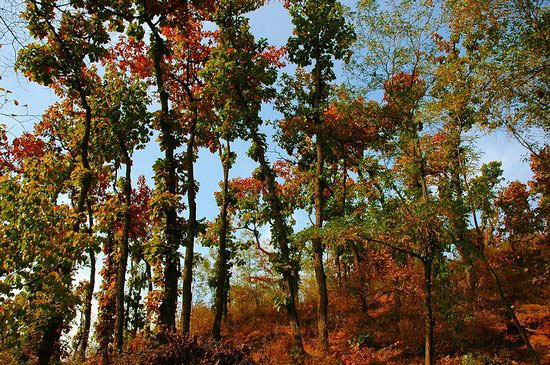
Effects and benefits of oak trees
1. Oak leaves
① Treatment of acute bacillary dysentery: make oak leaves into a 50% decoction, 100 ml each time, taken 3 times a day, with 7-10 days as one course of treatment. Two courses can be taken consecutively. A 25% decoction, 100 ml, can also be used for retention enema, once every night before bedtime. In clinical observation of 181 cases, according to statistics from the observation of 100 cases, fever subsided in an average of 2.1 days, abdominal pain and tenesmus disappeared in an average of 3.4 days and 3.5 days, and the time for stool frequency and characteristics to return to normal was 4.1 days and 4.4 days respectively; among 36 positive☆☆patients in stool culture, 20 turned negative within 3 days, and the rest all turned negative by the 6th day. After 1 month, 23 cases were followed up, and as a result 3 cases relapsed. No toxic reactions or side effects were seen during the course of treatment.
② Treatment of indigestion in children: pick fresh tender oak leaves from June to August, dry them in the shade, grind them into a very fine powder, fry until scorched over gentle heat, and take orally. Within 1 year of age, 0.5 grams each time; over 1 year of age, 0.75-1 gram each time, 3-4 times daily. In the treatment of 100 cases of toxic indigestion in children, 97 cases were cured and 3 cases were ineffective (all complicated by malnutrition). The shortest treatment course was 1 day and the longest 10 days; among them, those cured within 1-3 days accounted for 38%, and those cured within 4-5 days accounted for 39%. No adverse reactions occurred after taking it.
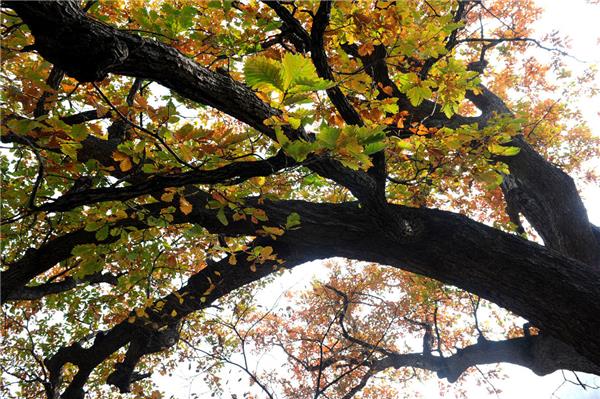
2. Oak bark
① Treatment of diarrhea in children: take 3 liang of oak bark, wash it clean and cut it into pieces, add 4000 ml of water, decoct it down to 1000 ml, and use this decoction to soak the feet, half an hour each time. For severe cases, take 20 ml of the decoction orally, 2-3 times daily. In the treatment of 200 cases, 96.5% were cured or improved.
② Treatment of amoebic dysentery: take 200 grams of fresh oak bark, add water and boil for 15-20 minutes to make 1000 ml of decoction. Take 3 times a day, 5-10 ml each time before meals. The decoction can also be used for enema. Clinical verification has shown a certain curative effect, with no side effects whatsoever.
③ Treats dysentery, enteritis, and diarrhea: five qian of oak bark. Decoct in water, take three times a day.
④ Treats jaundice: oak bark, calcined into charcoal and ground into powder. Two qian each time, taken three times a day.
⑤ Treats hemorrhoids: mash fresh oak bark and apply to the affected area.
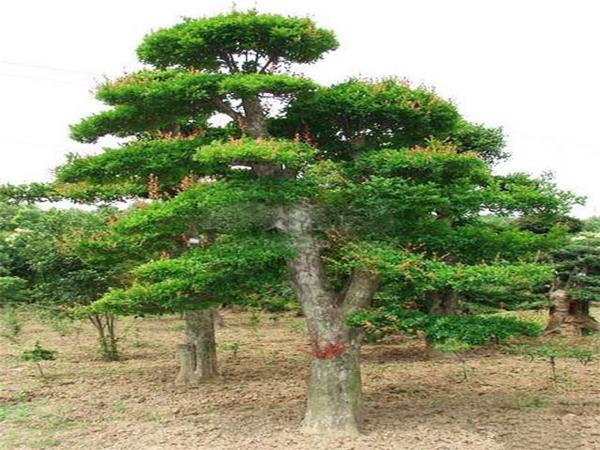
Alright, that is all for the introduction to the oak tree. After reading the above introduction, have you also gained a relatively in-depth understanding of the oak tree? If you also want to grow a tree in your courtyard, then the oak tree would be a very good choice.