What are the methods and precautions for growing pear trees?
The pear tree is a very popular fruit tree, because like the peach tree it not only produces beautiful flowers but also bears sweet, delicious fruit, and the petals can also be used to make tea, so the pear tree is a tree species that combines ornamental value with edible value and has high cultivation value.
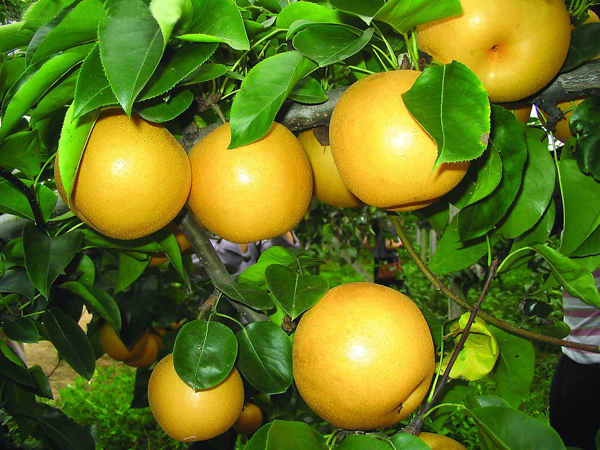
Characteristics of pear tree propagation
1. After the seeds have undergone stratification (about 40-60 days), sow them from late March to mid-to-late April. For Pyrus ussuriensis (mountain pear), the sowing rate is 1.5-2 kg per mu; for Pyrus betulifolia, the sowing rate per mu is 1.5-2 kg for large seeds and 1-1.5 kg for small seeds; for Pyrus calleryana, it is 0.75-1 kg; in drier conditions, cover with 2-2.5 cm of soil, and for soil that tends to crust, cover more thinly, with grass placed on top. Management after sowing is basically the same as for apple tree propagation.
2. For grafting methods, both bud grafting and scion grafting take easily. Because the cambium activity of pear trees stops earlier than that of apples, the bud grafting period must be scheduled before that of apples. Some varieties sprout early in spring, such as Yali and Cili, so the scion grafting period should also be earlier.
3. Pear buds and leaf cushions are both relatively large. For bud grafting, the rootstock is required to be relatively thick, generally above 0.6 cm. Therefore, when the seedlings are about 30 cm tall, pinch off the growing tips at the 7th-8th large leaf to promote thickening.
4. In order to produce more seedlings and better seedlings, different grafting methods can also be used in different seasons within a year.
5. Pear seedlings must meet the qualified standard before leaving the nursery, requiring a good graft union, complete main and lateral roots, numerous fibrous roots, sturdy seedlings, plump buds within the shaping zone, and no quarantine pests or diseases.
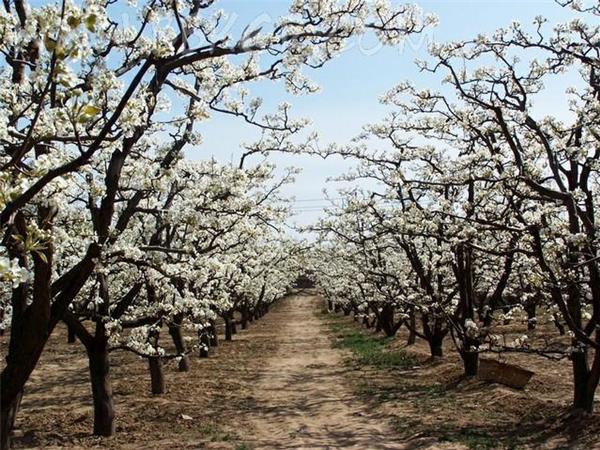
Precautions for scientific fertilization of pear trees
1. Do not use large amounts of chicken manure when applying base fertilizer, because chicken manure has overly high fertility and is not suitable for heavy use. Pig manure is relatively mild and suitable for widespread use. Be sure to focus on organic fertilizer as the main input and chemical fertilizer as a supplement. Also choose the fertilization amount according to the characteristics of the tree: apply moderate fertilizer to superior pear trees, a small amount to the poorest trees, and a large amount of fertilizer to medium pear trees.
2. Applying too much fertilizer makes pear trees reluctant to bear fruit, with fruit too large, peel too thick, and a sour taste, among other things, affecting fruit sales. Therefore, before fertilizing, be sure to strictly calculate the fertilization amount and fertilization area. In the topdressing during the fruit swelling period, the total amount of nitrogen, phosphorus, and potassium fertilizer per mu should be controlled at 30-35 kg. But during the fruit-setting period, such a large fertilizer amount is not needed; control it at 15-20 kg per mu.
3. When spraying pesticides and fertilizers, be sure to choose weather with no wind but relatively high air humidity, which is best. This allows the sprayed pesticide to be used effectively, without being blown away by wind or washed into the soil by rain and losing its efficacy.
4. During topdressing, pay attention to applying small amounts multiple times, and do not be afraid of the trouble. The first few topdressings should focus mainly on nitrogen, and as the number of topdressings increases, attention should then be paid to the application of phosphorus and potassium fertilizer. This can effectively avoid the phenomenon of "growing only in size but not bearing fruit." At the same time, it also reduces unnecessary waste of chemical fertilizer.
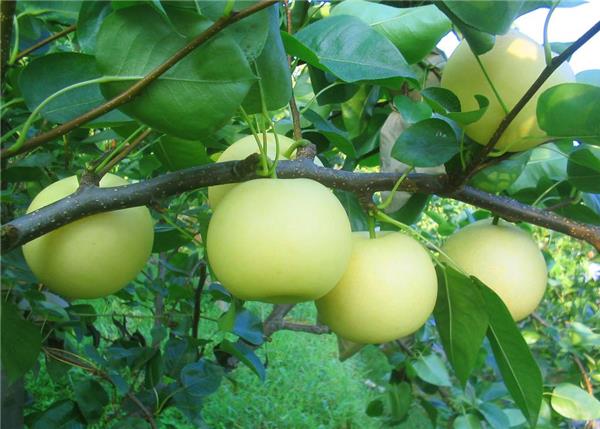
Shaping and pruning of pear trees
1. Pruning of young trees. From planting until the start of fruiting is the young tree stage. Generally, light pruning should be used. Apart from appropriately heading back the scaffold branches, extension branches, and auxiliary branches, the remaining branches should be retained as much as possible on the premise that they do not affect the growth of scaffold branches, and should be lightly pruned and left unpruned, so as to facilitate rapid growth of young trees and rapid flower formation and fruiting.
2. Pruning of trees beginning to bear fruit. These are fruiting trees from the start of fruiting to about 10 years. The pruning task for such trees is to continue selecting and retaining scaffold branches at all levels, continue expanding the canopy, and at the same time pay attention to cultivating fruiting branch groups, promoting early high yield and creating favorable conditions for long-term high yield.
3. Pruning during the full fruiting period. The full fruiting period generally refers to trees 12-30 years old. During this period, the fruiting amount of the tree increases year by year, vegetative growth gradually weakens, and unreasonable management can easily lead to alternate bearing. Therefore, the main task of pruning is to regulate the relationship between growth and fruiting, improve light conditions, and maintain vigorous tree growth, so as to obtain high and stable yields and extend the number of years of the full fruiting period.
4. Pruning of aging trees. Under ordinary management levels, fruit trees enter the aging period after about 30-35 years. The main purpose of pruning is renewal and rejuvenation, restoring tree vigor, extending the fruiting years as much as possible, and maintaining relatively good yield. For main branches and lateral branches, they should be appropriately retracted and their angles raised according to their degree of decline; if the central trunk has become extremely weak and cannot be saved, it should be sawed off at the base and the canopy changed to an open-center form, but care should be taken to protect the wounds well to prevent the occurrence of decay disease.
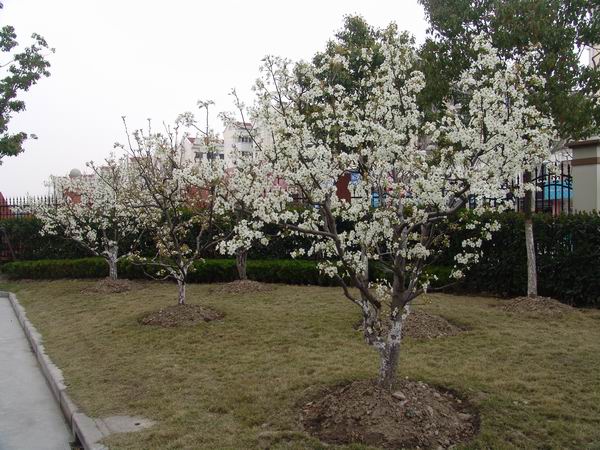
In ancient times, literati once described the beautiful scene of "thousands of trees and tens of thousands of trees blooming with pear blossoms," which shows how eye-catching pear trees are when in bloom. So if any friends want to plant some trees to decorate their courtyard, you may give priority to considering planting a pear tree.
In ancient times, literati once described the beautiful scene of "thousands of trees and tens of thousands of trees blooming with pear blossoms," which shows how eye-catching pear trees are when in bloom. So if any friends want to plant some trees to decorate their courtyard, you may give priority to considering planting a pear tree.