Rose Growing Techniques: A Detailed Guide to Field Planting and Container Growing
Rose propagation is generally carried out mainly by division, layering and cuttings; of course, it can also be propagated from seed, but before sowing, the rose seeds must be disinfected and treated, and the survival rate is also not as high as with the above three methods.
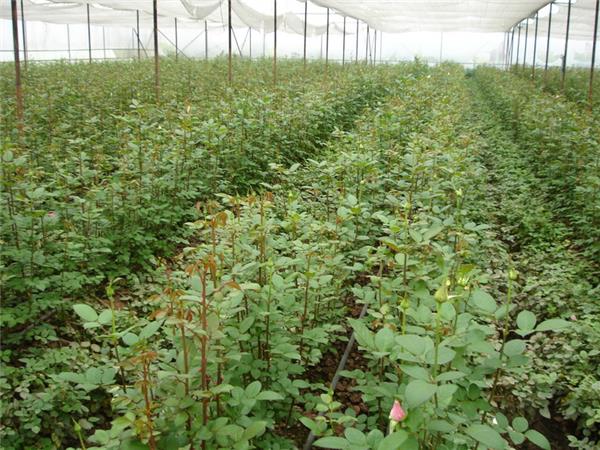
Rose Propagation Methods
Division propagation: One year before division, apply plenty of fertilizer around the root zone of the mother plant and water it, while keeping the soil loose and moist to encourage abundant suckering at the roots. Because roses have a very strong suckering ability, the mother branch tends to wither after each flush of new growth, so the young shoots near the root zone must be transplanted elsewhere in good time so that the mother branch can still grow vigorously.
Layering propagation: During the plum rain season from June to August each year, choose vigorous current-year branches, bend them down into the soil, notch the buried portion and insert a clod of soil into the wound, bury it in the soil, fix it with a bamboo fork or tree fork, and let the shoot tip remain above ground; keep the soil moist, and roots will form in 2 to 3 months. The following spring it can be separated from the mother plant and planted elsewhere.
Cutting propagation: Before buds break in early spring, select healthy, pest-free 1-year-old branches, cut them into cuttings about 20 cm long, and insert them obliquely into a cutting bed made of fresh river sand to a depth of 12 to 14 cm. Firm the sand and water, and keep the sand bed temperature constant; roots form after about 30 days, and the plants are transplanted after they sprout.
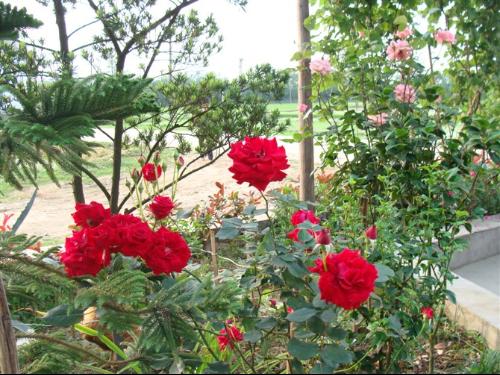
Field Planting Techniques for Roses
Soil improvement: For slightly alkaline soil, apply fully decomposed barnyard manure, compost, medicinal residue, rice husks, wood shavings and other materials combined with deep plowing to improve the soil; for slightly acidic soil, wood ash, lime and the like can be used to neutralize and improve the soil; the improved soil layer should be more than 40 cm deep. Make beds 1.3 m apart, with a bed surface 60 cm wide, a bed height of 30-40 cm, and a bed furrow 40 cm to 50 cm wide; the bed surface must be level.
Planting out: It is best to plant out from March to April, and flowering generally begins 6 months after planting out. Plant 2 rows per bed, with a plant spacing of 15 cm to 25 cm and a row spacing of 40 cm. When planting out, spread the root system out in all directions, and the graft union should be 1 cm to 2 cm above the soil surface.
Field management: In summer, prevent heat stress and lower the temperature, ventilate to remove moisture, prevent drought and drain waterlogging in good time, apply light fertilizer frequently, strengthen pest and disease control, and prune and manage according to the non-flowering period to preserve branches and leaves. In autumn, strengthen fertilizer and water management to promote plant growth, switch to pruning and management for the flowering period, and encourage flower branches to sprout. In winter, close the greenhouse to keep it warm and humid, so as to increase the yield and quality of rose cut flowers; at the same time, watch for weather changes and ventilate in good time.
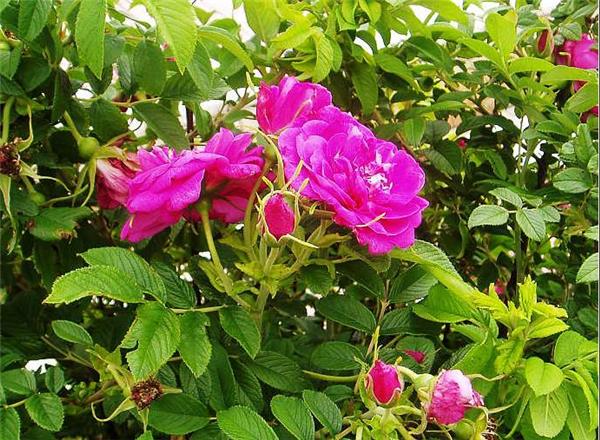
Container Growing Techniques for Roses
Potting up: Potting up can be done each spring or after autumn; when planting, make sure the roots are spread out, firm the soil after potting, leave the soil 3 cm to 4 cm below the rim of the pot, and be sure to water thoroughly the first time.
Routine care: Roses like sunlight and are fairly cold-tolerant and drought-tolerant. The flower pot should be placed in a ventilated, airy spot with plenty of sunlight, and the principle for watering is to water when dry and stop when wet. Roses are afraid of waterlogging and standing water; if this lasts a little too long, the lower leaves turn yellow and drop, and in severe cases the plant dies. At ordinary times, topdressing (such as soybean cake water) or foliar feeding can also be applied as needed.
Pruning: Roses bloom on current-year branches, and regular pruning keeps the plant growing vigorously, with abundant, brightly colored and ever more fragrant flowers, a well-formed shape, and can extend the number of years it blooms. Rose pruning is divided into dormant-season pruning and growing-season pruning. Dormant-season pruning is done after leaf fall in winter or before bud break in early spring, cutting out overly dense branches, old and declining branches, and diseased and pest-infested branches; when thinning branches, do not leave the stub too long; generally make the upper cut starting from the branching point at a 45-degree slant, and keep the cut smooth. Leave 4 to 5 branches per plant, cut them back at 40 cm to 50 cm above the ground, leave 1 to 2 side branches on each branch, and cut back each side branch leaving two buds. Growing-season pruning is done after the first flush of flowers opens, cutting back about 15 cm to 20 cm above the base of the flower branch to encourage new branches, so that the second bloom is more abundant and of better quality.

Whether roses are used to beautify a room, or to decorate an outdoor space such as a home courtyard or balcony, or even as cut flowers to give to others, they are all excellent choices, so if you happen to want to grow flowers, roses can be added to the plants you consider first.