Belgian azalea is a Western beauty that has crossed the ocean
Overall, growing Belgian azalea is relatively easy. When planting it, the four elements we need to pay attention to are timing, method, operation and management. Let's take a detailed look below.
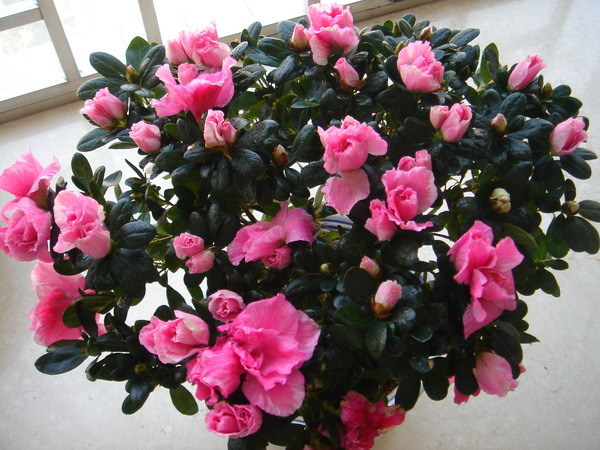
Four key elements of Belgian azalea cutting propagation
Timing: Belgian azalea has a long growth period and can be propagated by cuttings all year round. Generally, spring and autumn are the most suitable seasons for cutting propagation, in spring from March to April, and in autumn from August to September.
Method: 1. Insert the cuttings into the seedling bed for raising seedlings at a plant-to-row spacing of 2 x 3 cm. 2. Arrange artificially made nutrient pots in the shed, and insert 1-2 cuttings into each nutrient pot. 3. Insert the cuttings directly into pots, with 4 cuttings per pot, and release them from the nursery as finished pots.
Operation: During the cutting process, too many leaves should not be retained. Generally, it is advisable to retain 3-4 leaves at the top, to minimize seedling death from water loss caused by transpiration. The cutting depth should be 0.5-1 cm. If too deep, it easily causes water accumulation and rot in the stem base of the cutting, affecting rooting; if too shallow, it easily loses water and wilts.
Management: After cutting, water thoroughly, then water once every 3-5 days to keep the soil moist. At the same time, cover well with a shade net, and strictly prevent direct sunlight on the seedling bed.
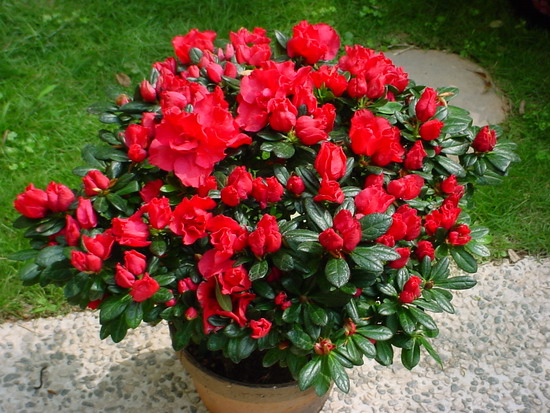
Flowering regulation techniques for Belgian azalea
Timely shaping: The shaping time is calculated and determined according to the artificially set flowering period and the gestation time required by the regulated variety. The main methods are: shortening strong new shoots; pinching ordinary new shoots; and removing diseased and disabled branches in combination with the styling design. Belgian azalea shaping is mainly based on heading and pinching, carried out once every 60-80 days. Each time, the new shoots are required to be pinched flat, to facilitate compact, flat and even formation. If flowering is required for New Year's Day and Spring Festival, the last shoot-setting time in the Jiangnan area is preferably from early June to early July; it can be postponed in the south, and should be earlier in the north.
Spraying growth inhibitors: About 20-30 days after shaping, when the new shoots grow to about 3 cm, plant growth inhibitors can be sprayed to promote the plant's transition from vegetative growth to reproductive growth, so that flower bud differentiation is timely and development is uniform.
Adjusting the nutrient ratio: After flower bud differentiation, plant growth is mainly reproductive growth. The nutrient composition should be mainly phosphorus and potassium fertilizers. During the gestation period, the ratio of nitrogen, phosphorus and potassium is preferably 15:18:18.
Using temperature control facilities to regulate flowering period errors: Due to unforeseen environmental influences, there will inevitably be certain errors in flowering regulation. The adjustment method is to appropriately raise or lower the temperature to speed up or delay the opening of flower buds. The suitable temperature for flower bud opening is 25°C during the day and 15°C at night.
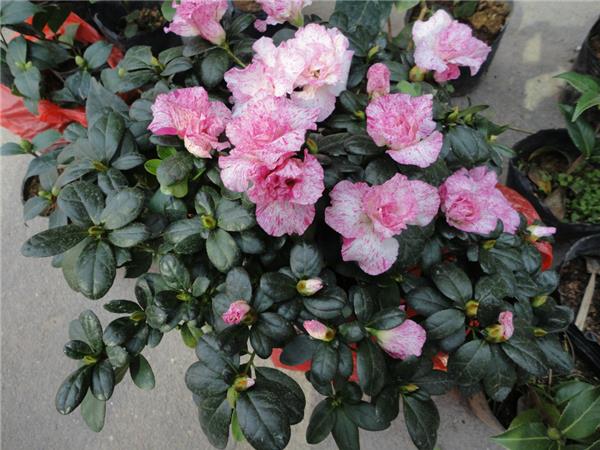
Pest and disease control for Belgian azalea
Belgian azalea does not have many insect pests. The main insect pests are: leaf roller moth (rolls leaves and eats leaves), mites (cause small-leaf disease), and lace bug (causes white spots on the leaf surface and dirty spots on the leaf back). The corresponding pesticides are: beta-cypermethrin 2000 times to control leaf roller moth, lace bug, etc.; dicofol 1000 times and propargite 1500-2000 times to control mites.
The main diseases of Belgian azalea include black spot, spotted leaf cast, stem blight, etc. Fungicides such as Daconil (mancozeb) 600 times, Score 3000 times, Kocide 600 times, Thiophanate 600 times, and myclobutanil 2000 times can be used for rotation control, once every 10-20 days. During long periods of rain, prevent before rain and treat after rain; during the flowering period, attention should be paid to the control of gray mold. At the beginning of flowering, use gray mold control drugs such as procymidone, pyrimethanil and iprodione once every 7-10 days, for a total of 2-3 times.
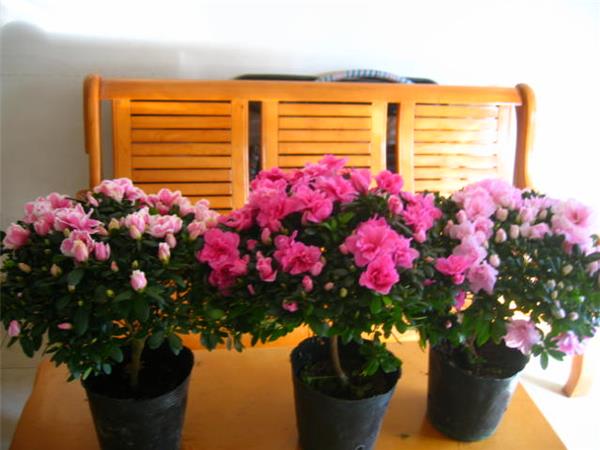
Belgian azalea has graceful flower shapes and rich, brilliant colors. Placing it in living rooms and other places can add vitality to the room and let guests feel full of warmth.