How to propagate and care for Indocalamus? Methods and key points explained
Indocalamus is relatively easy to keep alive, because it naturally has fairly vigorous vitality. Although it is a very short bamboo, it shares the easy-to-grow characteristic of most bamboos, and Indocalamus is certainly no exception.
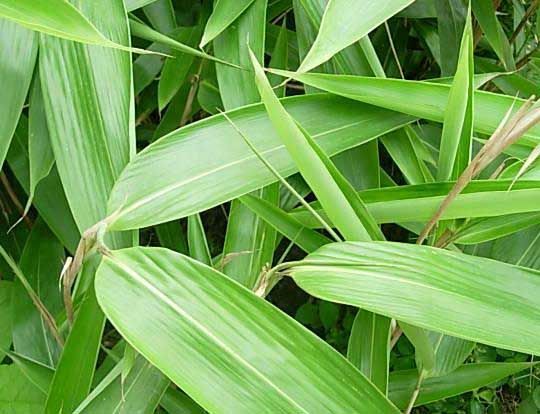
I. Propagation methods of Indocalamus
Division propagation: In spring and autumn, dig up mother bamboo in clumps for division, trim the lower branches and leaves, do not damage the rhizome buds or rhizome roots, transplant into pots with plenty of native soil, press firm and water to keep moist. After new shoots appear, take care to protect them from damage; place in a shaded, humid spot, and only after new buds sprout may they be moved to weak light to receive scattered light. The planting depth is generally 20 to 25 cm; if too deep, the bamboo shoots have difficulty breaking through the soil, and if too shallow, the shoots emerge thin and weak. According to the rhizome length (generally 40 to 50 cm), dig a long strip hole, bury the rhizome, cover with soil and firm it down, and water thoroughly.
Propagation with mother bamboo: Select 1-2 year old mother bamboo that is robust, free of pests and diseases, with fresh yellow rhizomes and plump rhizome buds. Before digging, determine the direction of the rhizome, then cut the rhizome at 30 cm to 80 cm from the mother bamboo. Keep 15 cm to 25 cm of the incoming rhizome and 20 cm to 30 cm of the outgoing rhizome. Use a sharp knife to cut off its upper part, generally keeping 3-5 Indocalamus leaves, then plant it in a previously dug hole. The burial depth should be 3 cm to 5 cm deeper than the part where the mother bamboo was originally buried. After planting, water promptly, cover with grass, and open good drainage ditches.
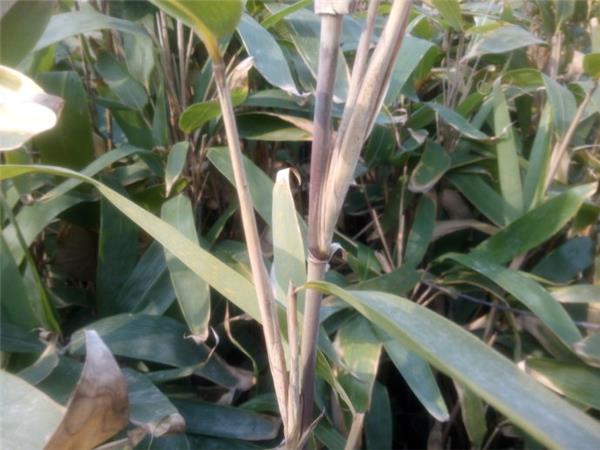
II. Care key points of Indocalamus
1. Carry out from May to June in combination with clearing the mountain and loosening the soil. Spread fertilizer in the forest land that has already been cleared, then loosen the soil to cover it. At this time, the purpose of fertilizing is mainly to provide conditions for the growth of bamboo rhizomes, so quick-acting fertilizer should be the main type, and 100-150 kg of urea can be applied per mu. Where conditions permit, organic fertilizer can be applied in autumn and winter, which can both improve the soil fertility of the forest land and maintain soil temperature, benefiting the overwintering of the buds of new bamboo.
2. Because current Indocalamus forests rarely form pure stands, and some Indocalamus forests have low value for leaf use, they need improvement. By establishing and propagating high-quality Indocalamus forests, it is convenient for forest farmers to harvest and can also increase the returns from Indocalamus forests. Afforestation methods mainly use propagation with mother bamboo and rhizome transplanting. The afforestation land is Chinese fir forest, Chinese fir cutting sites, and forest land around Indocalamus areas. Dig holes or open trenches for afforestation, with a plant and row spacing of 0.5M*1M.
3. When clearing the mountain and loosening the soil, master the principle of "shallow near the clump base, deep farther from the clump base," that is, near the bamboo base and in clustered areas it should be shallow, generally clearing the mountain and loosening the soil 6-10 cm; farther from the bamboo base (clump) it should be slightly deeper, generally clearing the mountain and loosening the soil 15-20 cm. Carry out clearing the mountain and loosening the soil once every 3-4 years, taking care not to damage young and vigorous bamboo rhizomes, roots and buds, and dig out stones, tree stumps and old bamboo rhizomes from the soil.

III. Varieties included in the genus Indocalamus: Sasamorpha sinica
Morphological characteristics: Culms about 1.5 m tall, about 4 mm in diameter, hard and glossy; internodes cylindrical, hollow but nearly solid due to thick walls, with the upper internodes often of unequal length; branches stout, and after growing, the culm sheath is pushed away from the main culm by them and instead tightly wraps this branch. Culm sheaths persistent, 6-10 cm long, longer than their internodes, light purple, hairless or sometimes with small bristles on the upper part, edges bearing cilia; sheath mouth without seam hairs. Leaf-bearing branchlets with 2 (3) terminal leaves; leaf sheaths 7-10 cm long, hairless; ligule only 0.5-2 mm high, truncate; leaf blades oblong-lanceolate, 10-20 cm long, 1.5-3 cm wide, apex acuminate, lower surface with a few sparse short hairs at the base or both surfaces hairless, base contracted into a petiole about 5 mm long, secondary veins 6-8 pairs, small transverse veins clearly visible. Fruit not seen, flowering period April-May.
Growth habit: Grows under forest or by roadsides at an altitude of 1000 m. How is it propagated by cuttings?
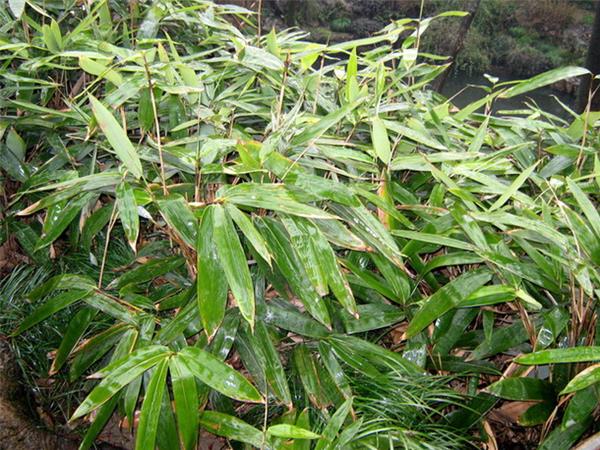
Indocalamus culms are short and lovely, and the bamboo leaves are full of luster, giving it high ornamental value. Group planting for afforestation and planting in courtyards are both very good choices, and can effectively add a natural, fresh atmosphere to the surrounding environment.