Bald Cypress Propagation Methods and Transplanting Precautions Explained in Detail
The bald cypress is not much different from other nursery stock in its growth and is not very delicate, so it is very easy to cultivate. However, during transplanting, we still need to pay attention to protecting its roots. Let's take a detailed look below.
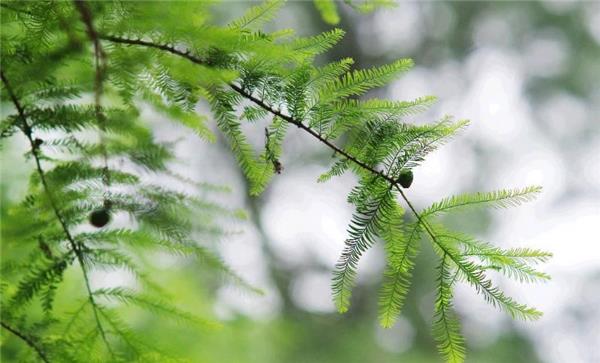
I. Introduction to the Bald Cypress
Morphological characteristics: Also known as pond cypress. It belongs to the Taxodiaceae family, genus Taxodium, and is a deciduous tree. The base of the trunk is swollen, usually with knee-like breathing roots. The bark is thick and rough, brown, with furrows, and peels off in long strips. The large branches extend obliquely upward, and the small branches are upright and red-brown. The leaves are awl-shaped, slightly curved inward, 0.5 to 1.0 cm long, extending forward, closely appressed to the small branches, and arranged spirally on the small branches. Some leaves on young branches or sprouting branches are linear. Male cones are arranged in panicle-like inflorescences, and female cones are borne singly at the top of new branches. The cone is elliptical, light brown, 1.8 to 3 cm in diameter. The seed scales are shield-shaped and woody; the seeds are red-brown, triangular, with thick wings on the ridges. The flowering period is in April.
The cones mature in October. Cultivated varieties include the feather-leaf pond cypress, whose lower leaves are linear and arranged in a feather-like pattern; and the weeping pond cypress, which has many branches, with slender, drooping one- to two-year-old twigs.
Growth habits: It is light-loving and does not tolerate shade. It is tolerant of water and moisture and has a certain degree of drought resistance. It grows rapidly in deep, loose, moist acidic soil. Young trees and seedlings are very sensitive to soil acidity and alkalinity. It has strong sprouting ability and strong wind resistance, and can be used as an afforestation species for farmland shelterbelts.
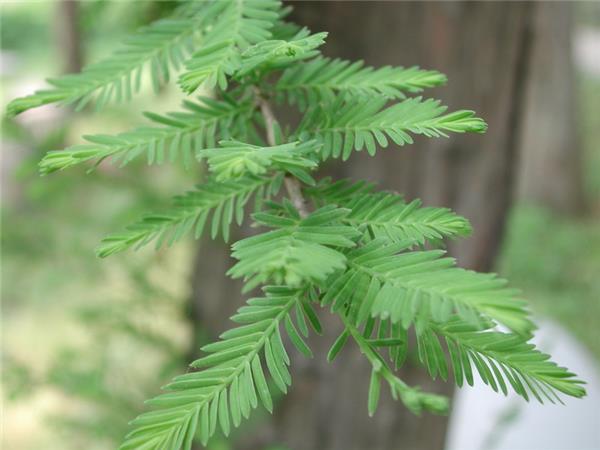
II. Propagation Methods of the Bald Cypress
Propagation by sowing: Its seeds have a hard shell, are difficult to absorb water, and contain inhibitory substances, so they germinate slowly and the germination period lasts a long time, sometimes more than 80 days. If sown in spring, the seedlings may not emerge until summer, which seriously affects seedling formation and seedling growth. Therefore, seeds should be collected in autumn and winter. After processing to obtain clean seeds, they should be stratified with wet sand in December and sown after 90 days of germination promotion. When sowing, choose fertile, moist, slightly acidic sandy loam to make the bed and sow in drills. The row spacing is 20 cm, and the sowing rate per mu is 8 to 10 kg. After sowing, carry out routine management. When the one-year-old seedlings reach 60 to 80 cm in height, they can be lifted from the nursery and planted out.
Propagation by cuttings: In summer and autumn, collect 10 to 15 cm long semi-lignified branches of the current year that are light brown and well developed. Treat them with a 50 mg/L naphthalene acetic acid solution for 6 hours, or quickly dip them in other rooting-promoting hormones for 3 seconds, then insert them into thoroughly washed and disinfected fine river sand, cover with plastic film, provide shade, and strengthen water management. Cuttings taken in summer can reach about 50 cm in height in the same year; cuttings taken in autumn can take root in the same year, and can be transplanted the following spring for continued cultivation. Hardwood cuttings can be made in spring using fully lignified branches, cut into 10 to 12 cm long cuttings, treated with 100 to 150 mg/L naphthalene acetic acid for 24 hours, and inserted into a loam seedbed. Insert 35,000 to 50,000 cuttings per mu, strengthen management, and when the seedlings reach 50 to 60 cm in height in the autumn of the same year, they can be lifted from the nursery and planted.
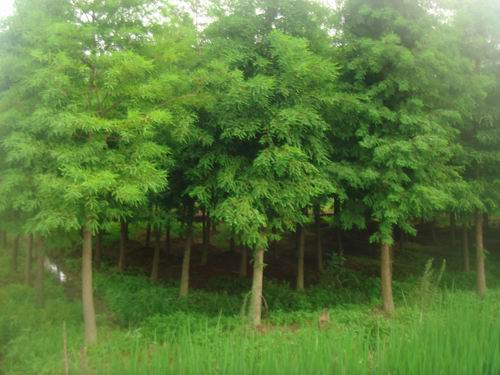
III. Transplanting Precautions for the Bald Cypress
1. During the transplanting of the bald cypress, be sure to pay attention to protecting its bark. This is related to its survival and is therefore very important. Once the soil ball has been dug out, lifting is very critical to bark damage. Different large trees differ according to actual conditions and the characteristics of the trunk itself, so the lifting methods also differ. Whether to lift by the soil ball, by the trunk, or by the branch crotch, etc., all differ. Among these, lifting by the soil ball is the most commonly applicable method in lifting and is also the method that best protects the bark.
2. During loading and transportation, collisions between the truck body and the trunk, and between trunks, should be avoided. After large trees are loaded, because the tree itself is large, in order to avoid contact between the trunk and the truck body, soft padding should be placed between the trunk and the truck body. Wrap the trunk of the large tree with soft material and place it on a wooden rack, tie it tightly with soft rope, and also appropriately bind the crown with soft rope.
3. During unloading and planting, the methods adopted are basically the same as those for digging and lifting. However, it is often the case that lifting by the soil ball can be used when loading, but lifting by the soil ball cannot be used when unloading. In this case, it is necessary to use the above methods of lifting by the trunk and by the branch crotch.
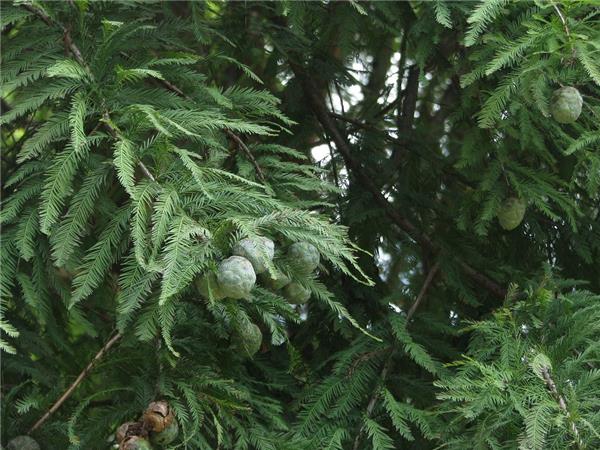 The bald cypress is a deciduous tree with a tall, upright trunk and high ornamental value. Planting bald cypress in a courtyard can not only greatly enhance the quality of the courtyard, but also make the courtyard appear lush and create a scene of natural scenery.