How to grow Trident Maple? Planting management and care methods
Trident Maple is a tree species with fairly good ornamental value, often used in landscape design and courtyard decoration, and it is also a fairly good street tree species.
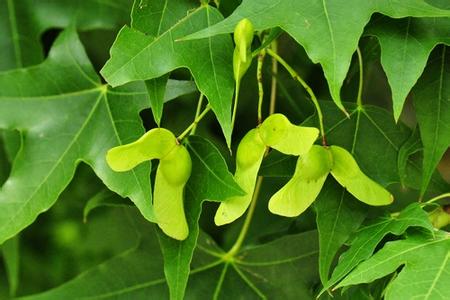
I. Propagation methods of Trident Maple
1. Seed collection and storage: For Trident Maple seeds, choose healthy, robust trees with relatively straight trunks and no pests or diseases as mother trees. Collect seeds when the samaras turn from green to yellow-brown. After collection, sun-dry the seeds for 3 to 4 days, screen them, and put them in a clean cloth bag. Store in a cool, dry place.
2. Site selection and land preparation: The nursery site should be sandy loam soil, with flat terrain, convenient drainage and irrigation, and deep, fertile soil. After preparing the land in winter, apply 3,000 kg to 5,000 kg of decomposed cow and horse manure per mu as base fertilizer, level the ground, and set aside for sowing the following spring.
3. Seed treatment: Before sowing, soak the seeds in 40°C warm water for 30 minutes, then add cold water and soak for 1 day. After removing them, place them in a wind-sheltered, sunny spot, and stir and rinse them evenly with warm water once a day. When more than half of the seeds have cracked open, they can be sown in the nursery.
3. Sowing method: Trident Maple is generally sown in drills, with a row spacing of about 30 cm, a sowing depth of 2 cm, and 15-20 kg of seed per mu, covered with 1.5 cm of soil. At sowing, water the holes, and cover with grass to keep the soil moist. After about 15 days, when the seeds germinate, remove the grass cover. After the seedlings grow to about 10 cm, thin and finalize the seedlings on a cloudy day, with a plant spacing of 10-15 cm.
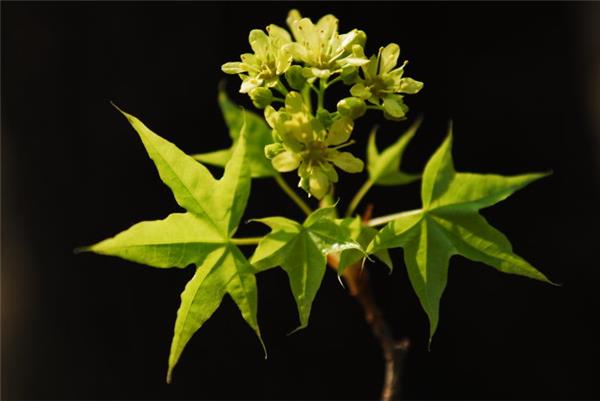
II. Water and fertilizer management of Trident Maple
1. Fertilization: Trident Maple likes fertilizer. When transplanting, apply some decomposed and fermented barnyard manure as base fertilizer, and mix the base fertilizer thoroughly with the planting soil. In early summer, topdress with some nitrogen fertilizer; this fertilization helps the plant recover its vigor and accelerates the growth of branches and leaves. In late autumn, in combination with watering the freezing water, apply decomposed leaf manure or cow and horse manure once. In early April of the second year, topdress with nitrogen fertilizer once; in early July, topdress with phosphorus and potassium fertilizer once; and in late autumn, apply cow and horse manure once. From the third year on, it is only necessary to apply cow and horse manure once each spring.
2. Watering: Attention should be paid to water management during cultivation. When transplanting, water well for the first three waterings. After that, water thoroughly once a month, and after each watering, loosen the soil promptly to conserve moisture. In summer rainy days, watering should be reduced or stopped, and if water accumulates in the tree basin, it should be drained promptly. In late autumn, water the freezing water sufficiently and thoroughly. In early spring of the following year, water the thawing water promptly. April and May are periods when temperatures rise rapidly, and they also coincide with the spring monsoon period in North China. During these two months, water thoroughly once every half month, which can effectively provide the water needed for plant growth and help the plant root and grow leaves. After that, water thoroughly once a month.
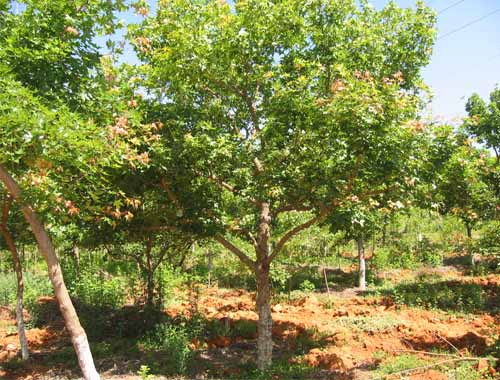
III. Differences between Trident Maple and Five-lobed Maple
Five-lobed Maple and Trident Maple are both trees of the genus Acer in the family Aceraceae. Both have beautiful tree shapes and elegant leaves and fruits, and their leaves turn red in autumn. The trunk of Trident Maple is relatively short, generally around 13 m, and the tree vigor is weaker, while the trunk of Five-lobed Maple can reach more than 20 m. The bark of Trident Maple is gray-yellow with shallow vertical fissures, and the twigs are gray-yellow (first-year branches are tender green), smooth and hairless; while the bark of Five-lobed Maple is thin and gray-brown, and the young twigs have sparse hairs when they first emerge, which gradually fall off later. Both have simple, opposite leaves with palmately lobed blades.
However, the leaves of Trident Maple are palmately 5-lobed, sometimes the middle lobe is divided into two lobes again, the lobe tips are gradually pointed, the leaf base is usually truncate, rarely heart-shaped, and both sides are hairless. The leaves of Five-lobed Maple are usually palmately 5-lobed, the lobes are broadly triangular, entire, both sides hairless or only the veins on the back have tufted hairs, the reticulate veins are obviously raised on both sides, and the base is often heart-shaped. The fruit of Five-lobed Maple spreads at an obtuse angle, while the two wings of the fruit of Trident Maple spread at nearly a right angle.
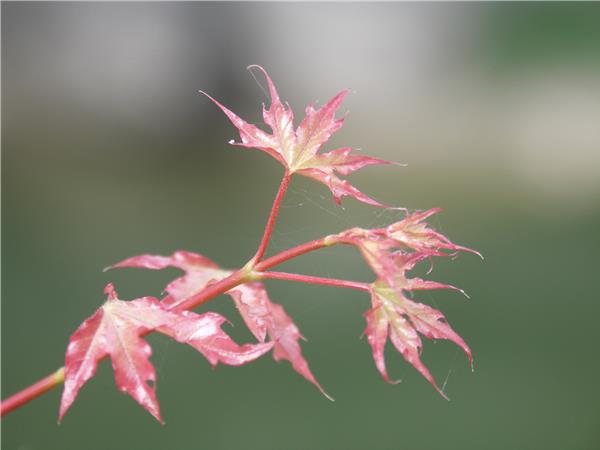
Although Trident Maple and Five-lobed Maple look similar in appearance, if you look closely, you can tell the differences between the two. However, both are good choices for decorating home courtyards, and relatively short tree species can also be grown as potted plants to beautify the room. Everyone can choose and grow them according to their own preferences.