Rose Cutting Propagation Methods and Care Management Tips
Rose cuttings require extra attention when it comes to choosing varieties, preparing the medium and selecting the time; neglecting any one of these aspects can very likely cause problems such as the death of rose cuttings.

Rose Cutting Propagation Techniques
Ecological habits: Grows vigorously, highly adaptable, cold-tolerant, drought-tolerant, and not demanding about soil. Prefers sunny, cool, well-ventilated and well-drained locations.
Preparing cuttings: Choose side branches of the current year that are well developed and plump. After cutting the cuttings, put them into water immediately to prevent wilting. Leave only 1 to 2 pairs of leaves, not too many, to reduce water evaporation.
Medium preparation: Use imported peat as the main medium, generally 80% imported peat + 20% perlite. The pH value must be kept between 5.5 and 6.0. Before potting, fill the medium as fully as possible to prevent it from settling after watering. In addition, note that the first watering should be done in several rounds so that the medium is thoroughly soaked while avoiding changes to the medium structure. After thorough watering, let the medium sit for several hours before potting, which achieves the optimal potting soil moisture. On the 16th day after potting, water sufficiently.
Cutting time: Softwood rose cuttings are generally taken from mid-June to mid-August, depending specifically on the growth condition of the seedlings. Take cuttings in mid-to-late July, but avoid consecutive cloudy days, because on consecutive cloudy days the temperature, humidity and light all fail to meet the conditions required for cuttings to root.
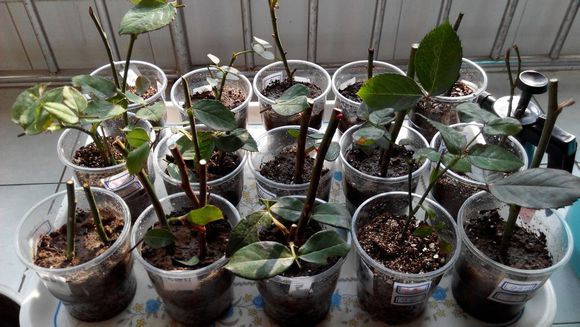
Cutting propagation: It is best to choose a cloudy day or the morning or evening. The cutting density should not be too high or too low. If the density is too high, ventilation is poor and diseases are likely; if too low, resources are wasted. Generally, 450-600 plants per sq m is suitable. The insertion depth into the substrate should be about 3/5 to 2/3 of the cutting; too shallow and it easily falls over, too deep and it easily rots. Spray water immediately after inserting so that the cuttings are in close contact with the substrate.
Transplanting management: Choose a cloudy day or the morning or evening for transplanting. Before transplanting, water the seedbed thoroughly to make the bed surface soft, so as to avoid damaging the root system when lifting the seedlings. Dig out the small seedlings with a shovel, gently shake off the medium, and plant at a plant spacing of 10-15 cm and a row spacing of 30-40 cm. Water immediately after planting, then irrigate 2-3 times in succession. After the seedlings recover, weed and loosen the soil in time to ensure the rose seedlings grow vigorously.
Rose Care and Management
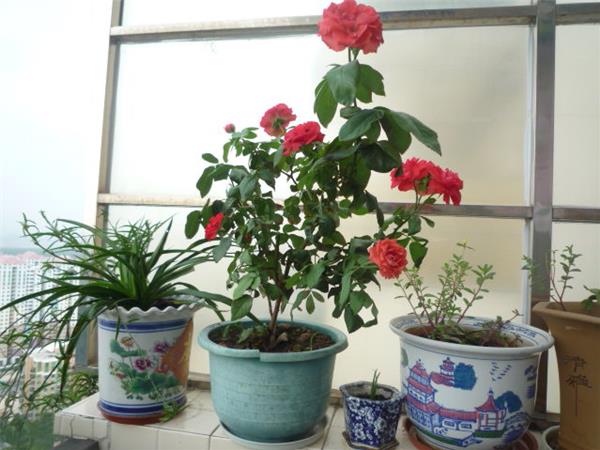
Fertilizer and water management: Roses are not demanding about water and fertilizer; generally, applying fertilizer 3 times in combination with watering is enough. First, pre-flowering fertilizer, applied in furrows before spring buds sprout, preferably well-rotted barnyard manure plus leaf mold; second, post-flowering fertilizer, applying rotted cake fertilizer residue after the flowers fade to replenish the nutrients consumed by flowering; third, winter fertilizer, applying barnyard manure after leaf fall to ensure the roses overwinter safely.
Dwarfing treatment: Paclobutrazol can effectively control plant height; use the same concentration each time, with about 1500 L of solution recommended per hectare. Since paclobutrazol acts on the stem, when spraying, the solution needs to come into contact with the plant's stem. Paclobutrazol is generally started one week after the second thinning, at a concentration of 100 ml/100 L water. Yellow and pink varieties need to be treated twice, while other varieties need only one treatment.
Shaping and pruning: Since rose flowers all grow at the tips of the branches, before flowering, short pruning should be avoided as much as possible, and thinning can be done as appropriate. For old plants, simply prune away overly dense branches, dead branches and diseased or pest-infested branches. After flowering, promptly cut off the spent flowers to accumulate nutrients.
Pest and disease control: Aphids and noctuid moths harm the young shoots and leaves of the plants; spray with 40% omethoate 2000x solution. Powdery mildew and rust often cause damage; spray with 65% zineb wettable powder 600x solution, and for rust, spray with 20% carboxin emulsifiable concentrate 400x solution.
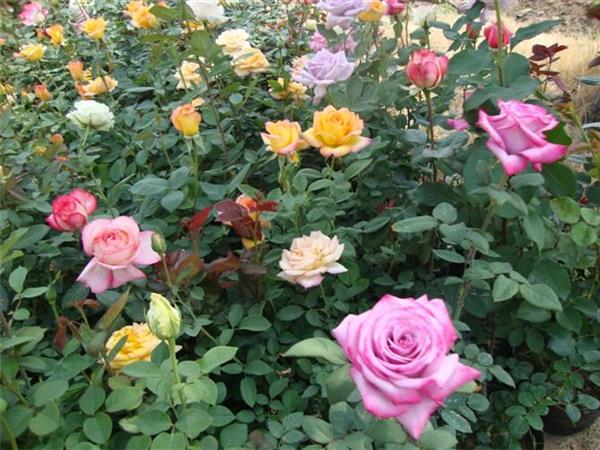
Roses have graceful flower shapes and rich, brilliant colors, making them an ornamental flowering plant that captivates at first glance. Roses used for indoor potted growing generally need dwarfing treatment, but they can also be planted in the ground to decorate courtyards, walls and other places, with a good landscaping effect.