What is the foundation for apricot trees to grow healthily and thrive
The apricot tree is a fruit tree species with fairly strong adaptability, and it is also a tree species with fairly high ornamental value. However, to ensure its healthy and vigorous growth, a certain amount of technical knowledge must also be mastered in cultivation.
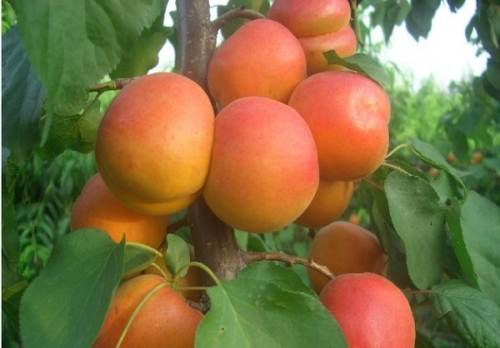
I. Basic cultivation methods for apricot trees
1. Propagation method: The quality of grafting technique is shown in the smoothness of the cut surface of the interface and the speed of grafting. If the cut surface is not smooth, or the cambium of the rootstock and scion fail to align, the cambium of the rootstock and scion cannot make close contact, and the wound healing speed will slow down or the wound will fail to heal. Even if it heals, it will affect the growth of the scion, causing situations such as late sprouting, weak growth, and easy splitting. When grafting, the scion surface should be trimmed flat, the cambium of the rootstock and scion at the grafting site should be aligned, and the plastic strip used for wrapping should be tied tightly and wrapped securely to ensure that the interface is firm.
2. Basic care: After the apricot tree is grafted, water it promptly to ensure the water supply for the scion. According to how fast the trunk grows, loosen the binding promptly to ensure nutrient supply for the apricot tree. Remove buds and rootstock shoots at any time to avoid excessive loss of nutrients and prevent effects on the growth of the grafted seedling. When newly grown branches on the scion reach about 20 cm in length, take measures to secure the branches to prevent them from being broken by the wind. Prune away overly dense and slender weak branches to facilitate ventilation and light penetration through the tree body. Cultivate a good tree shape, which is beneficial for the apricot tree to bear fruit.
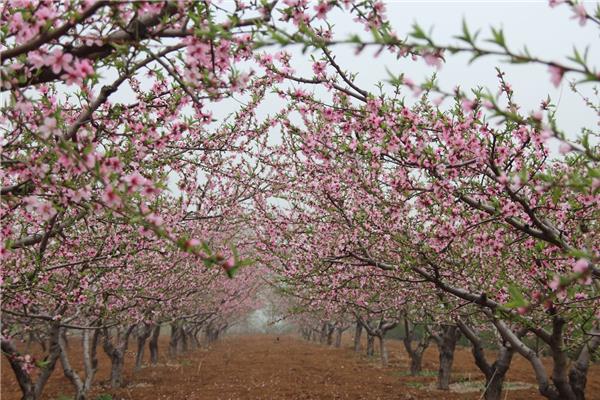
II. Shaping and pruning methods for apricot trees
1. Pruning of young trees: The main task of pruning young trees is shaping. According to the tree shape configuration, cultivate the main branches, maintain a relatively strong growth vigor of the main branches, and control the development of other branches. Every year, shorten the extension branches of the main and lateral branches to continuously expand the tree crown. In general, prune strong branches lightly and weak branches heavily. The amount of pruning should preferably be 1/3 to 2/5 of the original branch.
2. Pruning of trees beginning to bear fruit: Cut back main and lateral branches at all levels, retain plump outer buds, and lightly or moderately shorten them to continue expanding the tree crown; thin out upright competitive branches on the scaffold branches, overly dense branches, and crossing branches in the inner canopy; for non-scaffold branches, moderately vigorous branches, and even newly emerged water sprouts within the tree crown, if they do not affect the scaffold branches, they may be lightly shortened or left unpruned as appropriate to promote the formation of fruiting branch groups.
3. Pruning of trees in full fruit period: Main and lateral branches at all levels and scaffold branches still need to be shortened, with the pruning amount controlled at 1/3 to 1/2, to promote the growth of new branches. Thin out extremely weak branches and dead branches in the upper middle part of the tree crown, retain strong branches, and properly shorten long fruiting branches if any. Pay attention to raising the angle of branches around the periphery of the tree crown to enhance tree vigor, and appropriately use water sprouts on the upper side of main branches to cultivate fruiting branch groups.
4. Pruning of aging trees: After an apricot tree enters the aging stage, its growth vigor is weak, the amount of new shoot growth is small, and the fruiting parts shift outward severely. The main task of pruning in this period is to renew and rejuvenate all types of scaffold branches and fruiting branch groups.
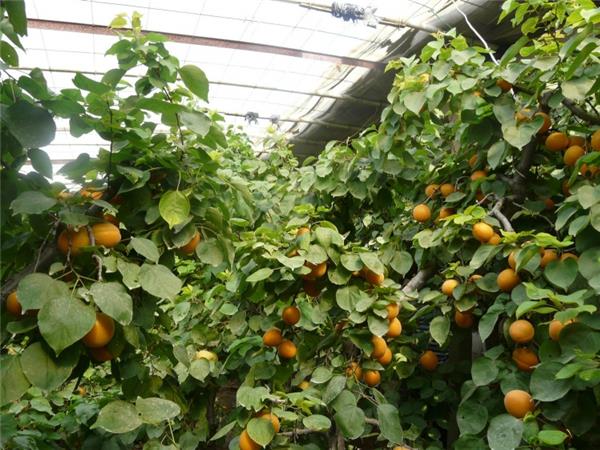
III. Apricot tree varieties suitable for protected cultivation
1. Jintaiyang apricot: An American variety. The fruit is relatively large, with an average single fruit weight of 66.9 grams and a maximum fruit weight of 87.5 grams. The fruit surface is golden yellow, smooth and beautiful. The flesh is free-stone, tender and juicy with aroma, and of good quality. It is resistant to fruit cracking and relatively tolerant to storage. Under protected cultivation, it can mature in mid-April. It has strong adaptability and stress resistance, strong self-fruiting ability, and high yield.
2. Dapengwang apricot: Its maturity period is 5-7 days later than that of Jintaiyang apricot. It is a new extra-large early-maturing European apricot variety, with an average single fruit weight of more than 125 grams and a maximum fruit weight of 200 grams; it has a high fruit-setting rate, early fruiting, excellent quality, high and stable yield, and strong adaptability, and is extremely suitable for greenhouse cultivation.
3. Kate apricot: Native to the United States. The fruit is nearly round and extra-large, with an average single fruit weight of 105.5 grams and a maximum of 138 grams. The fruit skin is orange-yellow, with a red blush on the sunny side. The flesh is orange-yellow, fine in texture, rich in juice, with a sweet-and-sour refreshing flavor, a strong aromatic fragrance, and top-grade quality. Under protected cultivation, it matures in late April. This variety has strong tree vigor, young trees grow vigorously and quickly form a crown, and trees in full fruit period have moderate vigor, with high and stable yield.
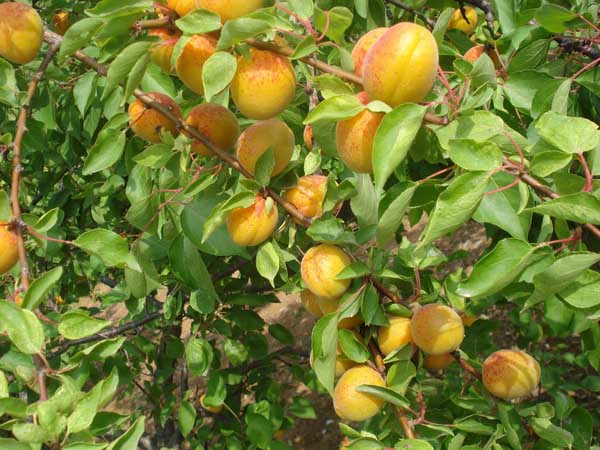
All right, the above is the complete introduction to apricot trees. Here I still want to remind everyone once again that in the process of pruning apricot trees, you must take different pruning measures according to their growth stages. Otherwise, not only will it fail to increase their fruit-setting rate, but it may instead cause harm to the apricot tree itself.