How to Grow Red Lilac? Detailed Guide to Cultivation Methods and Benefits
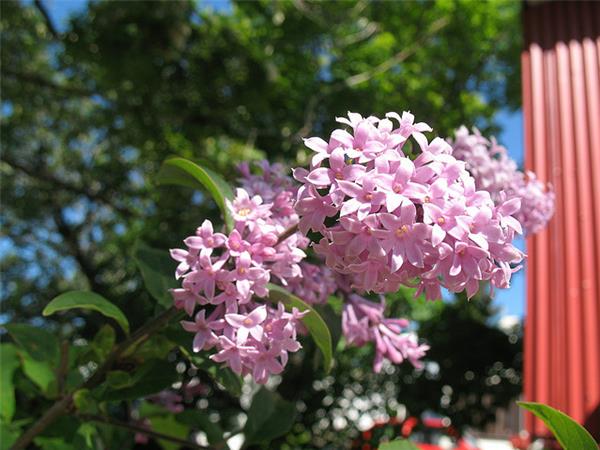
Red lilac can be cultivated in two ways: in the ground and in containers. Potted red lilac is mostly used to beautify indoor spaces, while red lilac planted in the ground can be used for landscaping gardens and courtyard decoration.
Cultivation Methods for Red Lilac
Propagation: Red lilac is mainly propagated by sowing seeds, and transplants easily and survives well. Choose disease-resistant varieties and mix the seeds with New High Lipid Film (can be mixed with seed coating agents). This can repel underground pests and diseases, isolate viral infections, without affecting the seed's imbibition and swelling function, strengthen respiration intensity, and improve the seed germination rate.
Seed collection: In August, when the seeds turn green is the best time to harvest them. If too early, they are not yet mature; if too late, the seed coat bursts and the seeds fall off. Place the collected seeds in a well-ventilated bag and put it in a wind-sheltered, sunny spot. After the seeds dry, transfer them to a cool, dry place for storage.
Site selection: Red lilac has low soil requirements and tolerates poor soil, but loose, fertile, slightly acidic sandy loam is best. For container cultivation, use a mix of leaf mold, peat soil and garden soil in equal parts as the growing medium. It prefers a warm, humid, semi-shaded environment, is relatively cold-tolerant, and extremely shade-tolerant.
Sowing: The best sowing time is from April 25 to 30, with a sowing rate of about 3.0g/m2. Scatter the seeds evenly over the bed surface and cover with fine soil to a thickness of 0.5-1.0cm. Water at the right time: before 9 a.m. and after 3 p.m. For manual watering, use a fine-rose watering can; for mechanical watering, ensure a fine mist-like spray. Do not cause the covering soil to wash away or pile up, and keep the bed surface moist at all times.
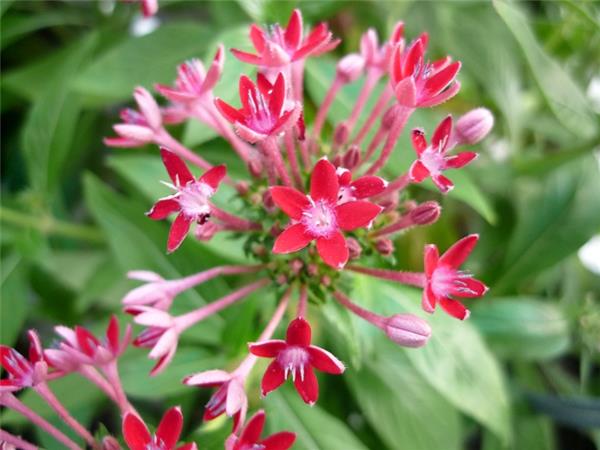
Cultivation: After transplanting the seedlings, water with a small amount of dilute fertilizer solution and spray with New High Lipid Film. This effectively prevents above-ground water evaporation and seedling moisture transpiration, isolates pests and diseases, shortens the seedling recovery period, and helps the plants quickly adapt to the new environment and grow healthily. If conditions are not very favorable, the color will be yellow-green or pale orange, unable to show the characteristics of red aquatic plants, so attention must be paid to light quality and fertilizer.
Pests and diseases: During the seedling stage, damping-off, seedling blight, black leaf disease, and root rot are common. When the seedlings grow 2-3 true leaves, drench the roots with 55% Dexon at 500 times dilution or 50% carbendazim at 600 times dilution. You can also spray with 50% carbendazim at 800 times dilution. For black leaf disease, Xiansheng can also be used as a spray. First-year seedlings can reach over 30cm, and second-year seedlings can reach over 60cm, at which point they can be dug out for planting.
Benefits and Effects of Red Lilac
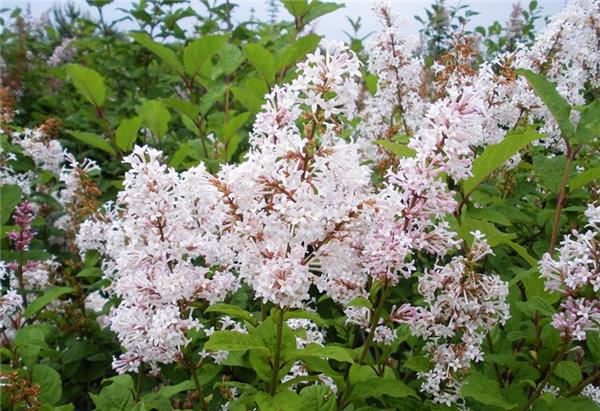
Ornamental value: The inflorescences of red lilac are neatly arranged and look orderly. Its flower color is relatively elegant, and its overall shape is also very beautiful, so it has strong ornamental value. Of course, we also know that red lilac has very strong vitality and adaptability, and is cold-tolerant and hardy, so it can be artificially cultivated. Only a small amount of manpower and resources are needed to harvest beautiful red lilac.
Landscape value: Red lilac is generally planted on lawns or roadsides as a backdrop. Of course, it can also be transplanted and cultivated. Red lilac has a very high survival rate, and there is almost no need to worry about it dying from transplanting, so we often plant red lilac for its landscape value.
Other value: Red lilac itself has outstanding flower shape and color, so in addition to ordinary potted cultivation, it is also a very good cut flower material. It can be used as a preferred cut flower material for vase arrangements, becoming a highly charming ornamental work of art.
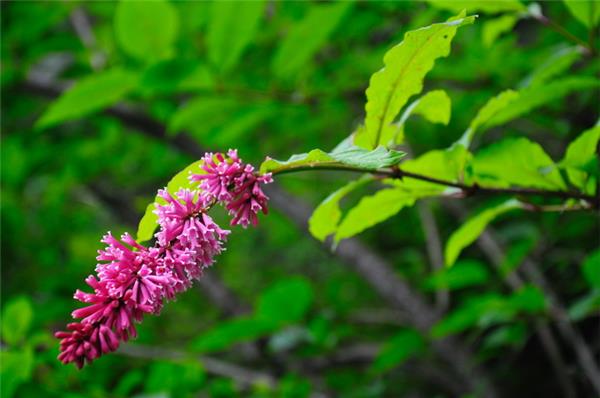
Relatively speaking, red lilac is quite easy to grow. However, for red lilac grown in indoor pots, measures such as indoor ventilation must be done well. Especially in hot summer weather, be sure to avoid damp air causing rot disease in the plants.