What Is the Magnolia Bark Tree? A Detailed Guide to Magnolia Bark Tree Cultivation and Care
The magnolia bark tree has a tall, upright form. Although it is a tree species unique to mountainous areas, it can now be cultivated artificially as well; as long as it is cared for properly, it can grow strong and healthy.
I. Morphological Characteristics of the Magnolia Bark Tree
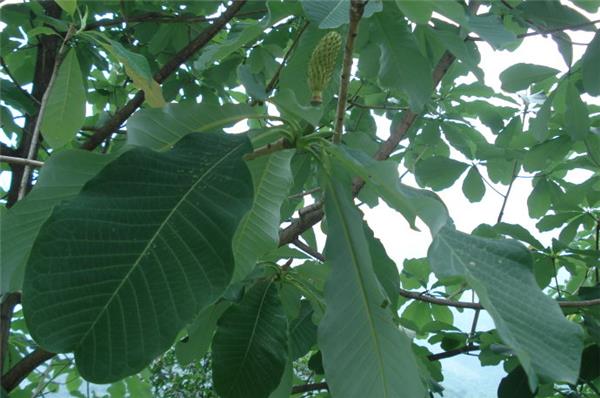
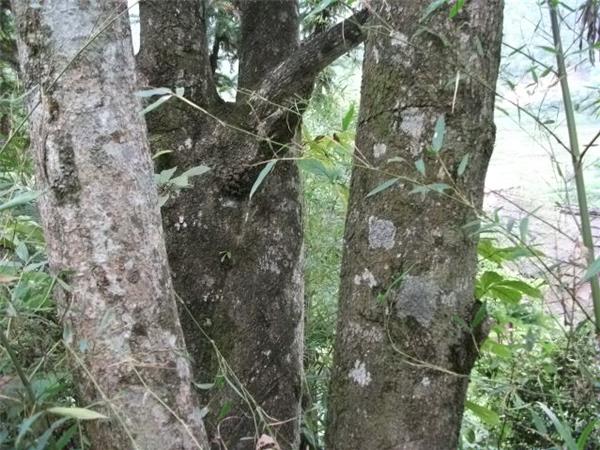
Deciduous tree, 15-20 m tall. Trunk straight, bark grayish brown with longitudinal cracks, inner bark purplish brown or dark brown. Terminal buds large, branchlets with annular stipular scars. Simple leaves alternate at the tips of branches, elliptic-obovate, leaf margin slightly wavy, leaf underside hairy and covered with white powder; petiole relatively thick. Flowers large, white, opening at the same time as the leaves, solitary at the tips of branches; tepals 9-10, fleshy; stamens numerous, arranged spirally; carpels numerous, arranged spirally on the receptacle. Aggregate follicle, cylindrical-elliptic or ovate-elliptic. Seeds red, triangular-obovate. Flowering period April-May, fruit ripening period October-November.
II. Growth Habits of the Magnolia Bark Tree
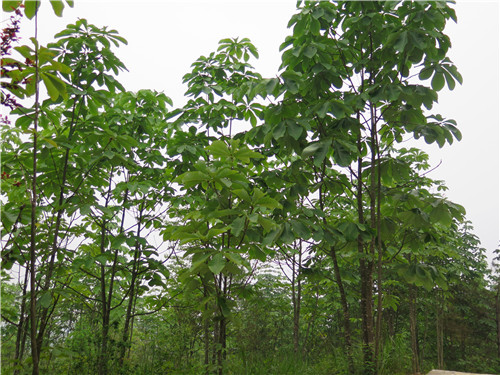
Because the species differ, their requirements for environmental conditions also differ. Magnolia bark tree prefers a cool, humid climate; high temperatures are unfavorable for its growth and development, and it is best grown in mountainous areas at an altitude of 800-1800 m. It is a tree species unique to mountainous areas, cold-resistant, and all are sun-loving species, but seedlings fear strong light. It is a slow-growing tree species; one-year-old seedlings are only 30-40 cm tall, while young trees grow relatively fast. Magnolia bark trees less than 10 years old rarely produce sprouts, and only trees over 8 years old can flower and bear fruit. After the seeds dry, their germination capacity decreases significantly. Cold stratification for about 5 days can effectively break seed dormancy. The suitable germination temperature is 20-25°C.
III. Sectional Bark Peeling and Regeneration Technique for the Magnolia Bark Tree
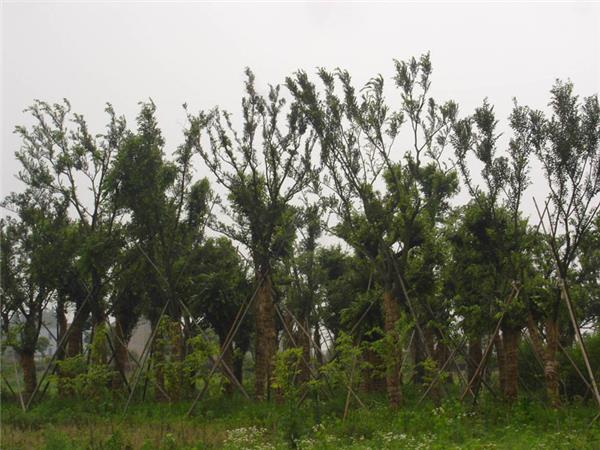
Ring-peeling position: Starting from the base of the trunk, set the lower cutting line at 20-30 cm above the ground. Then determine the ring-peeling length according to multiples of the standard harvesting length of 45 cm; generally there are 4 lengths: 45 cm, 90 cm, 135 cm, and 180 cm.
Ring cutting: First use a sharp knife to cut a ring-shaped cutting line all the way around the trunk on the upper ring cutting line, with the blade tilted downward at 45° when cutting; on the lower cutting line, also cut a ring-shaped cutting line all the way around the trunk, with the blade tilted upward at 45° when cutting; then make a vertical cut down the middle of the trunk from top to bottom, and then from the upper part of the vertical cutting line, use a clean, smooth and relatively thin bamboo strip to gently pry up the bark, and gently tear the bark open along the transverse knife marks, cutting the phloem connected to the xylem while tearing.
Peeling and bandaging: 15-18 days after peeling, first untie the lower binding strap or rope. Allow the newly regenerated tender bark tissue of the ring-peeled part to contact the air. But the plastic film wrapping must not be turned up. After 22-25 days, the plastic film wrapping can be untied. By this time, callus tissue has formed, the wound has healed, new bark has grown, and growth has begun to recover.
IV. Prevention and Control of Common Diseases and Pests of the Magnolia Bark Tree
Damping-off: The pathogens include both non-infectious and infectious types. It often occurs at the seedling stage and mostly during the plum rain season. After seedlings become diseased, it spreads rapidly, often causing death in patches. Commonly used is 1:1:100 Bordeaux mixture (that is, prepared from 1 part copper sulfate, 1 part quicklime plus 100 parts water), applying 112 g of the liquid per sq m; after the seedlings emerge, spray once about every 10 days, for 4-5 consecutive times, which has a significant control effect on damping-off.
Leaf blight: Shallow plowing, poor growth and development of young seedling and forest tree roots, poor soil with weak water- and fertilizer-holding capacity, insufficient base fertilizer, dry weather, and overcrowded growth of seedlings and forest trees, as well as other environmental conditions unfavorable to seedling growth and development, can all lead to the occurrence of magnolia bark tree leaf blight. After the disease occurs, promptly remove the diseased leaves; spray 1:1:100 Bordeaux mixture or 50% Tuzet 800-fold solution once every 7-10 days, for 2-3 consecutive sprays, etc.
In addition, common diseases of the magnolia bark tree also include sooty mold and root rot, and pests include the brown longhorn beetle, etc. Whenever diseases or pests are found, the pathogen must be removed immediately and control measures taken, to avoid further spread of the diseases and pests and affecting the healthy growth of the plants.