How to plant tea-oil camellia seedlings: Can tea-oil camellia be grafted with camellia?
Tea-oil camellia is a tree species with relatively high cultivation value, because it not only has ornamental value itself, but can also be used for grafting camellia, mutually enhancing each other's ornamental value.
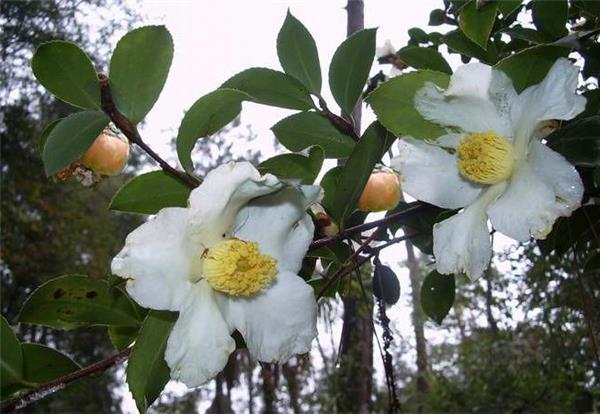
I. Tea-oil camellia cultivation and planting techniques
Site selection: For afforestation land, choose a sunny slope with deep soil, good drainage and a pH value of 4.5~6.0; the slope land should be relatively gentle, with a gradient below 20°. Low-lying land and shady, damp slopes are not suitable for tea-oil camellia growth.
Planting: Tea-oil camellia can be planted from late November in winter to early March of the following spring, but the severe cold and dry period should be avoided, and spring planting is better. Areas below 400 m in altitude can be planted in winter, but tea-oil camellia cannot be planted in a dry winter. Planting is best done on a cloudy or sunny day; at planting, add 250 g of burnt mud ash per plant and 5 g of calcium magnesium phosphate fertilizer per plant at the root collar. Spread the seedling roots out naturally, add soil and firm it layer by layer; when planting grafted seedlings, keep the graft union level with the ground, ensuring the roots are spread out, the seedling is upright and the soil is firm. After planting, water thoroughly to settle the roots so that the roots and soil are tightly combined.
Management: Tea-oil camellia is intolerant of waterlogging and drought; pay attention to drainage during the rainy season, and carry out drought relief and seedling protection promptly during summer and autumn droughts. Pruning of tea-oil camellia is mostly done after fruit harvest or before spring bud break.
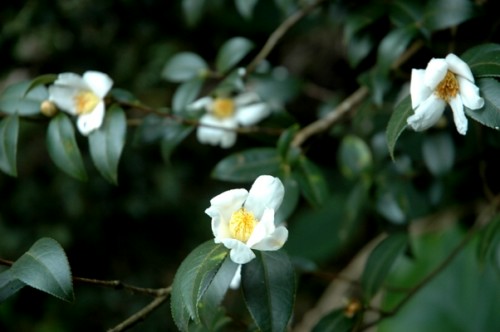
II. Control of southern blight in tea-oil camellia seedlings
1. Pay attention to the selection of nursery land and planting sites. Mix 1 kg of 70% nitrobenzene with 15 kg of fine soil, and incorporate it into the surface soil layer of the bed while preparing the land and making the bed, for soil disinfection. Where crops are severely affected, gramineous plants can be used for rotation. At the same time, pay attention to drainage, clear weeds and reduce sources of infection.
2. Chemical control: Dig out diseased plants and the infected soil nearby, and disinfect the soil with lime at 50 kg per mu. A 0.2% mercuric chloride solution can also be sprayed on the root collar of the seedlings, or 1% copper sulfate can be used as a drench.
3. Increase fertilization. This not only promotes vigorous seedlings but also promotes the growth of antagonistic saprophytic microorganisms in the soil to resist the activity of pathogens, or reduces the severity of the disease.
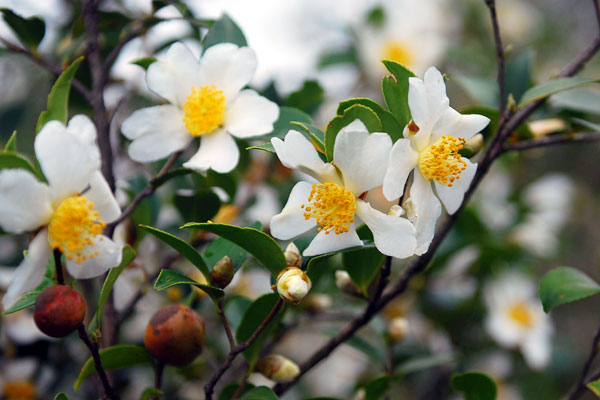
III. Steps for grafting camellia onto tea-oil camellia
1. Cut the camellia scions into small sections of 5 to 6 cm, each section ensuring 2 to 3 lateral buds; to reduce evaporation, half of the leaf can be cut off.
2. Cut a long slanting surface about 2 to 3 cm long 1 cm below the lower bud of the camellia scion, and cut a short surface within 1 cm on the opposite side of the long surface.
3. Cut the cut end of the rootstock flat, choose a smooth spot on the edge of the xylem of the rootstock cross-section and make a straight downward cut; the length and width of the rootstock cut should correspond to the long surface of the scion, then insert the long slanting surface of the scion into the rootstock, align the cambium on one side, and wrap the bark of the rootstock cut around the outside of the scion.
4. If the rootstock is thick, several scions can be grafted around its perimeter, and tied together after grafting. For tying, use plastic film strips about 1 cm wide (which should have some elasticity) and tie them; the film strips must be pulled tight when tying.
6. After tying the rootstock, cover it with a white transparent plastic bag, and tie the mouth of the bag tightly with packing rope, which can play a role in moisture retention. In places with too strong sunlight, shade and care for the grafted plants. During the care period, the sprouts on the rootstock should be wiped off at any time to reduce nutrient consumption.
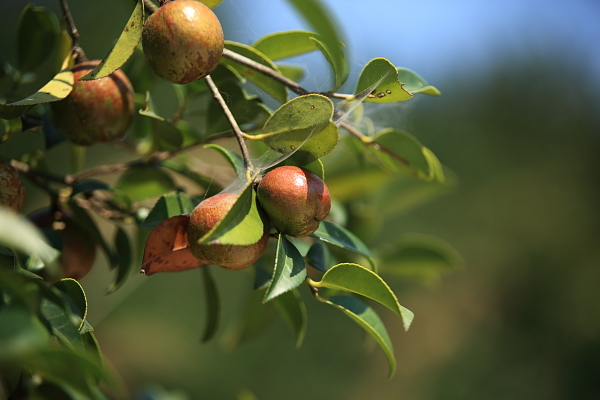
Well, that is all for how to plant tea-oil camellia and the introduction to grafting camellia onto tea-oil camellia. I hope the above introduction can help everyone improve the success rate of planting tea-oil camellia seedlings, and let your tea-oil camellia grow robustly and healthily.