A Detailed Guide to Planting and Caring for Poplar Saplings
Poplar saplings need to be handled carefully from lifting to cultivation and care. Although they are quite robust by nature, they still cannot withstand damage, can they? So when transporting, planting and caring for them, we must master the necessary planting techniques to avoid harming them.
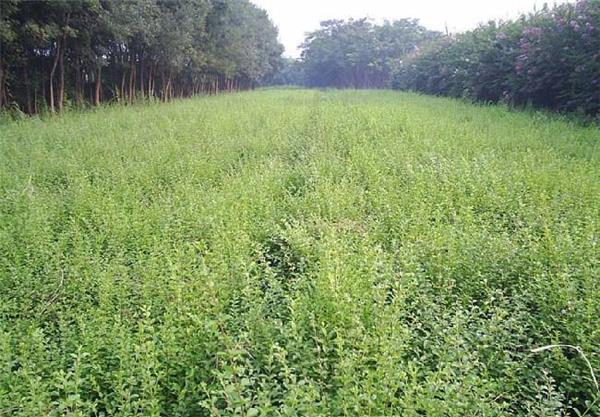
I. Transport Protection for Poplar Saplings
Lifting: In places where autumn afforestation is carried out, the saplings can be lifted once the trees have shed their leaves normally, and they should immediately be graded, piled up and transported separately to the afforestation site for planting. When lifting, the roots must be kept basically intact to prevent mechanical damage to the saplings. In spring, lift and plant them promptly. However, if the winter climate is harsh or the land is needed for other uses, the saplings can also be lifted in autumn and heeled in over winter in trenches in a sheltered, sunny spot.
Transporting saplings: During transport, the main things to prevent are mechanical damage and water loss, with particular attention to protecting the roots and terminal buds. For long-distance transport, wrap or cover the roots and saplings with wet straw mats or felt cloth, and sprinkle water on the roots from time to time to prevent the roots from being exposed to sunlight or dried out by strong winds.
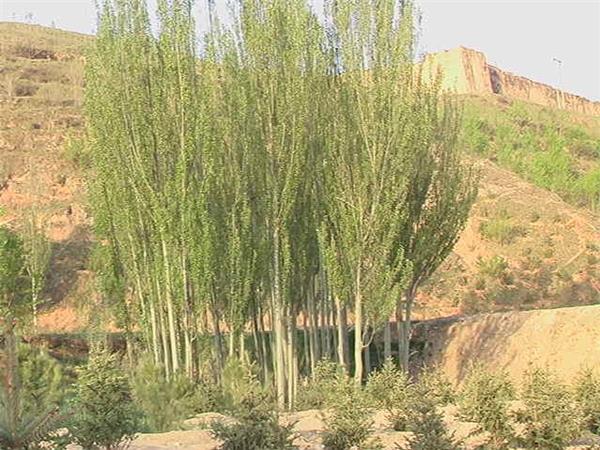
II. Planting Management for Poplar Saplings
Land preparation: Carry out full ploughing in winter to a depth of more than 40cm, install a good drainage and irrigation system, and before cuttings are taken the following year, prepare the soil finely so that the soil particles are definitely broken up, allowing it to retain water well.
Cuttings: Under normal circumstances, use vertical insertion, not slanting insertion. Insert by hand directly through the plastic film into the soil, with the top protruding about 0.5cm above the film. After insertion, press some soil onto the film to prevent wind from lifting it. A row spacing of 60 and a plant spacing of 30-35 are both acceptable, at 3100-3700 plants per mu.
Irrigation: Each watering should soak through, then loosen the soil to conserve moisture. Once the soil temperature can remain stable above 15°C, regular irrigation can begin. After the cuttings are inserted into the soil, water thoroughly once immediately to promote root development; this can raise the soil temperature, and the number of waterings should be appropriately controlled. During the summer peak growth period, water promptly as well, ensuring the saplings' growth potential is fully realised.
Fertilisation: In the nursery, the saplings are very densely grouped and need to take up large amounts of nutrients from the soil each year. Therefore, in addition to applying a large amount of base fertiliser the year before raising the seedlings, topdressing should also be done 2-3 times. The amount and fertiliser type ratio for each topdressing vary with soil conditions, poplar variety and sapling growth status.
Weeding: On the ridge beds in the nursery, where plastic film covers the ground, no weeding is needed in the early stage. Black film is opaque, so weeds generally do not grow. By the end of June, the film can be removed and the soil loosened. If weeds appear, herbicides can be used. Nursery weeding should follow the principle of "weed early, weed small, weed completely."
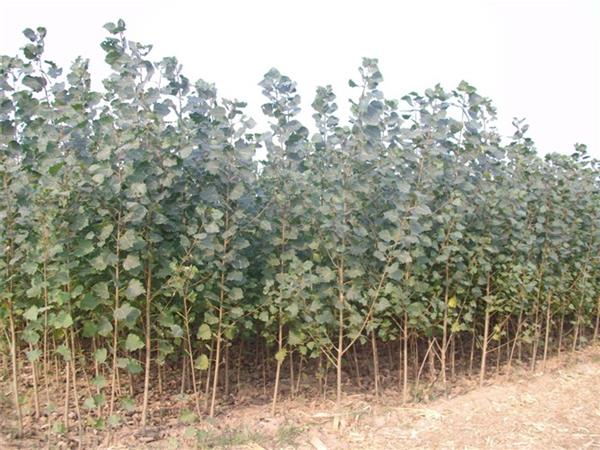
III. Main Pest and Disease Control for Poplar Saplings
Longhorn beetles: Adults emerge in mid-month, mate after 2-5 days, and lay eggs after about 2 days. In mid-to-late May they hatch into larvae and bore into young branches to cause damage. The tree species mainly affected include dozens of species such as poplar, willow, elm, walnut, paulownia and Chinese chestnut. Spray the trunks with 300-fold dilutions of organophosphorus pesticides such as 40% omethoate EC, 50% phoxim EC, 50% phosphamidon EC and 50% fenitrothion EC to control egg-laying and larval hatching of longhorn beetles.
Spring cankerworm: Newly hatched larvae feed on young buds and flower buds, while older larvae feed on leaves. Damaged leaves are slightly incomplete in mild cases, while in severe cases the leaves on entire branches are eaten bare; the larvae then spin silk and, aided by the wind, move to nearby trees to cause damage. In severely affected stands, take advantage of the peak larval period and spray trichlorfon, phosmet, deltamethrin, omethoate and the like at conventional concentrations, which can achieve good insecticidal results.
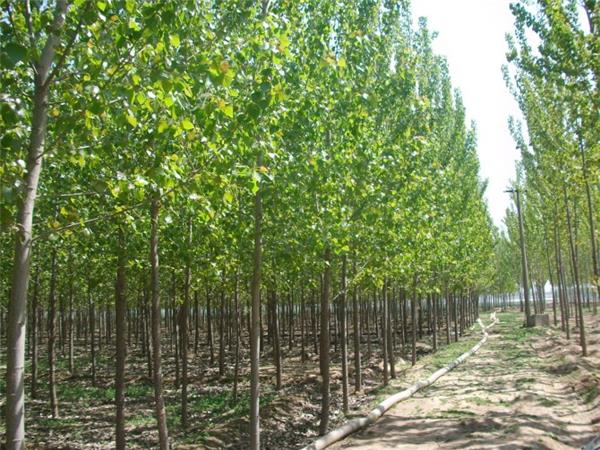
All right, that is the complete introduction to how to plant poplar saplings. There are many varieties of poplar, making them a great choice for decorating a courtyard. If you are struggling to decide what tree species to plant in your courtyard, the poplar can be a priority option to consider.