Differences Between Rhododendron pulchrum and Spring Azalea, Plus Cultivation Methods and Landscape Uses of Rhododendron pulchrum
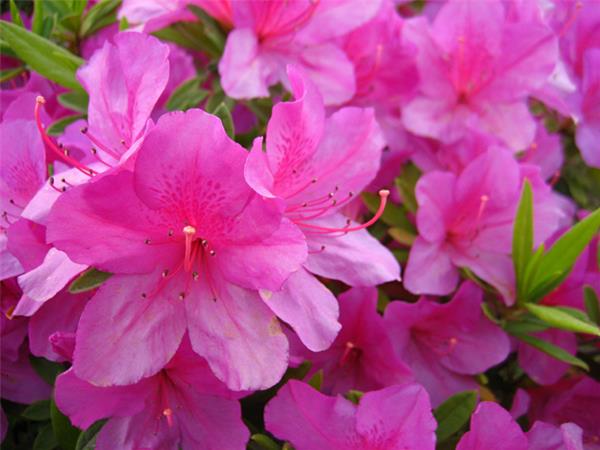
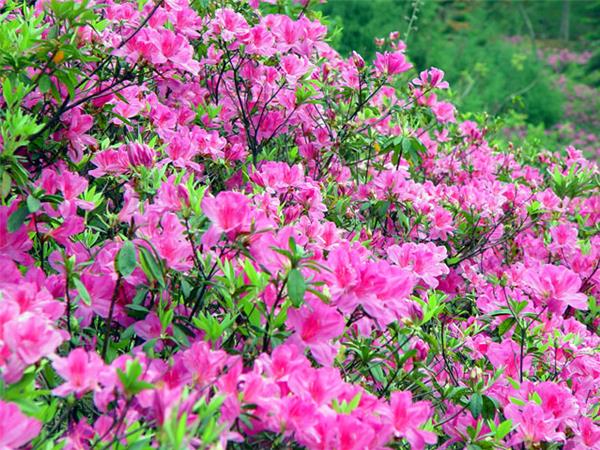
Rhododendron pulchrum is a plant with excellent ornamental value. Planted in masses, it can form a spectacular sea of flowers, making it a very suitable plant for decorating gardens, courtyards, terraces, and other spaces.
I. Differences Between Rhododendron pulchrum and Spring Azalea
Rhododendron pulchrum: also known as Jinxiu azalea, it is an evergreen or semi-evergreen shrub, up to 3 m tall, with sparse branching. Young branches are densely covered with pale brown flat appressed hairs. Leaves are papery, dimorphic, elliptic to elliptic-lanceolate or oblong-obovate-lanceolate, 2.5-5.6 cm long and 8-18 mm wide, acute at the apex with a mucronate tip, cuneate at the base, initially with scattered yellow sparse appressed hairs, later nearly glabrous above, with a bluntly pointed tip, wedge-shaped base, ciliate margins, and hairy petioles 4-6 mm long. Both leaf surfaces are hairy, especially along the midrib. Autumn leaves are narrowly oblong-obovate or elliptic-lanceolate, thick and glossy. Capsules are oblong-ovoid, about 8 mm long, with rough hairs and persistent calyx. Traditional cultivars include 'Yu Hudie', 'Zi Hudie', 'Liuqiu Hong', and 'Yu Ling'.
Spring azalea: also known as Yingshanhong, Manshanhong, Shanzhizhu, Hongzhizhu, and Shanshiliu, it is a deciduous shrub about 2 m tall; with many branches, the twigs are slender and straight. Leaves are alternate, long elliptic-ovate, pointed at the apex, dark green on the surface with sparse stiff hairs, and pale green on the underside. Racemose inflorescences; flowers are solitary or terminal, funnel-shaped, with diverse colors and many cultivars. There are evergreen azaleas and deciduous azaleas; according to flowering period, they are divided into spring azaleas, summer azaleas, and spring-summer azaleas. According to flower form, they are divided into single, semi-double, and double. Petals may also be flat, slightly wavy-edged, or wavy-edged. The flowering period is April-May, and the fruit ripening period is October. It mostly grows on hillsides and in hilly shrublands.
II. Ecological Habits of Rhododendron pulchrum
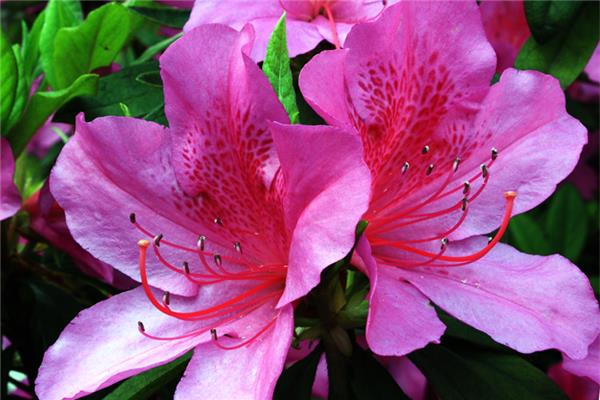
Rhododendron pulchrum prefers cool, humid, and sunny environments. It is cold-tolerant, heat-sensitive, tolerates partial shade, and does not tolerate long periods of intense sunlight. The optimal growth temperature is 15-28°C, and in winter it can withstand low temperatures of -8°C. The soil should preferably be fertile, loose, well-drained acidic sandy loam.
III. Propagation Techniques for Rhododendron pulchrum
1. Cuttings: carried out during the plum rain season. Select semi-mature young shoots 12-15 cm long, remove 2-3 leaves at the base, keep the apical leaves and cut them in half. Treat the cuttings with 0.8% indolebutyric acid solution for 2-3 seconds, insert them into a sand bed, and keep the room temperature at 15-18°C. Roots form 50-60 days after insertion.
2. Layering: carried out in April-May, using the air layering method. Select 2-3-year-old mature branches, perform ring barking 20-30 cm from the branch tip, 2 cm wide, and wrap with leaf mold and plastic film. Healing and rooting occur in 4-5 months, and in autumn they are cut off and potted.
3. Sowing: April is suitable, using indoor pot sowing. The optimal germination temperature is 22-24°C, germination occurs 10-15 days after sowing, and seedlings grow slowly.
IV. Pest and Disease Control of Rhododendron pulchrum
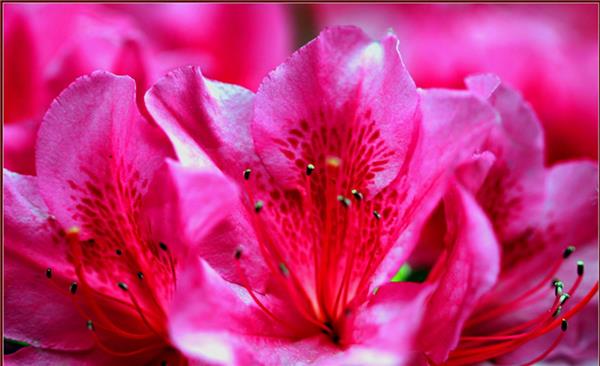
Rhododendron pulchrum is often harmed by brown mold and black spot, which can be sprayed with 70% mancozeb wettable powder at 600 times dilution. Pests include red spider mites and lace bugs, which can be killed by spraying with 80% dichlorvos emulsifiable concentrate at 1000 times dilution.
V. Landscape Uses of Rhododendron pulchrum
When planted in masses, Rhododendron pulchrum blooms in a splendid display of brilliant colors, enhancing the natural landscape effect of gardens. It can also be planted in clumps beside rocks, by pond edges, and along lawn borders to add garden atmosphere. Potted plants placed in hotels, homes, and public places are dazzling and eye-catching.
All right, the above is the complete introduction to Rhododendron pulchrum. After reading the above, have you also developed an interest in growing this plant with brilliant blooms and beautiful flower shapes? If so, do not hesitate. Hurry and use it to decorate your home life.