Qingxiang walnut is a walnut variety of excellent quality
The main value of Qingxiang walnut lies in its edible fruit with excellent taste. However, to ensure its fruit set rate and fruit quality, it is necessary to master some essential cultivation techniques.
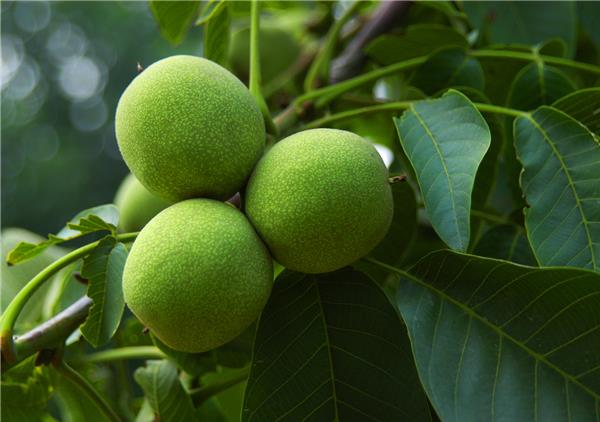
I. Planting techniques for Qingxiang walnut trees
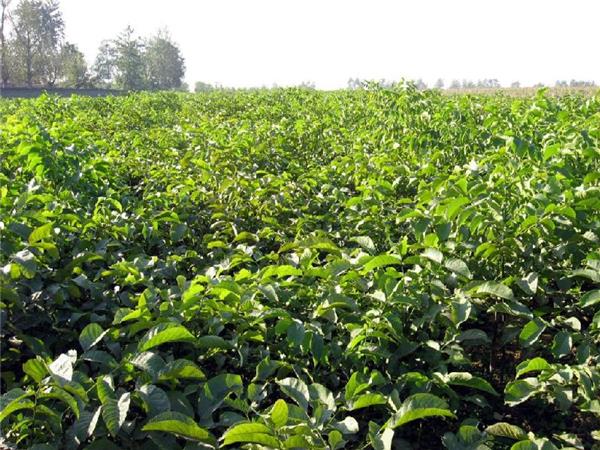
Sowing: Collect seeds after the fruit ripens in August-September, remove the husk, air-dry and store dry. In mid-March, soak the seeds in cold water for 2-3 days, then remove and mix with wet sand, and pile in a sunny spot. Make the pile 30-35cm high, cover with 10cm of wet sand, sprinkle water once a day to keep moist, and cover with straw mats or plastic film at night to retain moisture and warmth. After 10-15 days, when the shells crack and the white radicle shows, they are ready for sowing. Select once a day and sow in batches; sow when the soil moisture is sufficient. First open furrows at a row spacing of 40-50cm, and sow point by point at a plant spacing of 15-20cm; when sowing, keep the two suture lines parallel to the ground, with a depth of 3-5cm from the fruit to the soil surface. After covering with soil, press firm to conserve moisture. The sowing rate is about 100kg/mu, and the seedling yield is 7000-8000 plants/mu.
Management: The planting time is around bud break in late March. Planting 1-2 year old seedlings gives a high survival rate. After planting, water thoroughly, strengthen water and fertilizer management, frequently loosen the soil and remove weeds, pay attention to drainage in the rainy season, and control pests and diseases in June-July. Prune during the growing season, keeping the trunk height above 3m. Do not prune after leaf fall, otherwise it easily causes bleeding, affecting tree vigor.
II. Pruning methods for young Qingxiang walnut trees
1. Lay long branches and notch buds to promote branching: After vigorous long branches of Qingxiang walnut are left unpruned and laid out, their budding ability is very strong, and more than 80% of the medium and short branches will form terminal flower buds. The bud-notching technique used on apple trees also works very well on walnut trees. When the terminal buds begin to swell, do not prune the vigorous long branches but leave them, and notch some buds on both sides and on the upper side, which can significantly increase the budbreak rate of that branch and has an obvious effect on increasing early branch volume and flower quantity. Make a cut with a hacksaw blade or knife about one centimeter above the bud, and that bud will grow into a branch. For notching, the saw cut should not exceed half the circumference of the branch; the bark must be cut through, but the xylem must not be damaged. If cut too deep, the branch will break in strong wind after growth. Generally, notch one bud every 3-5 leaves.
2. Short cutting to promote branching: In the south, short cutting can be done during the growing season, which can increase early branch volume. The best time for short cutting is late May and early June. Select vigorous vegetative branches around the tree and cut off 1/3 of the branch length. Generally, 2-4 branches can sprout; if too light or too heavy, only 1-2 sub-branches will sprout. If short cut too early, fewer branches emerge; if short cut too late, the new shoots do not grow sufficiently and are not conducive to flower formation.
III. Questions and answers on Qingxiang walnut cultivation
1. Where does the Qingxiang variety come from?
Qingxiang walnut was selected by Japanese walnut breeding expert Naoe Shimizu from the seedling population of late-bearing walnuts. It was named in 1948 and is one of the best walnut varieties.
2. What excellent characteristics does Qingxiang walnut have?
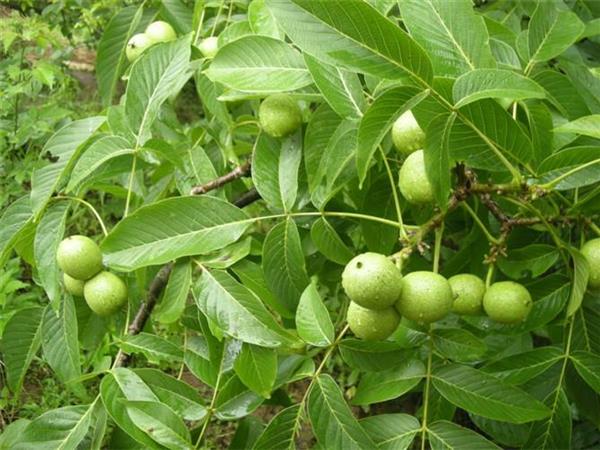
1. Early bearing and high yield. It bears fruit in the second year after planting, enters the full production period in five to six years, and the yield per mu of dried walnuts is six hundred to eight hundred jin; 2. Beautiful appearance and excellent quality. The nuts of this variety are relatively large, uniform in size, with a single nut weight of about 16 grams, conical in shape, with moderate shell thickness, plump kernels, light yellow kernel color, sweet aroma, and very little astringency, with a kernel yield of 53-55%. 3. Resistant to bleaching and easy to store. The nut suture line is tight, resistant to bleaching. Resistant to oxidative rancidity (kernel off-flavor) and easy to store. The nuts do not change flavor after one year of storage at room temperature; 4. Long lifespan and disease resistance. Qingxiang walnut is highly resistant to anthracnose, brown spot disease, and branch blight, grows vigorously, is not prone to premature aging, and its economic lifespan can reach more than a hundred years. The comprehensive traits of the nuts can rival American Diamond walnuts. It can be said that this variety is the first choice for current walnut production development.
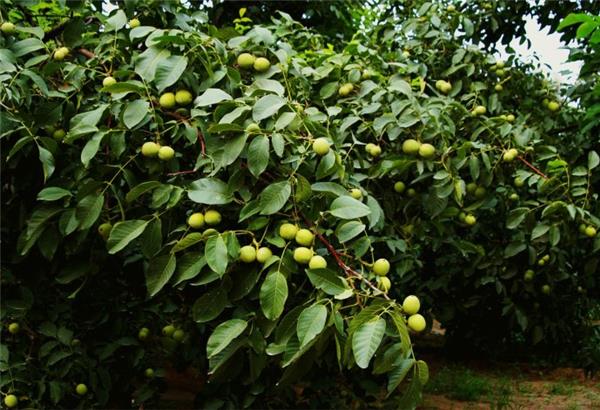
Overall, Qingxiang walnut still has very high cultivation value. It can be used both for ornamental purposes and to provide fruit for people to eat. It is a tree species that can generate considerable economic benefits.