How to cultivate and care for Ligustrum? A detailed guide to breeding and care methods
Ligustrum planted in the ground is mostly field-grown for economic benefit, so some techniques for sprouting and protecting seedlings need to be mastered, but for potted Ligustrum you can choose for yourself whether to carry out this step.
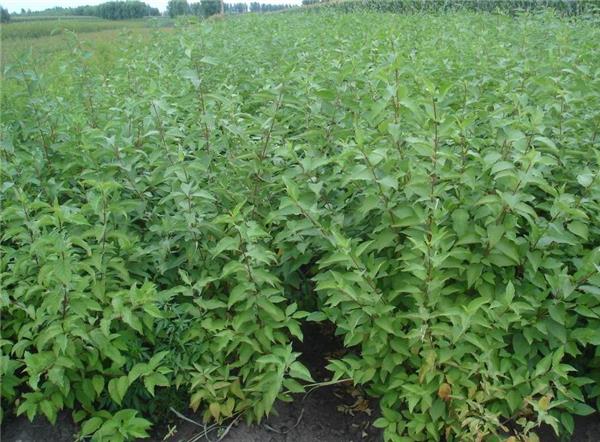
I. Seed sprouting and sowing methods for Ligustrum
Sprouting: Before the soil freezes, choose a shady spot with high, dry terrain and dig a seed storage pit. The pit should be 1.0 m deep and 1.0 m wide, with the length depending on the quantity of seeds. First soak the seeds in warm water for 1-2 days and nights, changing the water once a day, so the seeds absorb water fully, then mix them evenly with 2-3 times their volume of moist river sand. Around the onset of winter, spread a 10 cm layer of wet sand on the bottom of the pit, then spread the seed-sand mixture flat into the pit, inserting a bundle of sorghum stalks in the middle to allow ventilation. After the seed-sand layer is leveled, cover it entirely with wet sand about 20 cm below the pit rim, then mound soil over the ground in a hill shape and cover it with whole bundles of rice straw or a thick straw mat for low-temperature stratification sprouting. Take them out before sowing the following spring, spread them to sun on a mat in a wind-sheltered, sunny spot, turn them over 2-3 times a day, and spray a suitable amount of warm water as needed to keep the seed-sand moist. When about 1/3 of the seeds have cracked open, they are ready for sowing.
Sowing: Generally sown in spring. When the soil temperature at a depth of 5 cm reaches 9-10°C, the seeds can germinate when sown, but 14-15°C is more suitable, around mid-March. Use flat-bed drilling. Before sowing, water thoroughly to saturate the subsoil; when the surface soil is slightly dry and loose, open furrows and drill the seeds, with row spacing of 15-20 cm, a sowing rate of 8-10 kg per mu, and a covering of soil 1-1.5 cm thick, then cover with straw.
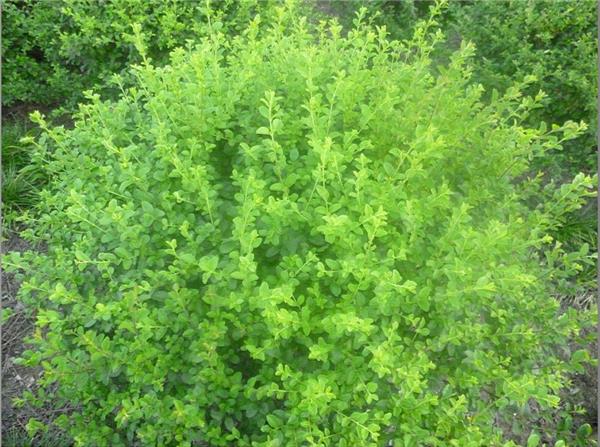
II. Breeding management of Ligustrum
Light: Ligustrum likes sunlight and also tolerates shade. In midsummer, avoid exposure to strong sun to prevent scorching the tender shoots; provide appropriate shade from 12 noon to 3 pm. In spring, autumn and winter, it can be placed in a sunny spot all day.
Water: The pot soil for Ligustrum should be kept alternately dry and moist; do not water when dry, and when watering, water thoroughly. Slightly moist soil is not a problem. If grown on a balcony, spray the leaves frequently with water in summer and autumn to maintain a certain air humidity. In winter, keep some moisture in the pot and never let it get too dry, otherwise it will affect the sprouting of new shoots the following year.
Fertilizing: Ligustrum usually needs little fertilizer, and it is even less suitable to apply concentrated fertilizer, otherwise its branches and trunk will grow leggy, the leaves will become too large, and even the root system may be damaged. During the growing season, apply a dilute liquid fertilizer once a month. To speed up fertilizer decomposition, water once the next morning as a "return watering," which both helps the plant absorb nutrients and avoids fertilizer damage.
Repotting: Ligustrum is generally not choosy about soil, but humus loam is best. Repot and change the soil once every 1-2 years in spring. When repotting, prune away old and dead roots, and apply some base fertilizer appropriately to maintain healthy growth.
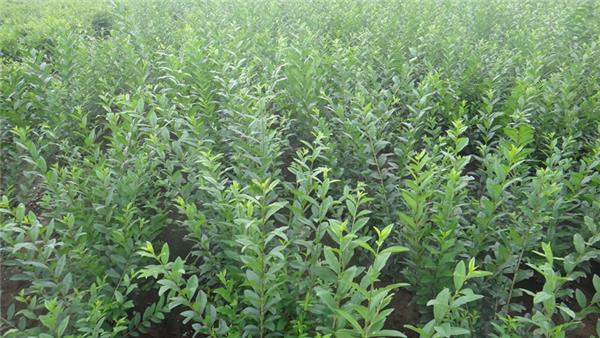
III. Pest and disease control for Ligustrum
Damage: Because Ligustrum scale insects have a habit of staying dormant and are not insects that move around freely, and because they are large and visible to the naked eye, their presence is very easy to detect. They like to choose places not reached by light to feed, such as the underside and base of leaves, and especially when the weather is warm, if their presence is not noticed, they will immediately multiply into groups. Fiber tissue infected by Ligustrum scale insects or beetles will turn yellow no matter how long the infection lasts, and then turn black. After prolonged infection, the entire leaf and new growth will turn yellow and die, and the vigor of the seedlings will therefore drop sharply.
Control: If discovered early, when this pest is still few in number, it is easy to control; simply spray some mild soapy water. Using diazinon (called Dalinong emulsion in China), or a water-mixable powder, for spraying are both effective methods of controlling Ligustrum scale insects. This is because this pesticide has a longer duration of effect than the well-known malathion, especially when using a water-mixed powder for spraying; it is best to add a spreader-sticker, and remove the dried outer membrane of pseudobulbs or withered yellow leaves to expand the spraying area and deepen the level of penetration. When killing the insects, one should spare no effort in spraying every outer surface as well as the underside of the leaves, and must observe whether the insecticide has reached the axis of the leaves or other areas where infection may occur.
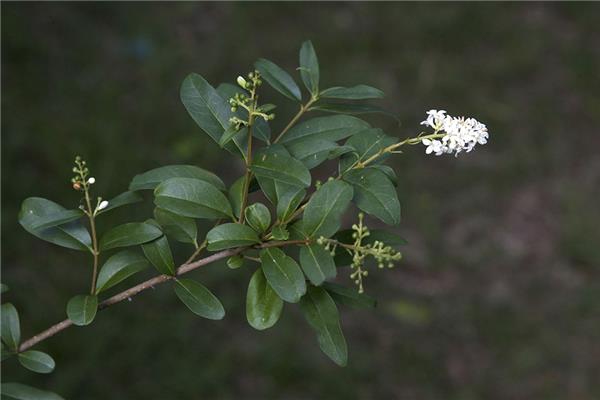
Ligustrum has emerald-green leaves and a relatively versatile plant shape, can be flexibly applied in various landscape designs, and can also match most interior styles. It is a plant very worth growing.