What are the methods for controlling pests and diseases in peach trees?
Common diseases of peach trees include bacterial canker, leaf shot hole disease, fruit shot hole disease, fruit rot and swelling, fungal invasion of the trunk, and crown gall, among several common serious diseases. If not detected and treated in time, they may cause the peach tree to be overwhelmed by disease and then spread to other peach trees, and in severe cases may result in total crop loss. Below is an introduction to the treatment methods for peach tree diseases. Control methods: first, when choosing the site for a peach orchard, choose a place with higher terrain, good drainage, abundant sunshine and good light, and fertile soil to establish the orchard. During the peach tree growing process, the needed nutrients should be increased to improve resistance. Whether in summer pruning or winter pruning, diseased branches and trunks must be completely removed without leaving future trouble. In addition, agricultural experts should be invited to prepare the corresponding chemicals for treating the diseases and spray them until the disease is completely cured. Peach plants are quite sensitive to chemicals; some organophosphorus chemicals with strong permeability and systemic action, and omethoate, easily cause chemical injury and should not be used.
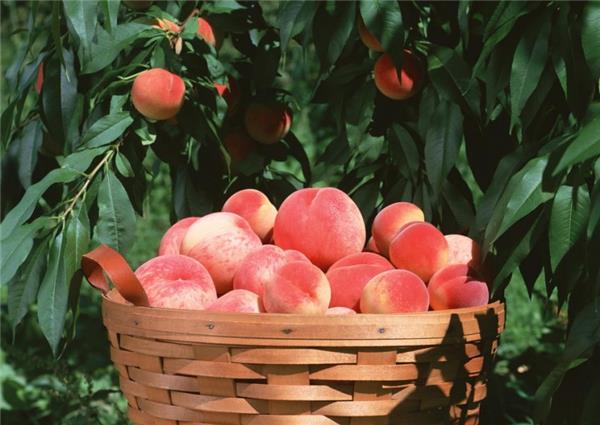
Common insect pests of peach trees include: bud-eating insects, strong insects that damage tender buds, leaf-eating insects, leaf spot insects, fruit-boring insects, sap-sucking insects, poisonous insects, and longhorn beetles, all of which damage fruits, leaves, and branches and trunks. The main methods for treating insect infestations are: during pruning, thoroughly remove the places where pests live; in winter, when peach trees are bare, it is a good time to check whether insect pests are present. In addition, protect the natural enemies of these pests to eliminate the pests. Finally, in early spring when pests reproduce, spray pesticides to thoroughly eliminate the pests.
Peach Tree Pest and Disease Control Methods
(1) Shot hole disease
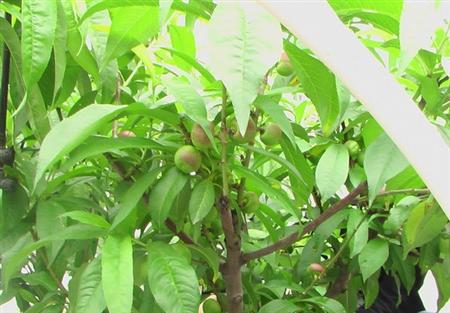
Shot hole disease is one of the main diseases of peach trees. It occurs commonly in peach-producing areas and often causes damage in solar greenhouse peach cultivation as well. Shot hole diseases mainly include bacterial shot hole disease, fungal mildew spot shot hole disease, and fungal brown spot shot hole disease. If these three shot hole diseases are not controlled in time, they will all cause leaf shot hole and shedding, and even death of new shoots, thereby severely weakening tree vigor and reducing fruit yield and quality.
(2) Peach gray mold
Peach gray mold is currently one of the important diseases in solar greenhouse nectarine cultivation. It occurs commonly and causes relatively severe damage.
1. Damage symptoms: It mainly damages flowers and young fruit. When the floral organs are affected, the diseased flowers gradually soften, wither, and rot at first; afterward, dense gray-brown mold layers grow on the calyx and receptacle; finally, the diseased flowers fall off, or fail to fall off smoothly and remain on the young fruit, causing the young fruit to develop the disease. When young fruit is affected, small light green round spots first appear on the fruit surface; afterward, as the lesions rapidly expand, the color gradually becomes dark brown. Slightly affected diseased fruit stops growing, while severely affected fruit rots completely and finally shrinks into a mummified fruit hanging on the branch.
(3) Peach brown rot
Peach brown rot, also known as sclerotinia disease and fruit rot, is an important fruit disease of peach trees.
1. Damage symptoms: It mainly damages peach fruit, and secondarily can also damage flowers, leaves, and new shoots. Fruit can be affected from young fruit to ripe fruit, but the closer to maturity, the more severe the damage. When fruit is affected, brown round small spots first appear on the fruit surface. If conditions are suitable, the lesions will spread to the whole fruit within a few days, and the flesh will also turn brown and soft-rot; finally, gray-brown mold clusters, namely the pathogen's conidial layer, appear on the surface of the lesions. After the diseased fruit rots, some fall off, while some lose water and shrink into mummified fruit hanging on the branches for a long time without falling.
(4) Peach leaf curl
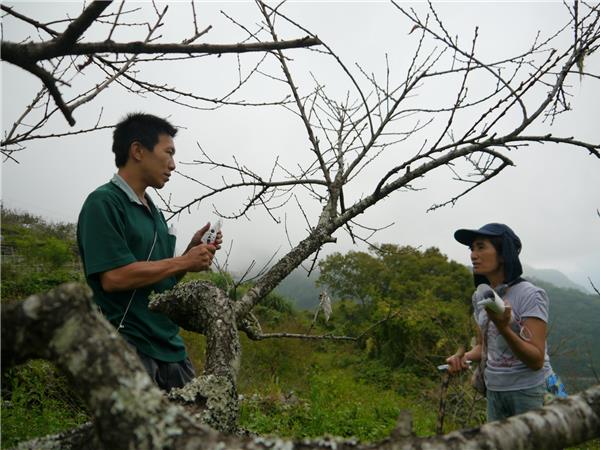
Peach leaf curl can infect peach, nectarine, almond, and apricot, but does not infect flat peach. When the disease is severe, new shoots cannot grow normally and may even wither. Diseased fruit is mostly deformed and drops early, often causing great damage to solar greenhouse nectarine cultivation.
1. Damage symptoms: It mainly damages leaves, and in severe cases can also damage flowers, tender shoots, and young fruit. In the early stage of leaf disease, after germination the tender leaves just emerging are red and curled; as the leaves unfold, the degree of shrinkage intensifies, the leaves stretch unevenly, the mesophyll is thick and brittle, and they appear yellow-green or in a mosaic pattern alternating yellow-green and green. In the late stage of leaf disease, the leaves appear red-brown, and a layer of gray-white waxy powdery substance (the pathogen's ascus layer) often grows on their surface. When the air in the greenhouse is humid, diseased leaves scorch, wilt, or rot, often causing early defoliation. After the leaves at the tips of branches die, they can cause the axillary buds below them to sprout and produce secondary shoots. Although the new leaves are no longer damaged, the branches do not develop fully and mostly form clustered leaves.
The harm and control methods of peach tree sooty mold
Symptoms
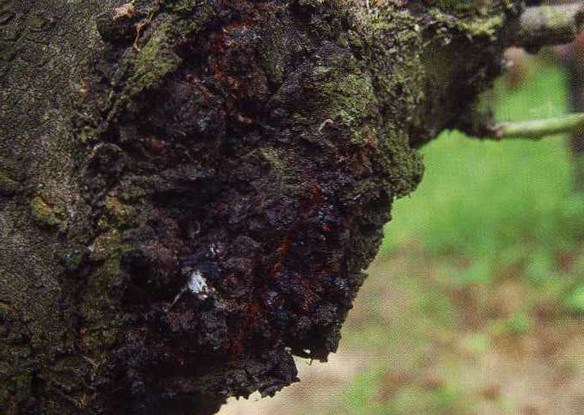
Peach tree sooty mold mainly damages leaves, and can also damage branches or fruit. When leaves are infected, the leaf surface first shows dirty brown round or irregular mold spots, then forms soot-like material that can cover the leaves, branches, and fruit surface. In severe cases, green leaves and attractive fruit are almost invisible, and black mold layers are everywhere; this affects photosynthesis and causes early defoliation of peach trees.
Pathogen
There are many kinds of pathogenic fungi causing sooty mold, mainly Aureobasidium pullulans; Cladosporium cladosporioides (herbaceous Cladosporium); and Cladosporium macrocarpum, all belonging to Deuteromycotina fungi. In Cladosporium cladosporioides, the conidiophores are upright, brown or olive-brown, single-branched or slightly branched, slightly curved at the upper part, and the terminal conidia are in short chains, elliptical, with 1-3 septa, measuring 10-18 x 5-8 micrometers. In Cladosporium macrocarpum, the hyphae are spreading, the conidiophores are brown, clustered or single-branched, slightly curved, and the conidia are elliptical, with 2 or more septa, light brown. In addition, Alternaria; and Microxyphella also can cause peach tree sooty mold. The population combinations of sooty mold fungi on peach trees in different regions are not entirely the same, and the spores are mostly distributed unevenly on the leaf surface.
Transmission routes and disease conditions
The sooty mold fungi overwinter as mycelium and conidia on diseased leaves or in soil and plant residues. The following spring they produce conidia, which spread and propagate by wind and rain and by aphids, scale insects, whiteflies, and others. Peach orchards that are shaded and humid, or the plum rain season, are prone to the disease.
Control methods
(1) Change the microclimate of the peach orchard to make it well ventilated, drain water promptly after rain, and prevent moisture from lingering.
(2) Control aphids, whiteflies, and scale insects in time.
These are some of the harms and control methods of peach tree sooty mold compiled by the editor. Have you learned them? You should study the knowledge compiled by the editor carefully, so that the peach trees you plant can grow better and bring you a bumper harvest.
Pathogen
There are many kinds of pathogenic fungi causing sooty mold, mainly Aureobasidium pullulans; Cladosporium cladosporioides (herbaceous Cladosporium); and Cladosporium macrocarpum, all belonging to Deuteromycotina fungi. In Cladosporium cladosporioides, the conidiophores are upright, brown or olive-brown, single-branched or slightly branched, slightly curved at the upper part, and the terminal conidia are in short chains, elliptical, with 1-3 septa, measuring 10-18 x 5-8 micrometers. In Cladosporium macrocarpum, the hyphae are spreading, the conidiophores are brown, clustered or single-branched, slightly curved, and the conidia are elliptical, with 2 or more septa, light brown. In addition, Alternaria; and Microxyphella also can cause peach tree sooty mold. The population combinations of sooty mold fungi on peach trees in different regions are not entirely the same, and the spores are mostly distributed unevenly on the leaf surface.
Transmission routes and disease conditions
The sooty mold fungi overwinter as mycelium and conidia on diseased leaves or in soil and plant residues. The following spring they produce conidia, which spread and propagate by wind and rain and by aphids, scale insects, whiteflies, and others. Peach orchards that are shaded and humid, or the plum rain season, are prone to the disease.
Control methods
(1) Change the microclimate of the peach orchard to make it well ventilated, drain water promptly after rain, and prevent moisture from lingering.
(2) Control aphids, whiteflies, and scale insects in time.
These are some of the harms and control methods of peach tree sooty mold compiled by the editor. Have you learned them? You should study the knowledge compiled by the editor carefully, so that the peach trees you plant can grow better and bring you a bumper harvest.